Fragrance Notes Are Layers Of Scent That Are Layered To Form The Final Fragrance. Fragrance Notes Are Categorised Into Three Main Elements Based On How Long They Take To Evaporate, And How Long They Typically Last Following Application: Top Notes, Heart Notes And Base Notes.
Yuzu
Yuzu presents a complex citrus aroma, often described as a blend of mandarin, lemon, and grapefruit, with distinct floral and herbal undertones. It offers a bright, tart, and uplifting freshness, characterized by its intensely aromatic and slightly bitter zest, providing a sophisticated, vibrant lift in fragrance compositions.

Origin & Extraction Of Yuzu
Yuzu, an aromatic citrus fruit native to East Asia, particularly Japan, Korea, and China, has a relatively modern history in Western perfumery compared to traditional Mediterranean citruses like Bergamot and Lemon. While Yuzu has been used for centuries in East Asian cuisine, bathing traditions (Yuzuyu), and traditional medicine for its distinct, refreshing scent, its significant introduction to the global fragrance industry coincided with the rise of modern, minimalist, and aquatic scents in the mid-1990s.
The note gained iconic status and global recognition with the launch of Issey Miyake’s L'Eau d'Issey Pour Homme in 1994, where Yuzu was prominently featured as a sharp, invigorating, and distinctly exotic opening. This composition established Yuzu as a foundational element in contemporary fresh and aquatic-citrus fragrances, valued for its unique complexity—a blend of mandarin, grapefruit, and herbaceous undertones—which offers a sophisticated alternative to simpler citrus oils. Today, Yuzu continues to be utilized by niche and designer houses for its ability to convey clarity, energy, and a vibrant, yet refined, freshness.
Extraction Methods of Yuzu
Historically, yuzu essential oil was obtained through labor-intensive manual methods such as hand-squeezing or the sponge method, where the rinds were pressed against sponges to capture the aromatic oils. In culinary and medicinal traditions, yuzu was often preserved through candying (yuja-cheong) or simple pressing to create vinegars and seasonal remedies. Because yuzu fruits contain many large seeds and relatively little pulp, traditional extraction focused on meticulously separating the oil-rich peel from the juice to avoid bitterness.
Modern commercial production primarily utilizes cold expression (pressing) of the fruit's peel to preserve its complex, heat-sensitive aroma of grapefruit and mandarin. While cold pressing remains the standard for high-quality perfumery oil, many industrial operations now utilize steam distillation on the leftover fruit material after juice extraction to maximize yield. Advanced techniques have also introduced "cellular extraction" to capture water-soluble phyto-compounds and specialized mechanical methods that extract juice from the sides of the fruit to better simulate natural hand-squeezing while controlling oil and pulp content.
Yuzu is a cherished note in modern perfumery, particularly celebrated for its bright, complex, and uplifting nature, often bridging the gap between traditional citrus and more exotic, green compositions. One of the fragrances that famously utilized Yuzu to define a modern, clean aesthetic is **L'Eau d'Issey Pour Homme** by Issey Miyake. Launched in 1994, this iconic aquatic-citrus scent uses the sharpness of Yuzu as a signature top note, giving it an intensely invigorating and distinctive opening that paved the way for many subsequent fresh fragrances.
- **L'Eau d'Issey Pour Homme**
- **Eau de Cartier Concentrée**
- **Acqua di Parma Fico di Amalfi**
The versatility of Yuzu allows it to blend seamlessly with both green and aquatic accords, which is showcased in scents like **Eau de Cartier Concentrée**. In this fragrance, Yuzu provides a slightly tart, aromatic counterpoint to the green violet leaf and cedar notes, offering a sophisticated interpretation of freshness that is less straightforwardly sweet than orange or lemon. Its presence ensures a luminous lift and a sense of refined clarity in the composition.
In niche and luxury perfumery, Yuzu is often used to add an exotic, sophisticated twist to conventional citrus themes. **Acqua di Parma Fico di Amalfi** incorporates Yuzu to enhance the Italian Riviera scent profile, lending a uniquely bright, slightly bitter, and aromatic zest that complements the dominant fig and grapefruit notes. This application highlights Yuzu's ability to provide a vibrant, memorable opening that is distinctly modern and complex, making it a favorite for high-end fragrances seeking an invigorating yet elegant appeal.
Sustainability Of Yuzu
Sustainability of Yuzu
- Utilizing exceptional climate resilience and cold hardiness to establish stable, low-maintenance crops in mountainous regions where other citrus species fail to thrive
- Integrating yuzu into agroforestry and diversified farming systems to enhance on-farm biodiversity and provide habitats for pollinators and beneficial insects
- Reducing environmental impact through integrated pest management and organic farming practices that minimize or eliminate the need for synthetic chemicals and pesticides
- Promoting a circular economy by repurposing extraction byproducts, such as using nutrient-rich peels for essential oils and powders to reduce industrial food waste
- Supporting soil conservation and water efficiency by using yuzu’s deep root systems to prevent erosion on sloped lands and employing organic mulching to lower irrigation needs
- Ensuring socio-economic resilience for local communities through long-standing collaborative partnerships between major producers and smallholder farmers to maintain heritage cultivation methods
Trivia
In Japan, it is a centuries-old tradition to bathe with floating yuzu fruits during the winter solstice to ward off colds and invite good fortune, a practice so popular that even capybaras in Japanese zoos are famously treated to these hot citrus baths.
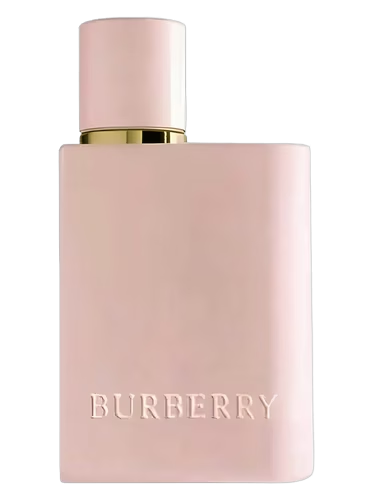
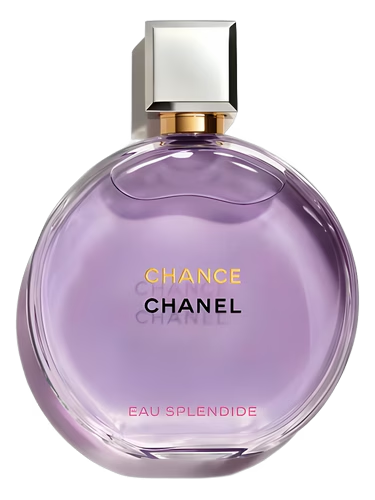
Most Popular Scents Using Yuzu

What is yuzu in perfumery?
Yuzu is a Japanese citrus fruit valued for its complex, zesty aroma that blends facets of mandarin, lemon, and grapefruit with floral and herbal undertones.
What does yuzu smell like?
It has a bright, tart, and intensely aromatic scent that is slightly more bitter and sophisticated than standard citrus notes, often described as having a dry, floral freshness.
How is yuzu oil extracted?
The essential oil is primarily obtained through cold expression (pressing) of the fruit's thick, fragrant peel to preserve its delicate, heat-sensitive aromatic compounds.
What are some famous perfumes featuring yuzu?
Iconic fragrances featuring yuzu include Issey Miyake L'Eau d'Issey Pour Homme, Acqua di Parma Yuzu, Diptyque Oyedo, and Maison Francis Kurkdjian Aqua Vitae Forte.
When is yuzu in season?
Yuzu has a two-stage harvest cycle, with green yuzu picked in late summer (August-October) and fully ripened yellow yuzu harvested during the winter months (November-January).