Fragrance Notes Are Layers Of Scent That Are Layered To Form The Final Fragrance. Fragrance Notes Are Categorised Into Three Main Elements Based On How Long They Take To Evaporate, And How Long They Typically Last Following Application: Top Notes, Heart Notes And Base Notes.
Corn
Corn, or maize, in perfumery offers a warm, gourmand, starchy-sweet aroma, evoking buttery popcorn or corn silk. It has nutty, slightly earthy undertones, sometimes leaning into a creamy, lactonic sweetness reminiscent of polenta or cornbread. It adds an unexpected comforting texture and savory-sweet dimension to exotic and food-inspired compositions.

Origin & Extraction Of Corn
Corn, or maize, is not a traditional historical note in classical European perfumery, which was traditionally dominated by florals, resins, and citrus. As a crop native to the Americas, it lacks the centuries-old history in Western fragrance that ingredients like rose or bergamot possess. Its relevance in perfumery is almost entirely modern, emerging with the rise of the gourmand category in the late 20th and early 21st centuries. Perfumers began seeking out unexpected, comforting, and food-related aromas to evoke nostalgia and unique sensory experiences.
The "Corn" note is typically used to convey a warm, starchy-sweet, or lactonic sensation, often specifically evoking the aroma of buttery popcorn or sweet cornsilk. It is not derived from a single essential oil but is usually constructed as an accord using synthetic or natural molecules to achieve its signature gourmand texture. This note is valued for adding an element of surprise and complexity to compositions, often bridging sweet notes with subtle nutty or earthy base notes in contemporary niche and artisanal fragrances.
Extraction Methods of Corn Oil
The primary method for extracting corn oil involves separating the germ from the corn kernel and then processing it through mechanical pressing and chemical solvent extraction. Historically, corn germ was separated using dry milling—mechanical extrusion or impact—or wet milling, which involves pre-soaking the corn in warm water to soften the kernels before centrifugal separation. Once isolated, the germ was traditionally pressed using screw oil presses, a physical method that separates a portion of the oil but leaves a significant amount in the remaining cake. Historically, this crude oil required extensive refining, including degumming and deacidification, to become edible.
Modern commercial production typically combines high-pressure screw pressing with solvent extraction, usually employing hexane, to achieve an oil yield of up to 97%. In the ethanol industry, dry-grind plants have modernized extraction by using high-speed disc stack centrifuges and specialized emulsion breakers to recover "distiller's corn oil" from the thin stillage. The latest technological advancements include aqueous enzymatic extraction, which uses water and enzymes to release oil without harsh chemicals, and supercritical CO2 extraction, which utilizes pressurized carbon dioxide as a clean solvent to capture high-purity oil while preserving its natural properties.
The Corn note, with its distinctive warm, starchy-sweet, and often buttery popcorn aroma, is a modern innovation primarily utilized within the gourmand fragrance category. Because it is not a traditional classical note, it often appears in contemporary niche and artisanal creations designed to evoke comforting, nostalgic, or unusual food-inspired textures. It provides an unexpected element, adding creamy depth and a savory-sweet dimension that pairs well with other sweet notes like vanilla, caramel, or subtle nutty accords.
- Amor - Romantic Potion (Adi Ale Van)
- Portrait de Madame Et Son Chat (Miskeo Parfums)
- French Kiss (ByBozo)
- Spanish Carnation (History Parfums)
- TAIGRANSU (Voyager)
In recent years, several houses have experimented with the corn note to achieve specific effects. For instance, in French Kiss, the corn note may contribute to a comforting, edible facet, while fragrances like Crunchy Cereal Milk leverage the note's lactonic, sweet, starchy nature to recreate a familiar breakfast aroma. The note's versatility allows perfumers to bridge the gap between pure sweetness and earthy textures, offering a unique olfactory experience.
The modern appeal of Corn lies in its ability to transform an ordinary scent profile into a complex gourmand experience. As evidenced by its inclusion in fragrances like Amor - Romantic Potion and Champurrado, the corn accord is increasingly being adopted by niche houses (like Adi Ale Van and Coyotl) that prioritize narrative and exotic, unexpected compositions over traditional fragrance structures, establishing corn as a recognizable, if still specialized, ingredient in the contemporary perfume market.
Sustainability Of Corn
Sustainability of Corn
- Utilizing corn as a renewable source for natural ethanol, which serves as a more eco-friendly alternative to synthetic solvents in fragrance production
- Adoption of regenerative agriculture practices like the ancient milpa system, which uses symbiotic planting of corn, beans, and squash to naturally improve soil fertility and nitrogen fixation
- Implementing the Corn Sustainability Assurance Protocol (CSAP) to ensure high environmental standards, legal compliance, and resource efficiency in large-scale production
- Advancing biotechnology to convert plant sugar feedstocks and corn cobs into renewable polymers and specialty ingredients like xylitol with a lower carbon footprint
- Committing to industry-wide 2030 goals aimed at reducing land use impact, soil erosion, and greenhouse gas emissions while increasing water and energy use efficiency
Trivia
In perfumery, the unique aroma of popcorn is not merely a synthetic reconstruction but can be captured through a molecular blend actually extracted from heated popcorn, yielding a scent that combines buttery, roasted, and corn-nuanced facets with a touch of vanilla.
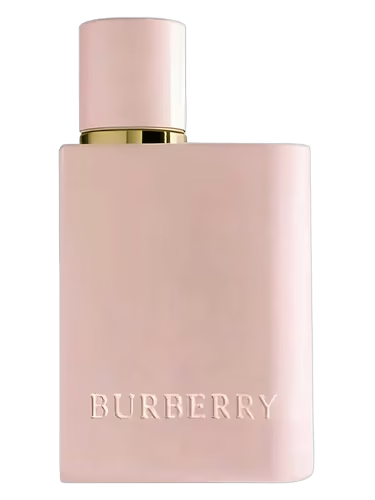
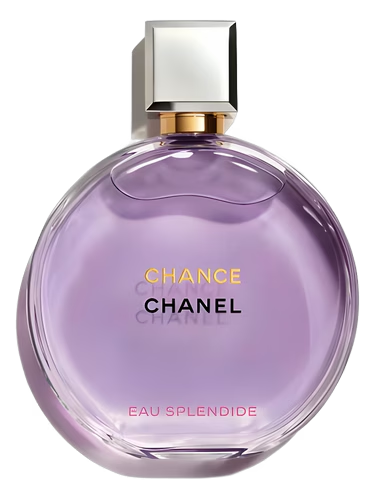
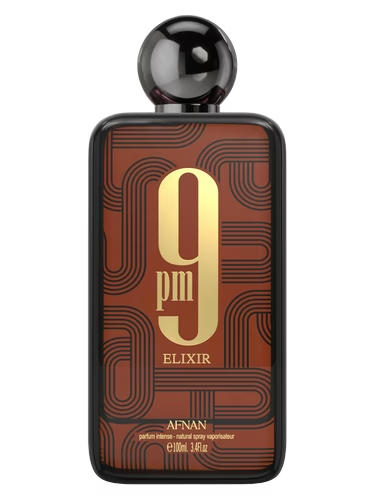
Most Popular Scents Using Corn
What is Corn in perfumery?
Corn, or maize, is a modern gourmand note used to create warm, starchy, and comforting accords that evoke aromas like buttery popcorn, cornsilk, or polenta.What does Corn smell like?
It offers a starchy-sweet and nutty profile, often featuring creamy, lactonic facets and a savory-sweet dimension reminiscent of toasted grains or buttery snacks.How is the Corn note extracted?
While corn oil is obtained through mechanical pressing and solvent extraction, the fragrance note is typically an accord constructed by perfumers or captured through molecular blends from heated popcorn.What are some top perfumes featuring Corn?
Notable fragrances include Etat Libre d'Orange La Fin Du Monde, Strangers Parfumerie Tokiwa, and Miskeo Parfums Portrait de Madame Et Son Chat.What is the origin of the Corn note?
Corn is native to Southern Mexico, and its use as a specialized fragrance note emerged alongside the rise of niche gourmand perfumes in the late 20th century.