Fragrance Notes Are Layers Of Scent That Are Layered To Form The Final Fragrance. Fragrance Notes Are Categorised Into Three Main Elements Based On How Long They Take To Evaporate, And How Long They Typically Last Following Application: Top Notes, Heart Notes And Base Notes.
Calamansi
Calamansi presents a bright, zesty citrus profile, often described as a cross between lime and mandarin. It is intensely tart with slightly sweet, floral, and green nuances. In perfumery, it offers a sparkling, fresh top note, imparting a vibrant, mouth-watering lift and an exotic, uplifting freshness to compositions.
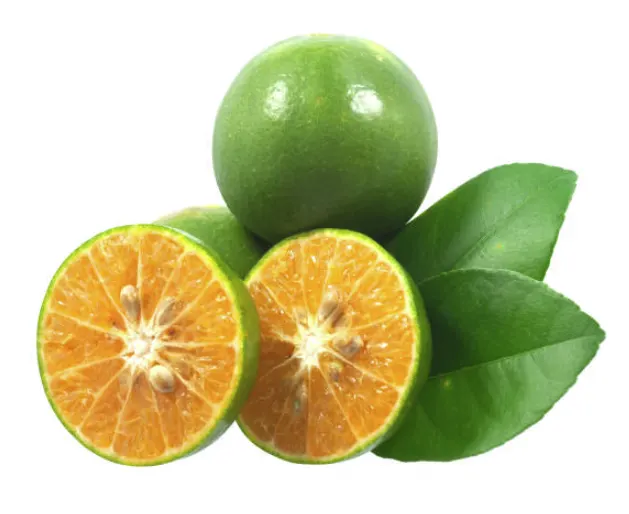
Origin & Extraction Of Calamansi
Calamansi, a hybrid citrus fruit native to Southeast Asia, has a shorter and more contemporary history in fine perfumery compared to classic notes like Bergamot or Lemon. Traditionally, its uses were primarily culinary and medicinal within Asian cultures. It was not until modern perfumery began seeking more exotic, nuanced, and photorealistic fresh notes that Calamansi, with its unique blend of lime and mandarin characteristics, gained traction.
In the 21st century, perfumers started incorporating Calamansi to provide a sophisticated, sparkling, and vibrant opening that moves beyond typical European citrus accords. Its tartness, sweetness, and subtle floral nuances make it valuable for contemporary compositions, especially those aiming to evoke tropical freshness or a bright, mouth-watering energy. It is increasingly featured in niche and designer fragrances to lend an invigorating and luminous lift.
The primary method for extracting calamansi essential oil is cold expression, where the fresh peel of the fruit is mechanically pressed or rasped to release the aromatic oils. Historically, this was often performed manually using the sponge method, which involved pressing the rind against a sponge to collect the oil, or the ecuelle a piquer method, where a bowl lined with sharp needles was used to puncture the oil glands of the citrus fruit.
In modern commercial production, extraction is typically achieved through high-speed mechanical peelers and centrifugal separators that isolate the oil from the resulting emulsion. Recent advancements include the use of supercritical carbon dioxide (scCO2) extraction, which operates at lower temperatures to produce a cleaner, more intense aromatic profile that more accurately reflects the fresh fruit. Additionally, molecular distillation is employed to refine the oil and remove specific unwanted components while concentrating the characteristic tangy and floral notes of the calamansi.
While Calamansi is a relatively modern note in perfumery, its vibrant, exotic profile has secured its place in contemporary fresh and tropical compositions. It offers a unique alternative to traditional lime and mandarin, providing a sparkling tartness that is often used to modernize classic citrus structures. It is frequently employed in niche and designer fragrances seeking an authentic, uplifting, and slightly mouth-watering opening.
- One notable example of a fragrance featuring the Calamansi note is **CK One Summer (2020 Edition)**. Here, the note is used to enhance the feeling of icy, aquatic freshness, blending its zesty tartness with grapefruit and mandarin for a bright, invigorating top layer suitable for hot weather.
- Another fragrance that highlights the Calamansi note is **Acqua di Parma Chinotto di Liguria**. In this composition, the Calamansi works alongside the bitter chinotto and mandarin to create a complex, sun-drenched Italian citrus cocktail that is both sophisticated and intensely refreshing, contributing to the fragrance's signature sparkling quality.
The Calamansi note is valued for its versatility in bridging green, herbaceous accords with juicy, sweet facets. Its intense yet delicate aroma makes it a favorite for perfumers aiming to create a prolonged, natural-smelling citrus burst, distinguishing fragrances like **Gucci Bloom Acqua di Fiori** where it adds a shimmering, watery brightness to the green floral heart.
Sustainability Of Calamansi
Sustainability of Calamansi
- Promoting zero-waste initiatives by repurposing calamansi peels and pulp into essential oils, animal feed, or organic fertilizers
- Supporting smallholder farmers in Southeast Asia through the establishment of cooperatives that ensure fair pricing and market access
- Implementing integrated pest management and organic farming techniques to reduce chemical runoff and protect local biodiversity
- Developing water-efficient irrigation systems and climate-resilient farming practices to mitigate the impact of extreme weather patterns
- Encouraging the use of by-products in the food and cosmetic industries to maximize the economic value of the entire harvest
Trivia
Calamansi is so small and tart that it is often frozen whole and used as a citrusy, decorative ice cube in cocktails and iced teas.
Most Popular Scents Using Calamansi

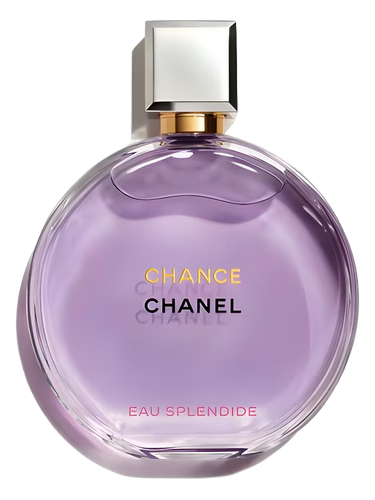
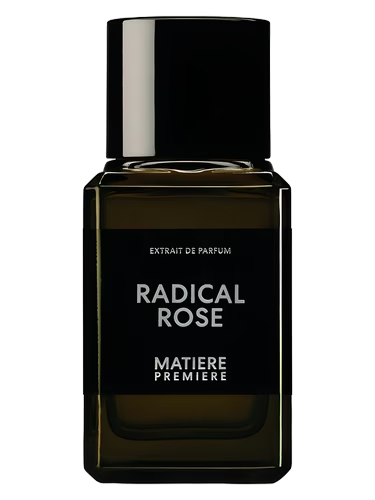
What is calamansi?
Calamansi is a hybrid citrus fruit native to Southeast Asia, particularly the Philippines, valued for its unique blend of lime and mandarin-like aromatic characteristics.What does calamansi smell like?
It offers a bright and zesty profile that is intensely tart with slightly sweet, floral, and green nuances, providing a vibrant and mouth-watering lift to fragrances.How is calamansi essence extracted?
The essential oil is primarily obtained through cold expression of the fresh peel, though modern methods like supercritical carbon dioxide (scCO2) extraction and molecular distillation are also used to enhance purity.What are some top perfumes featuring calamansi?
Notable fragrances include Bvlgari Man Terrae Essence, CK One Summer (2020 Edition), Acqua di Parma Chinotto di Liguria, and Molinard Citrus Noir.When is calamansi in season?
In tropical climates, calamansi trees can bloom and bear fruit year-round, although the peak harvest season typically occurs between August and October.