Fragrance Notes Are Layers Of Scent That Are Layered To Form The Final Fragrance. Fragrance Notes Are Categorised Into Three Main Elements Based On How Long They Take To Evaporate, And How Long They Typically Last Following Application: Top Notes, Heart Notes And Base Notes.
Yumberry
Yumberry offers a distinctive, vibrant, and lively fruity profile, blending notes of bright tanginess with a natural, delicate sweetness. It adds an exotic charm and uplifting character to fragrances, leaving a soft, lingering whisper of sweetness that evokes colorful, exotic markets.

Origin & Extraction Of Yumberry
The Yumberry, or *Myrica rubra*, is a fruit native to East Asia, particularly China, where it has been cultivated for thousands of years for its culinary and medicinal value. Traditionally, its history has been confined to these regions, and unlike Western-centric foundational notes such as Bergamot or Lemon, Yumberry does not possess a deep, classical history within European fine perfumery. Its introduction to the international flavor and fragrance lexicon is a relatively modern phenomenon, correlating with the rise of globalized perfumery and a demand for unique, exotic, and photorealistic fruit notes in the late 20th and early 21st centuries.
In contemporary perfumery, Yumberry is prized for its complex olfactory profile, which bridges bright tartness with delicate sweetness, offering an alternative to common red fruits. It is typically used to inject an exotic, lively, and vibrant character into a composition, moving beyond simple sweetness to provide a sophisticated, uplifting fruity opening. Its relevance lies in its ability to contribute a sense of novelty and exoticism, often appearing in modern fresh, fruity-floral, or niche fragrances that aim to evoke colorful, far-flung markets or tropical freshness.
Extraction Methods of Yumberry
The extraction of yumberry (Morella rubra) essence is primarily achieved through cold-pressing or solvent extraction of the fruit. Historically, the berries were processed through traditional culinary and medicinal methods, such as simmering the fruit over heat to release a concentrated extract, which was then sun-dried and preserved with sugar. Another traditional approach involves simple maceration, where the fruit is soaked in solvents like water or alcohol to capture its bioactive compounds.
Modern commercial and scientific techniques have evolved to include more efficient and sustainable methods. Contemporary extraction often utilizes ultrasonic-assisted extraction (UAE) and microwave-assisted extraction (MAE), which use sound waves or microwave energy to disrupt cell walls and enhance the release of soluble components. Advanced methods such as supercritical CO2 extraction and accelerated solvent extraction (ASE) are also employed to capture delicate aromatic molecules and water-soluble phyto-compounds while minimizing thermal degradation and reducing solvent usage.
The Yumberry note is appreciated in modern perfumery for its unique ability to blend bright, exotic tartness with a delicate, soft sweetness. Unlike more traditional, classic citrus or red fruit notes, Yumberry offers a distinct complexity that conveys both vibrant energy and tropical warmth. It is primarily used to provide a lively, uplifting opening in contemporary fruity-floral and fresh compositions, injecting an element of exotic charm that appeals to consumers looking for sophisticated and novel fruit accords.
- One accessible example showcasing this note is Victoria's Secret's Hibiscus & Yumberry, where the fruit's lively, tangy sweetness is paired with floral elements to create an energetic and bright fragrance, typically marketed for a cheerful, light-hearted feel.
Although Yumberry does not have a deep history in classic fine fragrance like Bergamot or Bitter Orange, its increasing relevance is found in niche and artisanal houses that aim to utilize unique botanical ingredients. These perfumers use Yumberry's sophisticated profile—which avoids the generic sweetness of common fruits—to craft memorable openings that bridge modern freshness with exotic sensibility, moving beyond simple top-note volatility to contribute lasting character to the scent.
Sustainability Of Yumberry
Sustainability of Yumberry
- Promoting soil health through the natural cultivation of Chinese bayberry trees, which form root nodules that enrich the soil with nitrogen and improve fertility
- Expanding organic farming practices and sourcing from local, family-managed lands to ensure pesticide-free production and biodiversity
- Reducing food waste by utilizing freeze-drying and powdering techniques to preserve the highly perishable fruit, which otherwise spoils within days of harvest
- Supporting ethical sourcing and socio-economic resilience by partnering with local communities and smallholder farmers in traditional growing regions
- Transitioning toward ecologically fermented products and sustainable packaging initiatives to minimize the environmental footprint of processed yumberry derivatives
Trivia
The name "yumberry" is a modern marketing term for the Yangmei fruit, an ancient Chinese delicacy cultivated for centuries and classified as a "superfruit" due to its remarkably high antioxidant content.
Most Popular Scents Using Yumberry
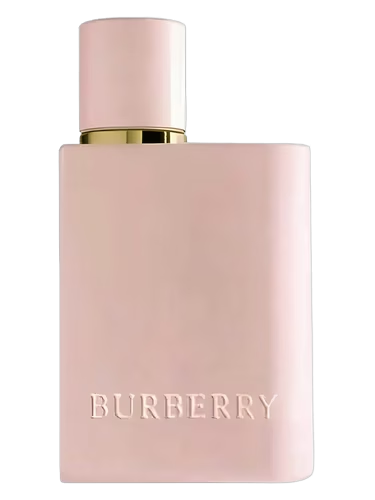
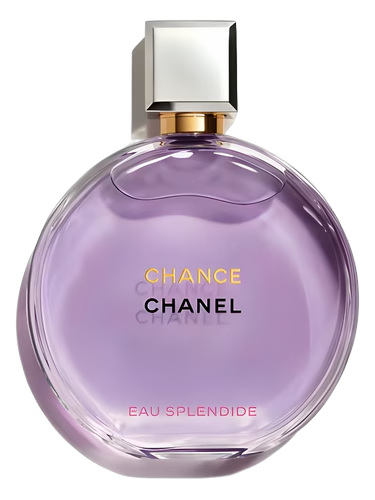
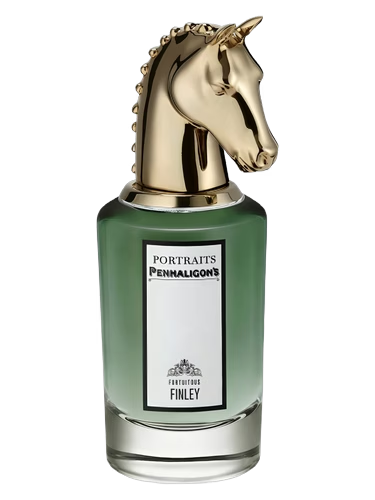
What is Yumberry?
Yumberry, also known as Yangmei or Chinese bayberry, is a fruit native to East Asia that has been cultivated for thousands of years for its culinary and medicinal value before becoming a modern exotic note in perfumery.What does Yumberry smell like?
It offers a vibrant and lively fruity profile that blends bright, tangy tartness with a natural, delicate sweetness, often described as a sophisticated alternative to common red fruits.How is Yumberry essence extracted?
The essence is primarily obtained through cold-pressing or solvent extraction of the fruit, with modern techniques including ultrasonic-assisted and supercritical CO2 extraction to preserve delicate aromatic molecules.What are some top perfumes featuring Yumberry?
Notable fragrances include Victoria's Secret Hibiscus & Yumberry, Arcana Wildcraft Artic Bear, Lalaloopsy Dot Starlight, and Ossa Gourmand Yummm Berry.When is Yumberry in season?
Yumberry has a very brief seasonality, typically reaching its peak harvest over just a few weeks in early summer, specifically around June.