Fragrance Notes Are Layers Of Scent That Are Layered To Form The Final Fragrance. Fragrance Notes Are Categorised Into Three Main Elements Based On How Long They Take To Evaporate, And How Long They Typically Last Following Application: Top Notes, Heart Notes And Base Notes.
Yellow Fruits
Yellow Fruits in perfumery offer a bright, often sweet and juicy profile, characterized by uplifting, sunny, and sometimes slightly tangy or tart nuances. They include notes like ripe banana, mango, and plum, but most frequently lean towards vibrant citruses (lemon, grapefruit, mandarin) for a cheerful, sparkling, and refreshing opening.

Origin & Extraction Of Yellow Fruits
The history of 'Yellow Fruits' in perfumery is largely tied to the evolution of the citrus family, which includes foundational yellow notes like Lemon, Citron, and Grapefruit. These notes were indispensable to the traditional Eau de Cologne structure dating back to the 17th and 18th centuries, providing the essential sharp, zesty, and highly volatile opening that defined freshness and cleanliness. These classic yellow citruses were valued for their invigorating lift, anchoring the fresh fragrance category for centuries.
The inclusion of other yellow fruits, such as Mango and Banana, is a more contemporary development, gaining traction in the late 20th and 21st centuries alongside the rise of fruity-gourmand and tropical fragrance trends. As perfumers sought more photorealistic, sweet, and juicy profiles, these non-citrus yellow fruit notes offered complexity and warmth. While classic yellow citruses maintain their importance as sophisticated top notes, the modern 'Yellow Fruits' accord can now encompass a wider, sunnier spectrum, blending sparkling zest with sweet, exotic nuances to create vibrant, uplifting compositions.
Historically, the extraction of aromatic compounds and pigments from yellow fruits like yellow passion fruit, gardenia, and citrus varieties involved traditional maceration and simple mechanical expression. Maceration often required soaking the fruit or its peel in solvents like water or alcohol for extended periods, such as 24 hours, to leach out bioactive components. For citrus-based yellow fruits, manual techniques like the "sponge method" or "ecuelle a piquer" were standard, where the oil-rich rinds were pressed against sponges or rolled over spiked bowls to rupture oil glands and release their essence without heat.
Modern extraction has evolved toward high-efficiency "green" technologies that prioritize purity and environmental sustainability. Advanced methods now include ultrasound-assisted extraction (UAE) and microwave-assisted extraction (MAE), which use sound waves or electromagnetic radiation to disrupt plant cells rapidly, significantly reducing extraction times from hours to minutes. Supercritical CO2 extraction is also widely utilized for high-value yellow fruit notes, as it operates at low temperatures to preserve delicate aromatic molecules while leaving no toxic solvent residue. Additionally, homogenate extraction technology has emerged, employing high-speed mechanical shearing and fluid cutting to smash fruit material in a solvent, resulting in higher color values and pigment yields compared to traditional heat-based methods.
The ‘Yellow Fruits’ note, largely rooted in the classic citrus family, defines the invigorating opening of countless fragrances. Foundational yellow citruses—like Lemon, Citron, and Grapefruit—are essential building blocks for the traditional Eau de Cologne structure, lending a crisp, zesty, and sparkling freshness. This reliance on bright, volatile yellow notes secures their place in history as key components of classic compositions.
- Manga Rosa e Água de Coco (Natura, 2020)
- Rendez-vous à Milan (Montale, 2022)
- Passiflora (Keiko Mecheri, 2003)
As perfumery evolved toward more exotic and gourmand profiles, the inclusion of non-citrus yellow fruits, such as mango and banana, introduced a sunnier, sweeter, and more complex warmth. These modern tropical notes offer photorealistic, juicy facets that are distinct from the sharp zest of traditional citrus. These fragrances leverage the soft, sweet characteristics of fruits like mango and banana to create vibrant, uplifting accords, often leading to fruity-gourmand or tropical scents.
- Muse de Rochas (Rochas)
- Sira Des Indes (Jean Patou)
- Casablanca (BROWN GIRL Jane)
In contemporary perfumery, the "Yellow Fruits" category is broad, blending both the historical citrus pillar and modern exotic fruits. This allows for versatile compositions, ranging from sheer, airy freshness to rich, juicy gourmands. Whether providing the bright, sharp lift in a classic cologne or the creamy, tropical sweetness in a modern scent, these notes are crucial for creating joyful and luminous fragrance openings, exemplified by diverse compositions found in niche and mainstream lines.
Sustainability Of Yellow Fruits
Sustainability of Yellow Fruits
- Utilizing upcycled ingredients by repurposing fruit peels, such as those from lemons and oranges, that are discarded by the food and beverage industry after juice extraction
- Promoting a circular economy through the use of side-streams from large-scale agriculture to create vibrant, fresh aromatic notes from materials that would otherwise be sent to landfills
- Adoption of organic farming practices in key growing regions to eliminate the use of synthetic pesticides and fertilizers, thereby protecting soil health and local biodiversity
- Implementing water conservation strategies and precision irrigation in citrus groves to safeguard local resources and maintain ecological balance
- Supporting local farming communities and fair trade initiatives to ensure socio-economic stability and preserve traditional agricultural heritage in regions like the Amazon and Mediterranean
- Reducing environmental impact by exploring sustainable synthetic alternatives that mimic natural fruit scents without the land-use requirements of intensive harvesting
Trivia
In perfumery, the "yellow fruits" note of apricot is often recreated using osmanthus, a small flower that naturally possesses a distinct olfactory profile of velvety fruit skin and leathery undertones.
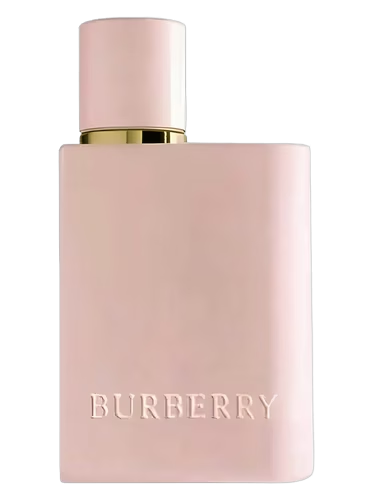
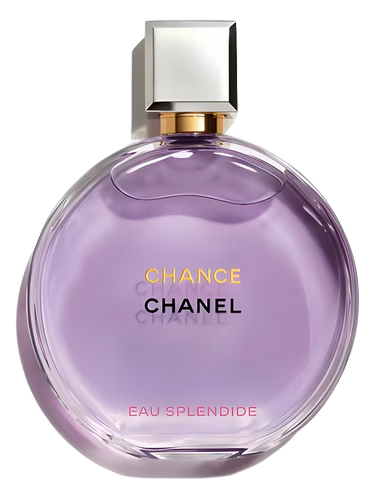
Most Popular Scents Using Yellow Fruits

What are Yellow Fruits in perfumery?
Yellow Fruits refer to a category of fragrance notes offering bright, sweet, and juicy profiles, traditionally rooted in citrus but expanding to include tropical fruits like mango and banana.What do Yellow Fruits smell like?
They typically possess a cheerful, sunny, and uplifting aroma, ranging from sharp, zesty citrus to creamy, exotic, and honey-like sweetness.How are Yellow Fruit notes extracted?
While citrus varieties are often cold-pressed, many modern yellow fruit notes are created synthetically or extracted using advanced green technologies like supercritical CO2 and ultrasound-assisted extraction.What are some top perfumes featuring Yellow Fruit notes?
Notable fragrances include Guerlain Nahéma, Lancôme Trésor, Montale Rendez-vous à Milan, and Versace Yellow Diamond.What is the seasonality of Yellow Fruits?
Seasonality varies by fruit type; stone fruits and mangoes peak in summer, while many citrus varieties like navel oranges and Meyer lemons are in season during winter and spring.