Fragrance Notes Are Layers Of Scent That Are Layered To Form The Final Fragrance. Fragrance Notes Are Categorised Into Three Main Elements Based On How Long They Take To Evaporate, And How Long They Typically Last Following Application: Top Notes, Heart Notes And Base Notes.
Wintermelon
Wintermelon offers a uniquely blended profile, combining the fresh, subtle sweetness of melon and crisp green leaves with complex floral and earthy nuances. It presents a gentle, slightly aquatic fruitiness underpinned by powdery orris, violet notes, and a creamy, warm base of sandalwood and a hint of cacao.

Origin & Extraction Of Wintermelon
Wintermelon, also known as ash gourd or wax gourd, has a long history in Asian culinary and medicinal traditions, but its application in fine perfumery is a very modern development. The traditional use of fruity notes in Western fragrance historically focused on easily extracted oils like citrus or common fruits like apple. Wintermelon, with its subtle, watery, and slightly green-vegetal sweetness, was challenging to capture effectively and lacked the historical prominence of classic materials.
The note gained relevance in contemporary perfumery—particularly in the 21st century—as houses began exploring photorealistic and subtle aquatic-green aromas. Its profile, which combines fresh melon with gentle floral and earthy facets, makes it ideal for transparent, airy, and sophisticated compositions that aim for a natural, cooling freshness distinct from sharp citrus or overly sweet tropical fruits. Wintermelon serves to add a unique, gentle hydration and texture to modern fresh and abstract floral scents.
Extraction Methods of Wintermelon
Historically, the extraction of valuable compounds and oils from wintermelon (Benincasa hispida), particularly its seeds, has relied on traditional methods such as Soxhlet extraction (SE). This conventional technique involves the use of large amounts of organic solvents like hexane or ethanol and high temperatures over extended periods to leach out the lipid content from the dried, ground seeds.
Modern advancements have introduced more efficient and environmentally friendly techniques to improve both yield and the quality of the aromatic and nutritional profile. Ultrasound-assisted extraction (UAE) is now frequently employed, utilizing high-frequency sound waves to create cavitation bubbles that disrupt cell walls, thereby enhancing mass transfer at lower temperatures. The latest gold standard for high-purity extraction is Supercritical Carbon Dioxide (SC-CO2) extraction. This method uses CO2 in a supercritical state as a non-toxic solvent, often modified with a small amount of ethanol as a co-solvent. This process allows for the capture of delicate volatile compounds and fatty acids without thermal degradation, resulting in a cleaner extract that is considered generally recognized as safe (GRAS) for use in perfumery and food products.
The Wintermelon note, due to its subtle, watery, and slightly green-vegetal sweetness, is a contemporary ingredient that has gained traction in modern perfumery. Unlike historically dominant citruses or florals, Wintermelon serves to add a unique, transparent, and cooling freshness to compositions. It appeals to niche houses and perfumers exploring photorealistic and sophisticated aquatic-green aromas, moving beyond overly sweet or sharp traditional fresh notes to achieve a gentle hydration and unique texture.
- * * *
One notable example that showcases the delicate complexity of this ingredient is **Winter Melon** by Meleg Perfumes. Launched in 2021, this fragrance demonstrates the note’s potential as a central feature in a Floral Fruity composition. The use of Wintermelon here is intentional, providing a subtle, airy opening that is neither overpowering nor conventionally tropical, positioning the fragrance as a refined, contemporary take on fresh scents.
- * * *
In **Winter Melon**, the top notes highlight the Wintermelon accord alongside Green Leaves, creating an immediate crisp and fresh impression. This gentle fruitiness then transitions into a complex floral heart featuring Orris Root, Violet Leaves, and Violet, giving the scent a delicate, powdery, and slightly earthy dimension. Finally, the fragrance settles into a warm, creamy base defined by Cacao and Sandalwood, grounding the airy fruit note with rich, subtle warmth.
Sustainability Of Wintermelon
Sustainability of Wintermelon
- Utilizing agricultural by-products by upcycling unharvested or "pre-waste" fruits—those abandoned due to aesthetic imperfections or overproduction—into high-value dietary fiber and natural extracts
- Promoting 100% vegan and cruelty-free formulation standards in personal care products to appeal to eco-conscious consumers and support ethical manufacturing
- Reducing the environmental footprint of cosmetic production through the use of natural, bio-based ingredients like winter melon extract and lemongrass essential oil as alternatives to synthetic chemicals like triclosan
- Supporting circular economy principles by processing the entire fruit into various streams, including juices, syrups, and extract powders, to minimize industrial food waste
- Advocating for "green" brand positioning through campaigns that combine environmental protection with social messages, fostering sustainable consumer habits and biodiversity awareness
Trivia
In perfumery, the winter melon note is a master of disguise, reconstructed from green and aldehydic molecules to capture a fresh, cucumber-like crispness entirely stripped of its natural sweetness.
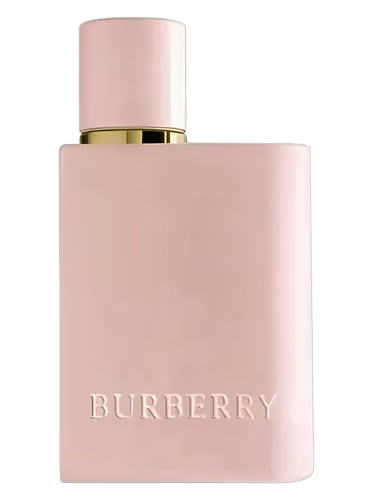
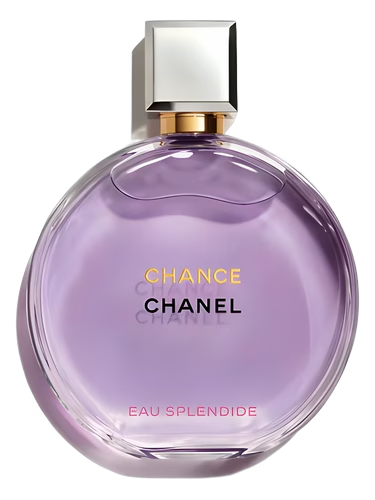
Most Popular Scents Using Wintermelon

What is Wintermelon?
Wintermelon, also known as ash gourd or wax gourd, is a fruit native to South and Southeast Asia that is traditionally used in Asian culinary and medicinal practices but has become a modern, sophisticated note in contemporary perfumery.What does Wintermelon smell like?
It offers a fresh, subtle sweetness and crisp green facets with cooling aquatic nuances, providing a transparent and airy profile that is often compared to the scent of cucumber or watermelon rind.How is the Wintermelon note used in perfumery?
In fine fragrance, it is often a reconstructed note using green and aldehydic molecules to capture a photorealistic, watery freshness that adds unique hydration and texture to modern floral and fresh compositions.What are some top perfumes featuring Wintermelon?
Notable fragrances including this note are Meleg Perfumes Winter Melon, Damask Haus Wintermelon Tea, Ralph Lauren Polo Blue, Jo Malone London Earl Grey & Cucumber, and Marc Jacobs Cucumber.When is Wintermelon in season?
The crop flourishes during the summer and is primarily harvested in late summer or autumn; its name comes from its thick waxy coating that allows the mature gourd to be stored and consumed throughout the winter.