Fragrance Notes Are Layers Of Scent That Are Layered To Form The Final Fragrance. Fragrance Notes Are Categorised Into Three Main Elements Based On How Long They Take To Evaporate, And How Long They Typically Last Following Application: Top Notes, Heart Notes And Base Notes.
White Grape
White Grape offers a luminous, refreshing, and highly delicate scent profile. It typically presents a balance of sweet, juicy fruitiness with a subtle, bright tanginess. Unlike darker grape notes, it is light, crisp, and clean, often containing ethereal, sometimes floral, nuances ideal for creating invigorating and fresh top-note accords in modern, airy compositions.

Origin & Extraction Of White Grape
The use of grape notes in perfumery, particularly the delicate White Grape aroma, is a relatively modern phenomenon. Historically, perfumery focused on traditional floral, resinous, and, since the 18th century, sharp citrus notes. Grapes, due to their watery and complex natural composition, were difficult to capture accurately and stably in a fragrance formula until the advent of advanced synthetic aroma molecules in the late 20th and early 21st centuries. These modern techniques allowed perfumers to isolate the luminous, slightly sweet, and tangy facets of white grapes, moving beyond the heavier, fermentation-like qualities sometimes associated with darker grape accords.
White Grape has gained relevance in contemporary perfumery for its ability to lend an invigorating, clean, and unique fruity-floral lift, often used in niche and high-end designer fragrances that aim for transparent, fresh compositions. It offers a sophisticated, subtle sweetness that avoids the heaviness of richer fruits. It frequently appears in fresh, airy compositions, especially those inspired by wine country or crisp summer themes, serving as an ethereal top or heart note to impart a sense of delicate juiciness and refined luminosity.
Extraction Methods of White Grape
Historically, the aromatic essence of white grapes was captured through simple maceration or the creation of tinctures by soaking dried fruit slices in alcohol, which produced liqueur-like notes with green and floral nuances. In traditional winemaking, the extraction of aroma components often occurred during pre-fermentative skin contact (maceration), where controlled temperatures and the fruit's natural enzymes helped release volatile compounds from the grape skins into the juice.
Modern commercial extraction utilizes advanced biochemical and chemical techniques to isolate fragrance substances from white grape pomace. This involves enzymatic hydrolysis using specialized enzyme formulations, such as endo-polygalacturonases, to degrade cell walls and release bound aroma precursors. Latest methods also employ solvent extraction using a combination of pentane and ethyl acetate, followed by vacuum distillation and nitrogen blowing to produce high-concentration extracts. Additionally, innovative green technologies like supercritical fluid extraction (SFE) and microwave-assisted extraction are increasingly used to improve efficiency while preserving the delicate, heat-sensitive aromatic profile of the grapes.
The White Grape note is highly valued in modern niche perfumery for its luminous, airy sweetness and delicate freshness, providing a sophisticated alternative to heavier fruit notes. Its transparent quality makes it excellent for compositions aiming to evoke the pristine atmosphere of vineyards or crisp, high-end white wines. While often subtle, it contributes a unique, slightly tangy juiciness that adds dimension to clean, effervescent fragrances, distinguishing them from traditional citrus-heavy scents.
- One notable example showcasing the refined use of white grape is **Jo Malone London's English Pear & Freesia**, which often features subtle grape-like facets to enhance the sense of juicy freshness.
- The note also appears in several limited edition summer fragrances, such as **Acqua di Parma's Fico di Amalfi**, where its ethereal lightness supports the Mediterranean citrus and fig accords.
In contemporary designer perfumery, White Grape is sometimes employed to lend a youthful, sparkling twist to fruity-floral compositions without resorting to overly sweet or synthetic-smelling accords. Its delicate nature requires careful balancing, often paired with green notes, light florals like jasmine or lily-of-the-valley, or sheer musks to maintain its signature transparency and brightness. This positioning ensures the fragrance remains uplifting and clean, often defining the immediate, invigorating top phase of the scent.
The evolution of White Grape into a viable, stable perfume note reflects the industry's mastery of synthetic aroma technology, enabling perfumers to capture the volatile, juicy essence of the fruit accurately. This technical capability has allowed houses specializing in fresh and gourmand profiles, like **Diptyque** or select **Maison Francis Kurkdjian** releases, to experiment with subtle, photorealistic fruit textures. The resulting scents use White Grape to impart a sense of delicate elegance and refined naturalism, appealing to consumers seeking gentle sophistication rather than bold intensity.
Sustainability Of White Grape
Sustainability of White Grape
- Adopting precision irrigation and soil moisture monitoring to optimize water usage and support vine health
- Implementing integrated pest management (IPM) and biological controls, such as using birds of prey or natural predators, to reduce reliance on synthetic pesticides
- Nurturing soil health through the use of cover crops and composting, which prevents erosion and enhances biodiversity within the vineyard
- Reducing carbon footprints by utilizing energy-efficient winery equipment, solar power, and gravity-flow production systems
- Promoting sustainable packaging and distribution through the use of lightweight glass bottles and recyclable or compostable shipping materials
- Committing to social equity and economic viability by ensuring fair labor practices and supporting local community stewardship
- Seeking third-party certifications like CCSW, SIP Certified, or Regenerative Organic to ensure rigorous environmental and social standards
Trivia
The "grape" scent in many perfumes often doesn't come from grapes at all, but from a molecule called methyl anthranilate found in white flowers like jasmine and tuberose, which is the exact same chemical used to flavor grape soda and purple candy.
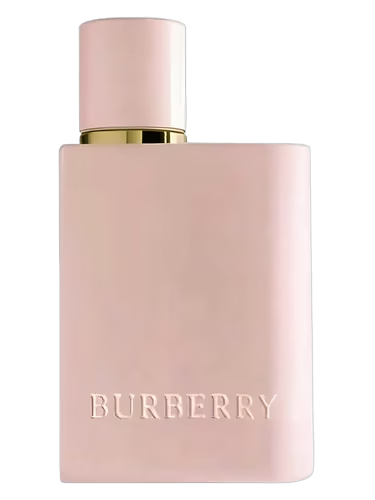
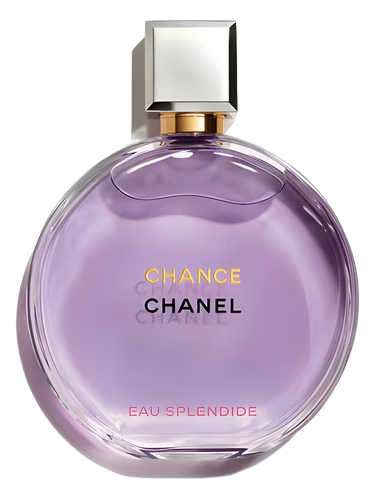
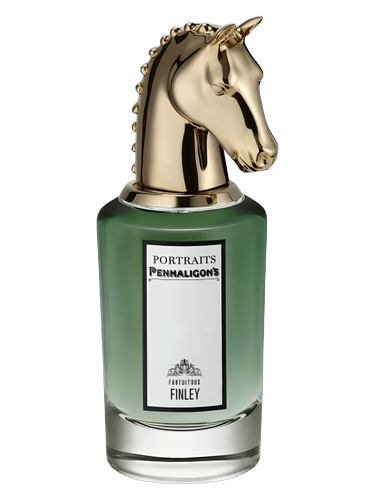
Most Popular Scents Using White Grape
What is White Grape?
White Grape is a modern perfume note derived from the Near East and Western Asia, valued for its ability to provide a luminous, airy, and crisp fruity-floral lift to contemporary fragrances.What does White Grape smell like?
It offers a delicate scent profile featuring sweet, juicy fruitiness balanced with a bright tanginess and ethereal, clean, and sometimes floral nuances.How is White Grape essence extracted?
While historically captured through maceration or tinctures, modern extraction uses advanced biochemical techniques, enzymatic hydrolysis, and green technologies like supercritical fluid extraction to isolate fragrance compounds from grape pomace.What are some top perfumes featuring White Grape?
Notable fragrances include Di Palomo White Grape, Jo Malone London English Pear & Freesia, Acqua di Parma Fico di Amalfi, and L'Occitane en Provence Muscat Blanc Fleurs de Cerisier.When is White Grape in season?
The annual growth cycle begins in early spring, with the peak harvest typically occurring from August through October in the Northern Hemisphere to preserve the fruit's characteristic crispness and acidity.