Fragrance Notes Are Layers Of Scent That Are Layered To Form The Final Fragrance. Fragrance Notes Are Categorised Into Three Main Elements Based On How Long They Take To Evaporate, And How Long They Typically Last Following Application: Top Notes, Heart Notes And Base Notes.
Wattleseed
Wattleseed offers a unique, complex gourmand profile characterized by a distinctive earthy, coffee-like nuttiness. It features warm, toasted, and savory facets, providing depth and texture to a fragrance's foundation. It can also exhibit subtle woody, milky, and sweet floral nuances, often used to impart a creamy, dry warmth.

Origin & Extraction Of Wattleseed
Wattleseed, derived from the seeds of the Australian Acacia species, has a rich and ancient history primarily centered around Indigenous Australian communities, who have utilized it as a sustainable food source (ground into flour for damper) and as a bush medicine for centuries. Historically, its use was cultural and culinary, rather than a component of global fine perfumery. The raw material itself offers a complex profile characterized by nutty, coffee-like, and earthy notes, which are the qualities later recognized as valuable in fragrance composition.
The relevance of Wattleseed to modern perfumery is a relatively recent development, coinciding with a growing global interest in indigenous ingredients and unique Australian botanicals. It is considered a specialty note, often utilized in contemporary and niche fragrances, particularly those aiming to evoke the Australian landscape or provide a unique gourmand, earthy texture. Its warm, toasted, and nutty facets are frequently employed in fragrance bases to impart a creamy, dry warmth and depth, providing a sophisticated, grounding foundation.
Historically, Indigenous Australians extracted the value of wattleseeds through a labor-intensive manual process that has remained largely unchanged for thousands of years. The seeds are harvested by laying tarps beneath Acacia trees and beating the branches or shaking the trees to release the pods. Traditionally, these seeds were then parched or roasted over open coals and milled between flat grinding stones to produce a high-protein flour used for damper and seedcakes. For medicinal or topical use, simple infusions were created by steeping the seeds or flowers in water to capture their therapeutic properties.
In modern commercial production and perfumery, extraction methods have evolved to capture more specific aromatic and bioactive profiles. Since wattleseed contains no volatile oil that can be obtained through traditional steam distillation, its fragrance is primarily developed through thermal processing. Modern techniques involve roasting the seeds at precise temperatures, typically around 200°C, to trigger Maillard reactions that generate its signature nutty, roasted coffee, and cacao-like aroma. For use in fragrances and cosmetics, advanced methods such as supercritical CO2 extraction are employed to create concentrated extracts, while innovative cellular extraction (hydroglyceric) techniques are used to capture water-soluble phyto-compounds for skincare applications.
Wattleseed is a distinctly modern and niche ingredient, primarily celebrated for its unique earthy, nutty, and coffee-like gourmand profile. Unlike classic notes like Bergamot or Neroli, it lacks a centuries-old history in European fine perfumery. Its rise is tied to contemporary perfumers exploring Australian botanicals, seeking unique textures and stories to convey the warmth and depth of the Australian landscape.
- The most prominent examples of Wattleseed’s use are found within Australian-based niche houses. Melis, an Australian perfumery, notably features Wattleseed as a "hero ingredient" in several creations. These fragrances use the ingredient to provide a rich, grounding base with its toasted, savory, and nutty characteristics.
The note is central to the NATIVUS collection by Melis. Specifically, fragrances like NATIVUS Terra and NATIVUS Spiritus highlight Wattleseed's complex aroma. In these compositions, the note acts to bridge the brighter Australian natives with a creamy, dry warmth, offering a sophisticated gourmand depth that stands apart from traditional vanilla or tonka bean bases.
- Wattleseed's subtle woody, milky, and sweet floral nuances allow it to be versatile, moving beyond pure gourmand territory. It is often paired with other native Australian ingredients, such as Quandong, to enhance the fragrance's sense of place and unique olfactive signature in the global niche market.
Because of its complexity and unique aromatic profile, Wattleseed is generally featured in artisanal fragrances seeking authenticity and depth. While it has not yet reached the level of ubiquity of notes like sandalwood or vetiver, its distinctive toasted, nutty quality positions it as a sophisticated alternative for those looking for a non-traditional, warm, and earthy gourmand foundation in fragrances.
- Look for Wattleseed in newer, experimental lines that prioritize natural, earthy, or coffee-adjacent notes, rather than in mass-market designer releases, as it remains a specialty ingredient prized for its unique, localized identity.
Sustainability Of Wattleseed
Sustainability of Wattleseed
- Promoting a conservation economy by integrating sustainable wild-harvesting practices that protect nature and biodiversity while supporting local First Nations communities
- Supporting socio-economic resilience through the establishment of Indigenous-led social enterprises and cooperatives that ensure fair remuneration and meaningful economic opportunities for traditional landowners
- Utilizing climate-resilient and drought-tolerant Acacia species that are well-adapted to arid environments and require minimal management compared to traditional crops
- Improving soil health and environmental rehabilitation by leveraging the nitrogen-fixing properties of wattle trees to enhance soil fertility and combat land degradation and salinity
- Advancing cultural sustainability by nurturing traditional knowledge and supporting Indigenous people in staying on and caring for Country through the harvest of ancient native foods
Trivia
Acacia trees, the source of wattleseed, serve as essential host plants for sandalwood trees, creating a unique botanical partnership where the two popular fragrance notes physically grow together.
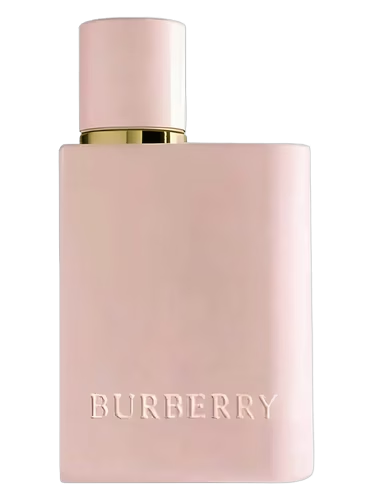
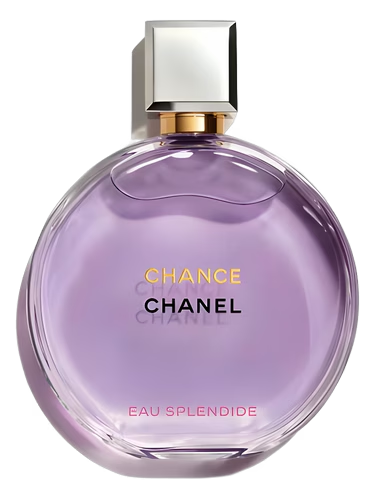
Most Popular Scents Using Wattleseed

What is Wattleseed?
Wattleseed is a specialty fragrance note derived from the seeds of Australian Acacia species, historically used by Indigenous Australians as a staple food and medicine.What does Wattleseed smell like?
It offers a complex gourmand profile with an earthy, coffee-like nuttiness, featuring warm, toasted, and savory facets with subtle woody and creamy nuances.How is Wattleseed essence extracted?
Because the seeds contain no volatile oil for steam distillation, the fragrance is developed through thermal processing (roasting) and extracted using advanced methods like supercritical CO2 or cellular extraction.What are some top perfumes featuring Wattleseed?
Notable fragrances including Wattleseed are Melis Nativus Spiritus, Melis Nativus Terra, Goldfield & Banks Velvet Splendour, and Dusk Aura Australis.When is Wattleseed in season?
While different Acacia species flower throughout the year, primary seed collection typically occurs from late spring through summer, specifically between September and February.