Fragrance Notes Are Layers Of Scent That Are Layered To Form The Final Fragrance. Fragrance Notes Are Categorised Into Three Main Elements Based On How Long They Take To Evaporate, And How Long They Typically Last Following Application: Top Notes, Heart Notes And Base Notes.
Watermelon
Watermelon offers a highly aqueous, juicy, and intensely refreshing note, capturing the sweet, dewy essence of the fruit and rind. It is a quintessential summer fragrance ingredient, imparting a transparent, cool, and uplifting sensation. Used primarily as a top note, it provides immediate vitality and a clean, fruity sweetness to compositions.

Origin & Extraction Of Watermelon
Watermelon as a specific note in perfumery is primarily a product of modern fragrance technology. Unlike ancient or classic notes derived from resins, flowers, or traditional citrus fruits, the highly aqueous, delicate scent of watermelon was challenging to extract naturally and often lacked stability. Its widespread use gained momentum in the late 20th and early 21st centuries, coinciding with the rise of fruity-aquatic and sheer fragrances. Perfumers began utilizing synthetic molecules (such as Calone, known for its marine and dewy effects) and advanced headspace technology to capture the true, intensely refreshing, juicy essence of the fruit, moving beyond simple fruit extracts.
The note's relevance is strongly tied to the popularization of light, transparent, and summery compositions, particularly in the 1990s and 2000s. Watermelon serves a unique function as a volatile, cheerful top note, offering an immediate sense of coolness, vitality, and clean sweetness without being heavy or cloying. It is frequently employed in 'summer flankers' and refreshing body sprays, providing an unmistakable, uplifting, and slightly nostalgic fruitiness that continues to define the modern fresh-fruity category.
Extraction Methods of Watermelon
Unlike many botanical ingredients, watermelon lacks the essential oil components necessary for traditional steam distillation or cold expression of its flesh or juice. Historically, capturing its scent was nearly impossible through natural means, though traditional techniques involved creating simple tinctures by macerating the fruit in alcohol. These early methods often resulted in weak, fleeting aromas that failed to capture the fruit's true juicy character.
In modern perfumery, the watermelon note is primarily achieved through synthesis. Perfumers use aroma chemicals such as Calone (methylbenzodioxepinone), discovered in the 1960s, to replicate the watery, ozonic, and sweet profile of the fruit. Advanced laboratory techniques allow for the combination of various esters, alcohols, and terpenes, like ethyl butyrate and cis-3-nonenal, to construct a realistic accord. While innovative methods like supercritical carbon dioxide extraction and enzymolysis are now used to extract nutrient-rich oil from watermelon seeds for cosmetic use, the characteristic "watermelon" scent remains a triumph of molecular synthesis.
The Watermelon note, prized for its intensely juicy, aqueous, and refreshing character, is a hallmark of modern fruity-aquatic perfumery, offering an unmistakable scent of summer vitality. One of the most commercially successful fragrances to champion this note is Dolce&Gabbana's b>Anthology L'Imperatrice 3 b>, where Watermelon provides a vibrant, sparkling, and sweet opening, blending seamlessly with kiwi and rhubarb to create a lush, yet transparent, composition. Its use here defined a generation of uplifting, clean, and feminine summer scents, establishing the note's widespread appeal for its immediate cheerfulness and thirst-quenching freshness.
- Watermelon is also frequently utilized in niche and contemporary designer collections that seek to capture a specific mood or locale. Fragrances like b>TOCCA's Simone b> showcase the note's ability to blend with tropical and white floral elements, offering a sun-drenched, sophisticated interpretation of the fruit rather than a simple candy-sweet accord. The freshness derived from Watermelon is critical for providing lift and a dewy texture, often helping to lighten denser floral or musk bases.
Beyond mainstream appeal, Watermelon continues to appear in specialized releases and flankers, demonstrating its versatility across different fragrance houses and concepts. For instance, the note is featured in the cheerful b>Viva La Juicy Pink Couture b> by Juicy Couture, where it contributes to a youthful, intensely fruity opening. More recently, houses like 4711 have explored it in their contemporary lines, such as b>4711 Acqua Colonia Bamboo & Watermelon b>, proving that this highly aqueous scent remains a staple for invigorating, clean, and gender-neutral compositions designed for immediate refreshment and vitality.
Sustainability Of Watermelon
Sustainability of Watermelon
- Promoting zero-waste initiatives through "Use the Whole Watermelon" campaigns that educate consumers on the edibility of the flesh, juice, and rind to minimize food waste
- Advancing a circular economy by upcycling agricultural waste into high-value products, such as developing biodegradable bioplastics and resin polymers from watermelon rinds
- Implementing precision irrigation and soil management techniques to address the crop's high water footprint and reduce the environmental impact of intensive farming
- Researching and developing organic cultivation strategies, including the use of anaerobic soil disinfestation (ASD) as a sustainable alternative to chemical fumigation
- Supporting local food security and socio-economic resilience by establishing digital platforms that connect local farmers directly to commercial supply chains and government agencies
- Reducing the carbon footprint of transport by prioritizing local sourcing and domestic production to minimize food miles and associated emissions
Trivia
In some parts of the American South, a watermelon is considered a symbol of fertility, leading to the playful myth that a pregnant woman has "swallowed a watermelon seed."
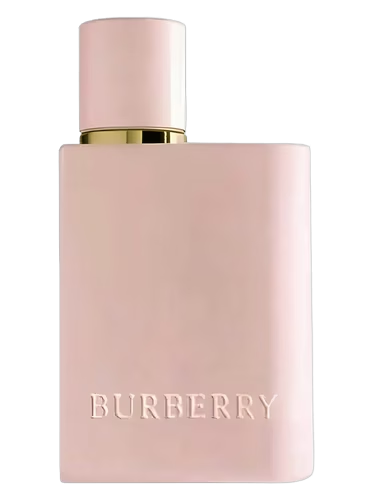
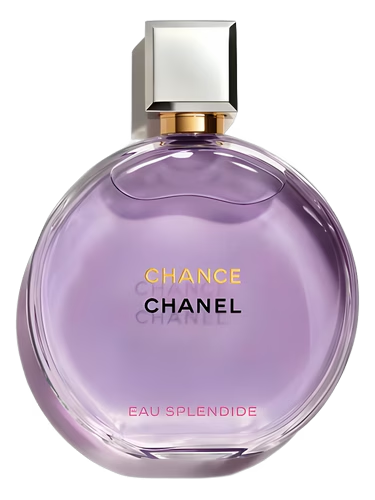
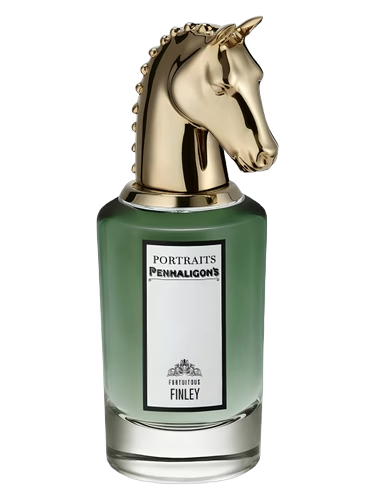
Most Popular Scents Using Watermelon
What is the Watermelon fragrance note?
Watermelon is an aqueous, fruity note used in modern perfumery to provide a refreshing, summery character, with the fruit itself originally native to the Kalahari Desert and northeastern Africa.What does Watermelon smell like in perfumes?
It offers a highly aqueous, juicy, and intensely refreshing aroma that captures the sweet, dewy essence of both the fruit and its rind, often providing a clean, transparent sweetness.How is Watermelon scent extracted for perfumes?
Because the fruit lacks the essential oils required for traditional extraction, the note is achieved through molecular synthesis using aroma chemicals like Calone to replicate its watery and ozonic profile.What are some top perfumes featuring Watermelon?
Notable fragrances featuring this note include Dolce & Gabbana L'Imperatrice 3, Creed Millesime Imperial, Giorgio Armani Acqua di Gio, and Shay & Blue Watermelons.When is Watermelon in season?
Watermelon is a quintessential summer fruit with a peak natural growth and harvest season typically running from May through September, reaching its height of flavor in July and August.