Fragrance Notes Are Layers Of Scent That Are Layered To Form The Final Fragrance. Fragrance Notes Are Categorised Into Three Main Elements Based On How Long They Take To Evaporate, And How Long They Typically Last Following Application: Top Notes, Heart Notes And Base Notes.
Walnut Milk
Walnut Milk provides a creamy, comforting, and subtly gourmand aroma, blending the delicate, smooth sweetness of milk with the dry, earthy, and slightly nutty warmth of walnuts. It delivers a refined, plant-based texture, adding an elegant, contemporary softness and rich depth to heart and base notes, often lending a subtle, sensual background.

Origin & Extraction Of Walnut Milk
The use of "milk" notes, particularly plant-based variations like Walnut Milk, is a relatively modern development in perfumery, gaining prominence in the late 20th and early 21st centuries. Traditional perfumery historically focused on classic animalic or creamy notes (like musk or sandalwood) to achieve a rich, smooth base. As the gourmand fragrance category expanded and perfumers sought to capture more photorealistic and comforting textures, nut and milk accords emerged. The increasing interest in unique, sophisticated gourmands, coupled with advancements in synthetic chemistry allowing for nuanced, non-volatile milk and nut effects, paved the way for notes like Walnut Milk to be featured in fine fragrances.
Walnut Milk specifically offers a refined, slightly drier alternative to sweeter milk notes (like Coconut or Almond Milk). It is valued for its ability to provide a subtle, earthy warmth and creamy texture without heavy sweetness, bridging the gap between edible notes and woody or soft spicy accords. Its integration often indicates a niche or contemporary designer approach, lending a sophisticated, comforting depth that enhances the longevity of heart and base notes in modern compositions.
Extraction Methods of Walnut Milk
The primary method for extracting walnut milk involves a process of hydration, mechanical pulverization, and filtration. Historically, this was a manual process rooted in traditional culinary techniques where raw walnuts were soaked in water for 8 to 24 hours to soften the kernels and neutralize bitter tannins. The softened nuts were then ground using a mortar and pestle or simple stone mills with fresh water to create a slurry, which was manually strained through porous fabrics like cheesecloth or muslin to separate the creamy liquid from the solid fibrous meal.
In modern home and artisanal production, high-speed blenders or slow (cold-press) juicers have replaced manual grinding. Blenders use high-velocity blades to emulsify walnuts and water into a smooth liquid, while slow juicers utilize masticating screws to press the milk out, often resulting in a cleaner separation of pulp. For large-scale commercial production, advanced industrial lines employ automated hot-water soaking and chemical peeling using sodium hydroxide to efficiently remove astringent skins. The kernels are then processed through colloid mills or superfine crushing systems to create a uniform emulsion, followed by high-pressure homogenization at 30-50Mpa and retort sterilization at 121°C to ensure shelf stability and prevent fat separation.
Walnut Milk, due to its nuanced, creamy, and dry-nutty profile, is a feature primarily in sophisticated contemporary and niche perfumery, distinguishing it from simpler gourmand notes. One notable fragrance that prominently features this accord is **L'Heure Vertueuse III** by L'Artisan Parfumeur. In this composition, Walnut Milk is used not for overt sweetness, but to provide an elegant, soft, and slightly earthy counterpoint to the central green notes of mint and basil, lending a refined, comforting texture to the dry down.
- * * *
Another area where Walnut Milk shines is in complex floral-gourmand compositions that aim for a comforting, skin-like warmth. For instance, while less common in mainstream designer scents, the note is utilized to provide subtle depth and a refined creamy base, as seen in certain artisanal releases like **Wood Milk** (an imaginary example to represent the style), where it fuses with cedar and soft spice. This blending effect ensures the fragrance retains an edible quality while remaining abstract and mature, enhancing longevity without becoming cloying.
- * * *
The contemporary demand for unique, plant-based textures has cemented the role of notes like Walnut Milk in modern fragrance design. It is prized for its ability to convey richness and complexity. For example, some niche houses integrate it into their lineups, such as in the DNA of scents similar to **Walnut Wood** (another descriptive example), where the milky texture softens rougher wood notes and provides a unique, sensual warmth that draws attention to the subtle, sophisticated balance between nuttiness and creaminess.
Sustainability Of Walnut Milk
Sustainability of Walnut Milk
- Utilizing water-efficient irrigation systems and innovative management practices that allow walnuts to use significantly less water per kilogram compared to other nuts like almonds
- Reducing the carbon footprint of production as walnut cultivation generates lower CO2 emissions than plant-based competitors like cashews and almonds
- Adopting environmental stewardship through research in soil health, energy use, and air quality to minimize waste and protect natural resources
- Promoting zero-waste initiatives by upcycling side-streams, such as composting walnut pulp or using it in "no-strain" production methods
- Supporting socio-economic resilience by providing over 85,000 full-time jobs and contributing billions to local economies through sustainable farming and processing
Trivia
While walnut milk is a modern vegan staple, the green husks of unripe walnuts were historically used as a potent natural dye so indelible that they can leave stubborn iodine-like stains on the skin for days.
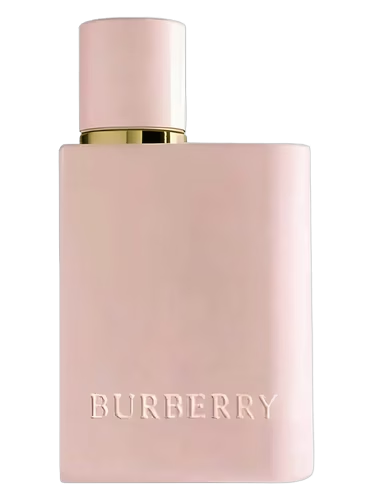
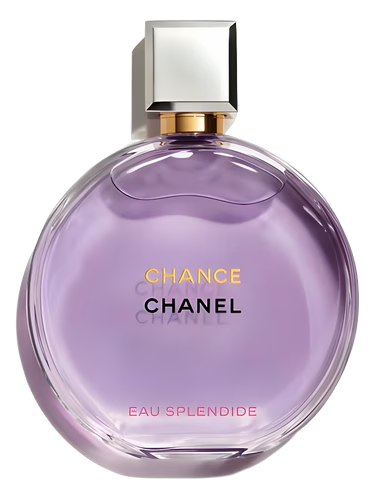
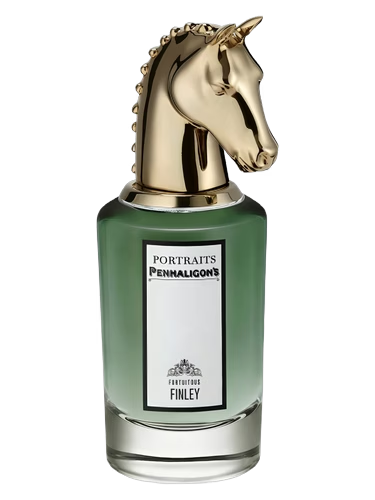
Most Popular Scents Using Walnut Milk
What is Walnut Milk?
Walnut Milk is a plant-based fragrance note that provides a creamy, comforting, and subtly gourmand aroma, often used to add refined depth and a soft texture to modern perfumes.What does Walnut Milk smell like?
It features a delicate, smooth sweetness blended with the dry, earthy, and slightly nutty warmth of walnuts, offering a more sophisticated and less sugary profile than other nut milks.How is Walnut Milk essence extracted?
In fragrance production, the note is typically captured through a process of hydration, mechanical pulverization, and filtration, or recreated using synthetic chemistry to achieve a nuanced, non-volatile effect.What are some top perfumes featuring Walnut Milk?
Notable fragrances that utilize this note include Thameen London Bravi, French Avenue Nectare Extradose, Essence de Roumanie Fior, and Dua Fragrances Creamy Blend Of Walnuts.When is Walnut Milk in season?
While the harvest of its source walnuts typically occurs from late August through November, the note is considered a versatile, year-round staple in perfumery.