Fragrance Notes Are Layers Of Scent That Are Layered To Form The Final Fragrance. Fragrance Notes Are Categorised Into Three Main Elements Based On How Long They Take To Evaporate, And How Long They Typically Last Following Application: Top Notes, Heart Notes And Base Notes.
Tropical Fruits
Tropical Fruits offer a vibrant, juicy, and often creamy aroma, combining sweet succulence with bright, sometimes tangy, facets. Notes include passion fruit, mango, guava, and pineapple, lending compositions an exotic, lush, and uplifting fullness. They introduce a warm, delectable sweetness and vibrant texture.

Origin & Extraction Of Tropical Fruits
Tropical fruit notes, as an identifiable category in perfumery, have a relatively recent history compared to classic scent families like citruses or florals. For centuries, perfumery was dominated by ingredients available in Europe and the Mediterranean. The challenge with natural tropical fruit essences (such as mango, passion fruit, and guava) is their volatility and the difficulty in extracting stable, representative oils. Therefore, the widespread adoption of this note depended heavily on the advancement of synthesis technology in the late 20th century. These new aroma chemicals allowed perfumers to accurately capture the vibrant, juicy, and lush aromas of these exotic fruits, moving beyond simple generic fruity accords.
The prominence of tropical fruit notes surged in the late 1980s and 1990s, accompanying the rise of the "gourmand" and modern aquatic fragrance trends. They were initially used to inject an exotic, youthful, and vibrant texture into compositions, symbolizing vacation, escapism, and hedonism. Today, they are key elements in modern fruity-floral and sunny compositions, valued for their ability to add a delectable sweetness, a creamy succulence, and an immediate, uplifting character. Their complexity now allows them to be seamlessly blended with traditional notes, creating sophisticated, lush, and enduring contemporary fragrances.
Extraction Methods of Tropical Fruits
Historically, the aromatic compounds and essences of tropical fruits were obtained through simple manual techniques such as maceration, where fruit pieces were steeped in water or spirits, and basic manual expression for oily peels. Traditional juice extraction often involved cleaning and crushing fruit before straining through muslin cloth, or using simple fruit presses and steamers to separate the liquid portion from the pulp.
Modern commercial production utilizes high-yield mechanical systems like multi-fruit juice extractors that employ mastication, cutter blades, and nylon brushes to separate juice from fiber efficiently. Advanced concentration methods include plate flash evaporators and climbing film evaporators, which protect heat-sensitive flavors. For high-purity aromatic extracts, industry now favors microwave-assisted extraction (MAE), supercritical fluid extraction (SFE), and ultrasound-assisted extraction (UAE), which reduce solvent use and processing time while preserving delicate bioactive compounds.
Tropical fruit notes are crucial for capturing exotic, vibrant, and vacation-ready aromas, gaining massive popularity with the rise of fruity-floral and aquatic compositions. One of the most iconic fragrances to utilize tropical fruit is Escada's yearly summer limited editions, which often feature lush blends of mango, passion fruit, and pineapple to create an immediate feeling of summer escapism and joy. This showcases how tropical accords are often used to define a composition's theme, prioritizing juicy, uplifting, and effervescent sweetness over traditional floral structures.
Another prominent use of tropical notes is found in the classic Dolce & Gabbana 3 L'Impératrice, which is celebrated for its dominant combination of Kiwi and Rhubarb, but also features a significant watery tropical fruit note (often interpreted as Watermelon or Mango) that lends the fragrance its signature vibrant, juicy, and slightly tangy freshness. This demonstrates the note's ability to provide a luminous and youthful opening, ensuring the scent is instantly recognizable and appealingly light, making it a modern staple in the fruity category.
In more contemporary niche perfumery, tropical fruits are often paired with gourmand or green notes to add depth and sophistication. For instance, Creed Virgin Island Water features a bright, sweet cocktail-like opening that strongly suggests Pineapple and Coconut, although they are blended seamlessly with Lime and White Rum accords. This pairing elevates the tropical fruit note beyond mere sweetness, transforming it into a refined, effervescent, and elegant interpretation of a Caribbean holiday, appealing to a luxury audience.
Sustainability Of Tropical Fruits
Sustainability of Tropical Fruits
- Upcycling side-streams from the food and beverage industry, such as repurposing discarded fruit peels from juice production into essential oils and aromatic compounds
- Promoting a circular economy by transforming agricultural by-products like leaves and pulp into high-value fragrance ingredients to reduce landfill waste
- Implementing sustainable harvesting practices through direct collaborations with local farmers to support local economies and ensure fruits are picked at peak ripeness
- Fostering biodiversity conservation through the systematic cultivation of aromatic plants to protect endangered species from the impacts of over-harvesting in the wild
- Utilizing biotechnology and innovative extraction methods, such as eco-conceived solvents, to develop fragrant ingredients without putting natural ecosystems at risk
Trivia
The durian fruit, known as the "King of Fruits" in Southeast Asia, possesses an aroma so powerful and divisive that it is famously banned from many public transportation systems, hotels, and airplanes throughout the region.
Most Popular Scents Using Tropical Fruits
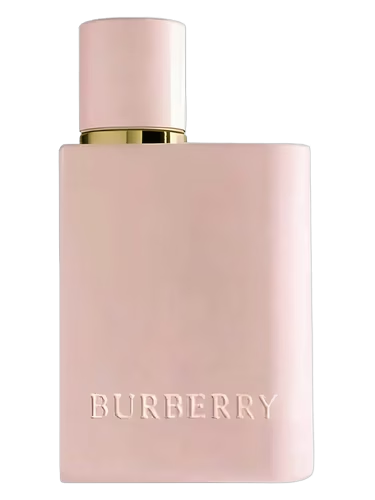
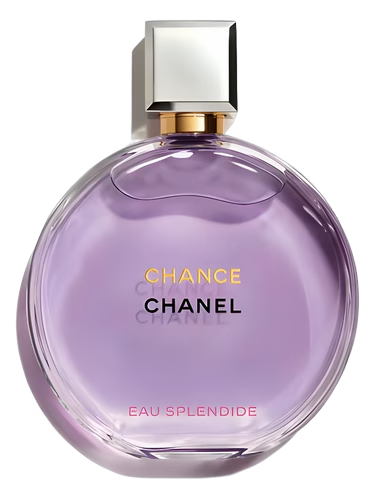
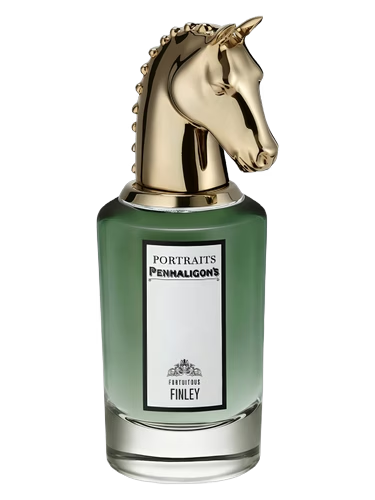
What are Tropical Fruits?
Tropical fruits are a vibrant scent category in perfumery, including notes like mango, pineapple, and guava, which are primarily native to equatorial regions.What do Tropical Fruits smell like?
They offer a vibrant, juicy, and often creamy aroma that combines sweet succulence with bright, tangy facets for an exotic and uplifting profile.How are Tropical Fruit essences extracted?
Modern production utilizes high-yield mechanical systems like multi-fruit juice extractors and advanced methods such as supercritical fluid extraction to preserve delicate aromatic compounds.What are some top perfumes featuring Tropical Fruits?
Popular fragrances include Viktor & Rolf Flowerbomb Tiger Lily, Simone Andreoli Leisure in Paradise, Tom Ford Soleil Blanc, and Vilhelm Parfumerie Mango Skin.When are Tropical Fruits in season?
While many varieties like papayas and coconuts are available year-round in equatorial climates, specific fruits like mangoes and pineapples peak during the summer months.