Fragrance Notes Are Layers Of Scent That Are Layered To Form The Final Fragrance. Fragrance Notes Are Categorised Into Three Main Elements Based On How Long They Take To Evaporate, And How Long They Typically Last Following Application: Top Notes, Heart Notes And Base Notes.
Tomato
Tomato in perfumery is a complex, green, and intensely fresh note. It often captures the scent of the crushed leaf or vine: sharp, vegetative, and stemmy, with tart, slightly metallic, and sometimes fruity (unripe) nuances. It provides an immediate, invigorating, and unique green lift.

Origin & Extraction Of Tomato
The use of the Tomato note, particularly the green, vegetative scent of the crushed leaf or vine, is a relatively modern development in fine perfumery. Unlike foundational notes like Bergamot or Neroli that date back to the 18th-century Eau de Cologne, tomato leaf gained prominence as perfumers began to seek photorealistic, green, and sharp notes. Its appeal lies in its ability to provide an immediate, invigorating, and unique green lift that evokes the natural scent of a summer vegetable garden, distinguishing it from traditional aromatic greens.
The note truly entered the contemporary olfactory palette in the late 20th century. A notable early adoption was in fragrances like *Eau de Campagne* by Sisley, created by Jean-Claude Ellena, where the tomato leaves and basil provided a sharp, crisp opening. Today, the Tomato note is valued for its unique complexity—blending tart, slightly metallic nuances with deep vegetative and stemmy qualities—making it a sophisticated component used in modern, airy, and niche compositions to achieve a distinct, fresh vitality.
Historically, capturing the scent of tomato leaves was a challenge as the plant material is too delicate for traditional steam distillation, which often results in a degraded aroma reminiscent of wet hay. Early attempts at capturing these volatile compounds involved basic infusion or maceration in alcohols and oils. More traditional artisanal techniques also utilized enfleurage, where odorless fats were used to absorb the fragrant oils from the leaves over several days, which were then washed with alcohol to create a primative absolute.
In modern perfumery, tomato leaf essence is primarily obtained as an absolute through solvent extraction. This process involves using food-grade solvents like hexane to penetrate the plant structure and release the aromatic molecules, resulting in a "concrete" that is further refined with ethyl alcohol to produce a highly concentrated, green, and earthy absolute. More recently, advanced techniques such as supercritical CO2 extraction have been employed to capture the most authentic and "true-to-nature" scent profile without the use of high heat or synthetic chemical solvents, preserving the delicate, sharp, and herbaceous top notes of the fresh leaf.
The Tomato note, particularly the photorealistic scent of the crushed green leaf, offers perfumers a unique avenue for creating invigorating, vegetative freshness that moves beyond traditional herbs and citruses. One of the pioneering fragrances to successfully showcase this sharp, green dimension is **Eau de Campagne** by Sisley. Created in 1974, this classic scent utilized the tomato leaf and basil accord to evoke the crisp, natural aroma of the French countryside, setting a benchmark for sophisticated, green compositions that focus on the complexity of nature rather than just flowers or fruits.
- *
In contemporary niche perfumery, the Tomato note is embraced for its ability to provide an authentic, earthy vitality and an unconventional opening. For instance, Demeter's **Tomato** or **Tomato Leaf** compositions offer a hyper-realistic interpretation, appealing to consumers seeking singular, nature-focused scents. By pairing the tart, metallic facets of the tomato vine with complementary notes like basil or vetiver, perfumers achieve a vibrant, long-lasting green structure that injects an unmistakable burst of sun-drenched garden energy into the fragrance.
- *
The Tomato note has also found a sophisticated home in designer compositions looking to add an unexpected twist to floral or aquatic themes. The green, stemmy quality of the note provides a sharp contrast, lending an airy, modern cleanliness. While subtle, its presence in scents like **Acqua di Parma Colonia Futura** helps to ground the bright citrus opening with a hint of crisp, vegetative bitterness, demonstrating its versatility in providing structure and depth without overpowering the composition's overall fresh character.
Sustainability Of Tomato
Sustainability of Tomato Leaf
- Utilizing SymTrap technology to upcycle perfume materials from food industry side streams and waste, creating 100% natural raw materials
- Promoting a circular economy by sourcing raw materials locally and respecting natural seasonality to reduce the carbon footprint of transport
- Adopting eco-elegant olfactory narratives that emphasize green, vegetal notes as clean and fresh alternatives to synthetic classics
- Implementing responsible production practices, including the use of biodegradable ingredients and eco-friendly packaging to minimize environmental impact
- Supporting biodiversity and regenerative trends by celebrating humble garden plants and fostering a therapeutic connection to nature through sustainable harvesting
Trivia
The smell of tomato leaf in perfumery is often a complex olfactory illusion; in famous scents like Diptyque L'Ombre dans L'Eau or YSL In Love Again, the realistic "tomato" aroma is actually constructed using blackcurrant leaf or grapefruit notes.
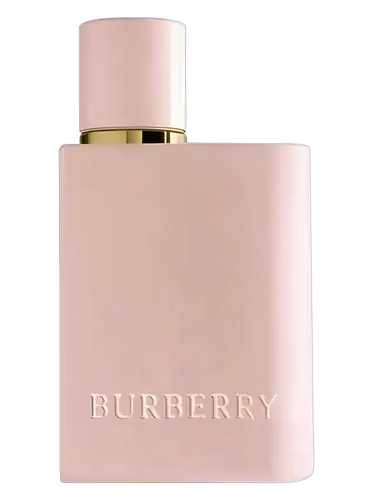
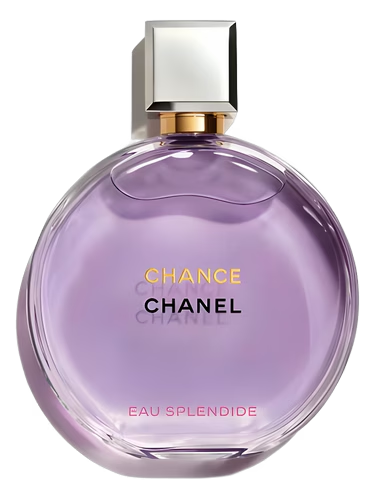
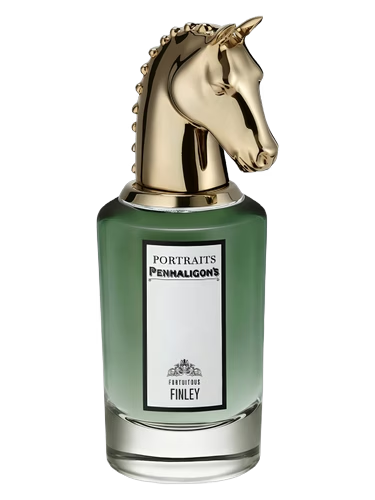
Most Popular Scents Using Tomato
What does the Tomato note smell like?
It is a complex, green, and intensely fresh note that captures the sharp, vegetative, and stemmy aroma of a crushed leaf or vine, often featuring tart and slightly metallic nuances.How is the Tomato note extracted?
The essence is primarily obtained as an absolute through solvent extraction of the leaves, or via supercritical CO2 extraction to preserve the delicate, sharp top notes of the fresh leaf.Is the Tomato note always derived from real tomatoes?
The realistic aroma is often an olfactory illusion; in many famous scents, the "tomato" profile is actually constructed using materials like blackcurrant leaf or grapefruit notes.What are some top perfumes featuring the Tomato note?
Popular fragrances featuring this note include Sisley Eau de Campagne, Hermès Un Jardin Sur Le Nil, Maison Margiela Replica From the Garden, and Demeter Tomato.When is the Tomato note in season?
While used year-round in perfumery, the note is most celebrated during the natural summer window from May through October when tomatoes reach their peak sweetness and aromatic profile.