Fragrance Notes Are Layers Of Scent That Are Layered To Form The Final Fragrance. Fragrance Notes Are Categorised Into Three Main Elements Based On How Long They Take To Evaporate, And How Long They Typically Last Following Application: Top Notes, Heart Notes And Base Notes.
Tayberry
Tayberry presents a bright, fruity profile, a hybrid of blackberry and red raspberry. It offers a rich, sweet, and juicy aroma, often described as larger and sweeter than loganberry. This note imparts a natural, slightly tart berry sweetness to compositions, sometimes featuring a subtle woody or pine undertone.

Origin & Extraction Of Tayberry
The Tayberry is a hybrid fruit, first bred in Scotland in 1979 as a cross between a red raspberry and a blackberry. Given its relatively modern agricultural origin, the use of Tayberry as a distinct note in fine perfumery is also contemporary. Unlike classical notes such as Bergamot or Lemon, which are foundational to centuries-old fragrance structures, Tayberry does not have a long, historical tradition. Its inclusion in fragrances reflects a modern trend towards capturing specific, photorealistic, and unique fruity aromas, particularly within niche and artisanal perfumery.
In perfumery, the Tayberry note is valued for its complex and balanced fruity profile, which bridges the sweet tartness of raspberry with the deeper, slightly woody richness of blackberry. It is often utilized to create bright, juicy openings that are more nuanced and less common than traditional berry notes. Its relevance lies in its ability to lend a sophisticated, natural sweetness and a subtle, northern-European "wild berry" feel to modern fruity-chypre and gourmand compositions, adding depth and intrigue to the fruity category.
Extraction Methods of Tayberry
Historically, tayberry aromatic compounds and functional extracts were obtained through traditional methods such as simple maceration, where the berries are steeped in solvents like alcohol to create tinctures, or through steam distillation of the plant's canes and leaves. For culinary and fragrance purposes, the essence has also been captured through sugar-saturation and the creation of syrups or compotes, reflecting the plant's heritage as a cross between a raspberry and a blackberry.
Modern extraction techniques have evolved to improve efficiency and preserve delicate antioxidant properties. Current industry standards include pressurized-liquid extraction, ultrasound-assisted extraction (UAE), and microwave-assisted extraction (MAE), which utilize sound waves or heat to more effectively rupture cell walls. Furthermore, advanced supercritical fluid extraction and enzyme-assisted extraction are employed to capture high-quality functional extracts and water-soluble compounds without the need for excessive chemical solvents, ensuring a more environmentally friendly and pure aromatic profile.
Tayberry, with its unique balance of sweet raspberry and rich blackberry facets, has become a specialty note in contemporary perfumery, particularly favored by niche houses aiming for distinctive and naturalistic fruity accords. Given its modern hybrid origin, the note lacks the long history of classic materials, but its complexity makes it ideal for sophisticated compositions where a juicy, slightly tart, and enduring berry presence is desired. It offers a refined, wild-berry sweetness that avoids the synthetic feel of simpler fruit notes, making it valuable for artisanal creators.
- One notable fragrance utilizing the Tayberry note is **Mûre et Musc Extrême** by L'Artisan Parfumeur, where it is often cited as contributing to the intense, naturalistic, and slightly acidic wild berry opening, beautifully complementing the creamy white musk and deeper blackberry notes.
The Tayberry note is often deployed in fragrances within the fruity-chypre or fruity-gourmand categories, providing a bright, slightly woodsy opening that transitions smoothly into richer floral or mossy bases. Its application helps to modernize traditional scent structures by injecting a unique, northern-European "wild" element, creating compositions that are both cheerful and elegant. The success of using this specific hybrid fruit demonstrates a modern trend in perfumery to explore detailed, photorealistic fruit textures beyond the standard repertoire of apple or peach.
Sustainability Of Tayberry
Sustainability of Tayberry
- Promoting sustainable farming practices through the selection of organic, untreated seeds that prioritize plant vigor, resilience, and natural pest resistance
- Reducing chemical dependency by utilizing biological control methods and planting tayberries in locations that avoid soil-borne diseases from previous crops
- Implementing water-efficient techniques such as drip or trickle irrigation systems and mulching to retain soil moisture and reduce evaporation
- Supporting a circular economy by using biodegradable seed disks, tapes, and organic compost or manure to enhance soil health and minimize waste
- Ensuring long-term plant productivity and health through manual pruning and the removal of wild brambles to prevent the spread of viral diseases
Trivia
The tayberry is a unique hybrid cross between a blackberry and a red raspberry, and it is named after the River Tay in Scotland where it was first developed.
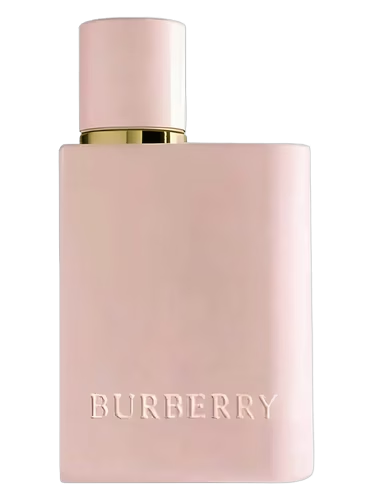
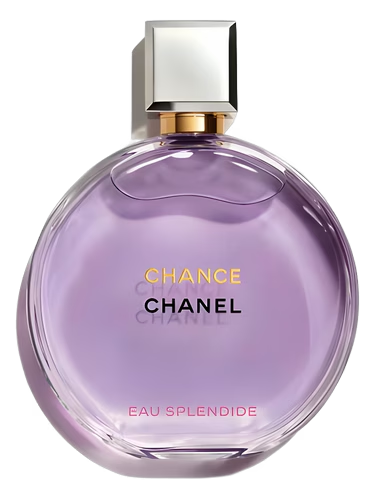
Most Popular Scents Using Tayberry

What is Tayberry?
Tayberry is a hybrid fruit first bred in Scotland in 1979 as a cross between a red raspberry and a blackberry, and it is named after the River Tay.What does Tayberry smell like?
It offers a rich, sweet, and juicy aroma that bridges the sweet tartness of raspberry with the deeper, slightly woody richness of blackberry.How is Tayberry essence extracted?
Modern techniques include pressurized-liquid, ultrasound-assisted, and microwave-assisted extraction to effectively capture its delicate aromatic profile and antioxidant properties.What are some top perfumes featuring Tayberry?
Notable fragrances include Jorum Studio Healing Berry, L'Artisan Parfumeur Mûre et Musc Extrême, Bath & Body Works Sweet Pea, and Alfred Sung Forever.When is Tayberry in season?
The harvest window occurs during the summer months, with peak ripeness and availability typically spanning from early June through early October.