Fragrance Notes Are Layers Of Scent That Are Layered To Form The Final Fragrance. Fragrance Notes Are Categorised Into Three Main Elements Based On How Long They Take To Evaporate, And How Long They Typically Last Following Application: Top Notes, Heart Notes And Base Notes.
Tangerine Zest
Tangerine Zest offers a sharp, bright, and intensely juicy citrus aroma, capturing the vibrant top notes of the fruit's peel. It is exhilarating and uplifting, lending a sparkling, effervescent quality to compositions. This note is often used to introduce freshness and vitality, possessing a slightly sweeter, less tart edge than pure lemon or lime.

Origin & Extraction Of Tangerine Zest
Tangerine, a citrus fruit closely related to the mandarin, derives its name from Tangier, Morocco, which began exporting the fruit in 1841. While the history of general citrus oils like Bergamot and Lemon dates back to the early days of Eau de Cologne in the 18th century, the specific note of "Tangerine Zest"—which captures the bright, sharp, and intensely juicy volatile notes of the peel—became prominent in perfumery more recently. It is prized for offering a sweeter, sunnier opening than lime or lemon, lending itself perfectly to lighter, more cheerful compositions.
In modern perfumery, Tangerine Zest is strategically employed to provide an immediate burst of vitality and effervescence, often enhancing Mandarin or Orange accords without the bitterness of grapefruit or some types of bergamot. It is frequently featured in contemporary colognes and luminous fragrances where a scent requires a significant, immediate radiance. Its natural sweetness allows it to blend seamlessly with white florals, light woods, and green tea notes, setting a bright and energetic tone for the overall composition.
Extraction Methods of Tangerine Zest
The primary method for extracting the essential oil from tangerine zest is cold expression, a mechanical process that ruptures the oil glands in the colorful outer layer of the peel (flavedo) to release its volatile essence. Historically, this was achieved through labor-intensive manual techniques such as the sponge method, where the rinds were pressed against sponges to collect the oil, or the "ecuelle a piquer" method, which involved rolling the fruit in a bowl lined with sharp needles. These traditional, non-thermal processes were highly valued for preserving the bright, sweet, and floral-citrus profile that can be easily degraded by heat.
Modern commercial production has transitioned to high-speed mechanical peelers and screw-press systems that rasp or squeeze the peel under water spray to create an emulsion, which is then separated using centrifugal force. Recent technological advancements have introduced even more efficient and sustainable alternatives, such as microwave-assisted extraction (MAE), ultrasound-assisted extraction, and supercritical CO2 extraction. These latest methods aim to improve yield and purity while maintaining the integrity of the delicate aromatic compounds without the use of high temperatures or harsh chemical solvents.
Tangerine Zest, with its bright, intensely juicy, and sparkling quality, is a modern favorite for designers looking to introduce an immediate burst of freshness and vitality in a top note. While many classic citrus fragrances rely on lemon and bergamot, Tangerine Zest offers a slightly sweeter, less acidic, and more cheerful opening. A prime example of this is its prominent use in **Acqua di Parma Fico di Amalfi**, where the zest contributes to a Mediterranean, sun-drenched vibrancy, setting the stage for the fig and cedar heart. This note ensures the initial impression is exhilarating and instantly uplifting.
- Tangerine Zest adds a dynamic, effervescent quality to compositions.
In contemporary perfumery, Tangerine Zest is often utilized in fresh, aromatic, and sometimes aquatic compositions to give them a distinctive luminous edge. For instance, in fragrances like **Hermès Eau de Mandarine Ambrée**, the zest provides a sharp, bright counterpoint to the richer, warmer mandarin pulp and amber base, preventing the scent from becoming overly sweet and maintaining a clean, invigorating profile throughout its initial phase. This ability to be both juicy and sharp makes it highly versatile.
- Its sweet-tart balance is ideal for blending with green, herbaceous, or woodier heart notes.
The exhilarating clarity of Tangerine Zest is also fundamental to sophisticated, vibrant summer fragrances. It is often a key player in modern interpretations of Eau de Cologne, where longevity is enhanced by coupling the natural essence with synthetic molecules. A notable example is its bright inclusion in the opening of **Dolce & Gabbana Light Blue Pour Homme**, where it contributes to the iconic sharp, zesty Mediterranean freshness, making it one of the most recognizable and enduring modern citrus top notes in men's fragrance.
Sustainability Of Tangerine Zest
Sustainability of Tangerine Zest
- Promoting a circular economy by repurposing citrus waste into value-added products like essential oils, biofuels, and natural cleaning agents
- Utilizing tangerine residues as a substrate in microbial fuel cells to generate sustainable bioelectricity for farms and industry
- Developing eco-friendly botanical pesticides from tangerine peel extracts as a non-toxic alternative to synthetic chemical treatments in organic farming
- Reducing environmental impact by diverting peels from landfills, where they would otherwise release potent methane gas
- Adopting integrated pest management (IPM) techniques and precision agriculture to optimize resource use and protect local biodiversity
- Supporting small-scale farmers and local economies through the creation of high-value artisanal products from fruit by-products
Trivia
Tangerine zest is derived from the tangerine, which was named after the Moroccan port of Tangier, the city from which the fruit was first exported to Europe in the 1800s.
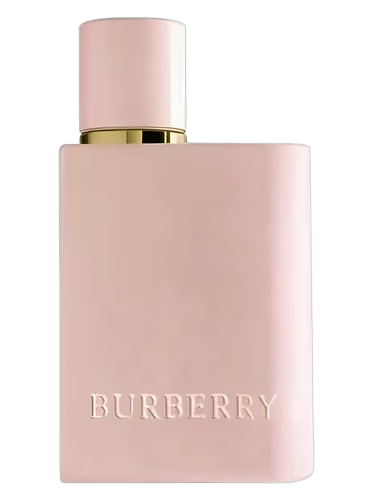
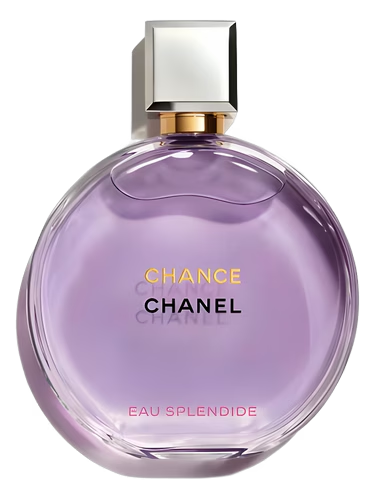
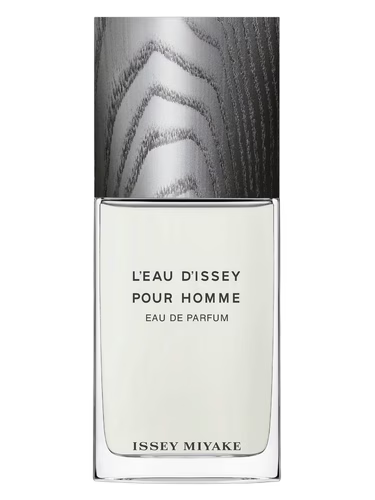
Most Popular Scents Using Tangerine Zest
What is tangerine zest?
Tangerine zest is the colorful, aromatic outer layer of the tangerine peel, containing high concentrations of essential oils that provide a sharp, bright, and intensely juicy citrus scent.
How is tangerine zest oil extracted?
The primary method is cold expression, where the fruit's peel is mechanically pressed or rasped to release the volatile oils without using heat, which preserves its delicate, sweet aroma.
What does tangerine zest smell like?
It offers an exhilarating and sparkling citrus profile that is sweeter and less tart than lemon or lime, featuring a honeyed depth and a sunny, effervescent quality.
What are some top perfumes featuring tangerine zest?
Notable fragrances include Acqua di Parma Fico di Amalfi, Hermès Eau de Mandarine Ambrée, Dolce & Gabbana Light Blue Pour Homme, Phlur Tangerine Boy, and Whind Amber Tangerine.
When is tangerine zest in season?
The peak season for tangerine zest aligns with the winter harvest, typically spanning from November to April, when the fruit develops its most flavorful and aromatic peels.