Fragrance Notes Are Layers Of Scent That Are Layered To Form The Final Fragrance. Fragrance Notes Are Categorised Into Three Main Elements Based On How Long They Take To Evaporate, And How Long They Typically Last Following Application: Top Notes, Heart Notes And Base Notes.
Tangerine
Tangerine offers a bright, sweet, and juicy citrus scent, less sharp and more mellow than orange or lemon. It is uplifting, effervescent, and slightly tart, with a warm, fruity nuance reminiscent of the peel. It is frequently used in top notes to provide a sparkling opening in various fragrance compositions.

Origin & Extraction Of Tangerine
Tangerine, a variety of mandarin orange, traces its perfumery roots to the increased availability of diverse citrus oils. While classic Eau de Colognes relied primarily on lemon and bergamot, the sweeter, mellower, and less acidic profile of tangerine offered perfumers a warmer, more joyful alternative. It rose to prominence in the 20th century as fragrances evolved to incorporate brighter, fruitier top notes, appealing to a broader audience seeking uplifting and cheerful scents. Its essential oil, often cold-pressed from the rind, provides an initial burst of sweetness that is highly valued for creating sparkling, inviting openings.
Today, the tangerine note is indispensable in modern perfumery, utilized across multiple fragrance genres. Its ability to convey warmth and vitality makes it a staple in summery, light, and aquatic compositions. Furthermore, perfumers appreciate its versatility; it pairs beautifully with white florals to create solar effects, and it is frequently blended with spices like cinnamon or ginger to add a candied zest in gourmand and autumnal creations. The note is key in defining the modern fresh category, providing a sophisticated, less sharp counterpoint to traditional zesty citruses.
Extraction Methods of Tangerine
The primary method for extracting tangerine essential oil is cold expression, also known as cold pressing. This mechanical process involves rupturing the oil sacs located on the underside of the fruit's rind to release the volatile oils. Because citrus oils are highly sensitive to heat, which can cause polymerization and degradation of the delicate aromatic compounds, cold pressing is the industrial standard for preserving the sweet and tangy profile of fresh tangerines.
Historically, citrus oils were extracted through labor-intensive manual techniques like the sponge method, where the rinds were pressed by hand against sponges to collect the oil, or the "ecuelle a piquer" method, which used a bowl lined with sharp needles to puncture the oil glands. In modern commercial production, high-speed mechanical peelers and centrifugal separators are used to efficiently isolate the oil from the resulting emulsion. Modern refinements also include the use of three-roll presses to accommodate both thick and thin-skinned varieties without pre-treating the peel.
While less common due to the potential for heat damage, steam distillation is also used to produce "hot oil" from tangerine peels. Latest advancements in the field include the use of supercritical carbon dioxide (SCF-CO2) extraction and electromagnetic heat hydrodistillation. These innovative methods allow for the capture of pure essential oils at lower temperatures and with greater efficiency, often yielding a higher proportion of oxygen-containing compounds and monoterpenoids compared to traditional techniques.
Tangerine is a widely used and highly versatile citrus note, valued for its cheerful sweetness and lack of sharp acidity compared to lemon or lime. One of the most famous early uses of a strong mandarin/tangerine note is in **Jean Patou Joy**, where it provides a sparkling, sunny opening to the legendary floral bouquet. Modern perfumery often capitalizes on tangerine for its effervescence and ability to lend a youthful, vibrant feel.
The note has seen significant popularity in contemporary fragrance houses, especially those specializing in light, fresh colognes and vibrant summer scents. For example, the tangerine note provides a luminous, zesty burst in scents like **Acqua di Parma Blu Mediterraneo Fico di Amalfi**, harmonizing with the fig and cedar base to capture the essence of the Italian coast. This vibrant, juicy quality makes it indispensable for creating an immediate, uplifting impression.
- The cheerful brightness of tangerine is also prominently featured in gourmand and sweet compositions, giving a lift to heavier notes.
- The note is a crucial element in **Hermès Eau de Mandarine Ambrée**, where its sweetness is beautifully balanced against the warm, earthy amber base, showcasing its ability to bridge fresh openings and rich drydowns.
Its role often extends beyond just the top notes; high-quality tangerine essence can integrate smoothly into the heart of a fragrance. Another iconic example is **Guerlain Aqua Allegoria Mandarine Basilic**, which relies on the juicy, sweet profile of tangerine and mandarin to create a sophisticated, aromatic fresh scent, proving that this note is capable of forming the core identity of a refined fragrance.
Sustainability Of Tangerine
Sustainability of Tangerine
- Utilizing circular economy principles by repurposing fruit by-products, such as peels and seeds, into essential oils for the pharmaceutical, cosmetic, and food industries
- Promoting zero-waste initiatives by exploring the use of citrus waste for the production of biofuels and bioactive compounds to combat oxidative stress
- Adoption of eco-friendly extraction methods, such as cold pressing and steam distillation, to ensure high oil purity while minimizing environmental impact
- Implementing traceable and vertically-integrated supply chains from seed to scent to ensure ecosystem preservation and responsible sourcing
- Investing in advanced food processing technologies like high-pressure applications and natural preservatives to extend shelf life and reduce food waste
Trivia
Tangerine was named after the city of Tangier in Morocco, which has been a major exporter of the fruit since 1841.
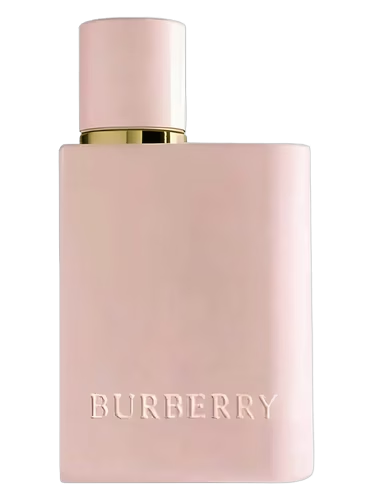
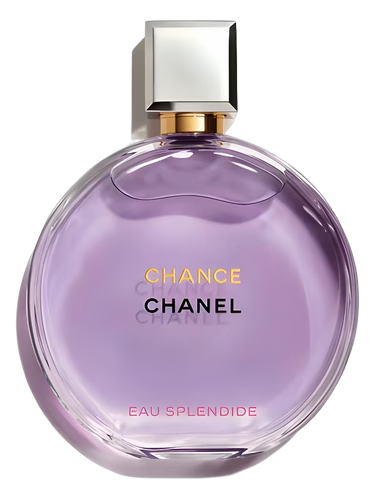
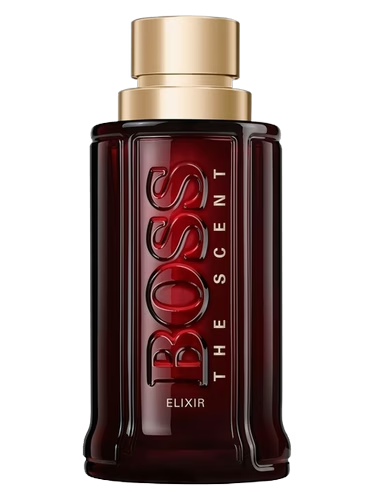
Most Popular Scents Using Tangerine
What is tangerine in perfumery?
Tangerine is a bright, sweet, and juicy citrus note belonging to the Citrus reticulata species, valued for its mellow and uplifting aroma that is less sharp than lemon or lime.How is tangerine essential oil extracted?
The oil is primarily obtained through cold expression (cold pressing) of the fruit's rind, which ruptures oil sacs to release the volatile essence while preserving its delicate scent.What does tangerine smell like?
It offers a sparkling, honeyed citrus fragrance with soft floral and fruity nuances, providing a warm and joyful alternative to traditional zesty notes like bergamot.What are some top perfumes featuring tangerine?
Iconic fragrances highlighting tangerine include Jean Patou Joy, Guerlain Aqua Allegoria Mandarine Basilic, Hermès Eau de Mandarine Ambrée, and Phlur Tangerine Boy.When is tangerine in season?
Tangerines reach their peak sweetness and oil quality during the winter months, with a primary harvest season typically spanning from November through May in the Northern Hemisphere.