Fragrance Notes Are Layers Of Scent That Are Layered To Form The Final Fragrance. Fragrance Notes Are Categorised Into Three Main Elements Based On How Long They Take To Evaporate, And How Long They Typically Last Following Application: Top Notes, Heart Notes And Base Notes.
Tangelo
Tangelo offers a bright, sweet citrus aroma, blending the juiciness of tangerine with the tartness of grapefruit. It presents a fresh, zesty, and slightly honeyed facet, often utilized in top notes for a sparkling, uplifting introduction in contemporary and classic eau de colognes and fragrances.

Origin & Extraction Of Tangelo
Tangelo is a citrus fruit hybrid resulting from the cross between a tangerine and either a pomelo or grapefruit. As a scent note, its history in perfumery is relatively recent compared to classical citruses like Bergamot or Lemon, which date back to the 18th century and the origin of Eau de Cologne. The Tangelo note gained prominence in modern perfumery, particularly from the late 20th century onwards, as perfumers sought new, complex, and exotic citrus profiles to differentiate contemporary compositions from traditional structures. Its sweet-tart profile provided a fresh alternative.
Tangelo is valued in modern fragrance creation for its ability to deliver a cheerful, juicy burst that is less bitter than pure grapefruit but more nuanced and uplifting than sweet orange. It is commonly utilized in the top notes of fresh, aquatic, and light gourmand fragrances, offering excellent diffusion and a modern, sun-drenched feel. Its inclusion often signals a move towards sophisticated, contemporary compositions, bridging volatile citrus openings with warmer, fruitier or floral heart notes, making it a favorite in designer summer flankers and niche fragrances aiming for vibrant freshness.
Extraction Methods of Tangelo
Historically, tangelo essential oils and extracts were obtained through traditional citrus processing methods such as cold pressing the fresh peel or simple maceration in solvents like alcohol. Because tangelos are hybrids of tangerines and pomelos (or grapefruits), they inherited the characteristic oil-rich flavedo of their parent species. Early manual techniques often involved the "sponge method," where the rinds were pressed by hand against sponges to collect the volatile oils, or basic hydrodistillation using Clevenger-type apparatuses to drag essences through steam.
Modern commercial and laboratory extraction has evolved to include more efficient and specialized techniques. Cold expression remains a standard for high-quality peel oil, often utilizing centrifugation to separate the pure essence from the crude extract. Recent advancements feature microwave-assisted extraction (MAE), which uses controlled microwave power to rupture oil glands more rapidly, and ultrasonic heating methods that employ alkaline alcohol reagents to target specific bioactive compounds like hesperidin. Furthermore, sophisticated separation technologies such as macroporous resin purification and high-performance liquid chromatography (HPLC) are now used to isolate and refine individual aromatic and medicinal components from the raw tangelo extract.
Tangelo, a bright and uplifting hybrid of tangerine and grapefruit, is often utilized in modern perfumery to give a sparkling, zesty opening that is less sharp than lemon and more complex than sweet orange. Its ability to bridge sweet fruitiness with refreshing tartness makes it an ideal top note for contemporary designer and niche compositions. One notable fragrance where Tangelo provides a vital, energetic lift is **Acqua di Parma Fico di Amalfi**, where it contributes to the invigorating Mediterranean atmosphere of the scent.
- Tangelo is used in **Jo Malone London Grapefruit** to enhance the central note, lending a rounder, sweeter facet to the grapefruit's inherent bitterness, making the composition immediately cheerful and more widely appealing.
The note is also featured prominently in the creation of fresher, more casual fragrances, securing a position in successful lines that emphasize clarity and lightheartedness. In the vibrant composition of **Atelier Cologne Clémentine California**, Tangelo is part of the central citrus cocktail, ensuring the fragrance maintains an effervescent, sunny disposition that lasts well beyond the initial spray. This use demonstrates its value not just for immediate impact, but also for reinforcing the fragrance's core theme.
- In fragrances like **L'Occitane en Provence Verbena**, while the focus is on the herbal elements, a subtle Tangelo note is often included to add a sophisticated, juicy brightness that prevents the composition from becoming overly green or dry.
Tangelo's smooth, honeyed depth, paired with its zesty character, allows it to blend seamlessly into both simple Eau de Cologne structures and complex floral-fruity accords. Its versatility makes it a valuable asset for perfumers seeking a distinctive, signature citrus that evokes warmth and vitality. As modern trends favor clean, natural-smelling freshness, Tangelo continues to rise in popularity for its refined and highly aromatic profile, often appearing as a highlight in recent summer limited editions.
Sustainability Of Tangelo
Sustainability of Tangelo
- Utilizing circular economy principles by promoting the Value Green Lease program to finance environmentally responsible assets like solar panels and biorecycling machines
- Supporting waste management innovations through partnerships that help neutralize carbon footprints and reincorporate recyclable materials into industrial processes
- Enhancing transparency and compliance with global ESG standards like CSRD and ESRS through integrated data collection and reporting software
- Adopting ethical business practices and formalized ESG policies, as evidenced by achieving an EcoVadis Bronze sustainability rating
- Promoting social equity and financial inclusion in underserved markets through technology-driven alternative financing and credit scoring
Trivia
The tangelo is a hybrid fruit whose name is a portmanteau of "tangerine" and "pomelo," and its popular Minneola variety is nicknamed the "Honeybell" due to its unique bell-like shape and a distinctive knob at the stem end.
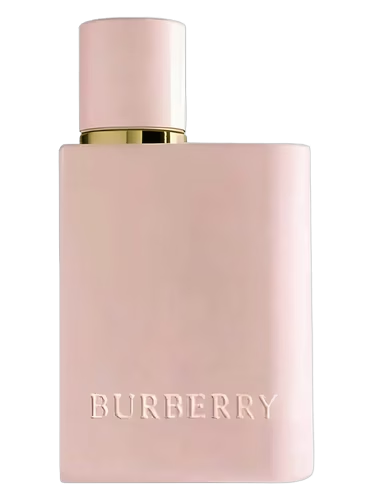
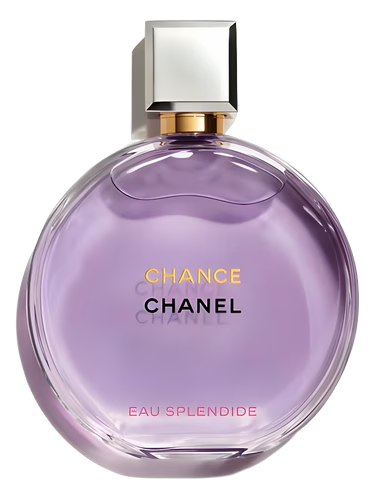
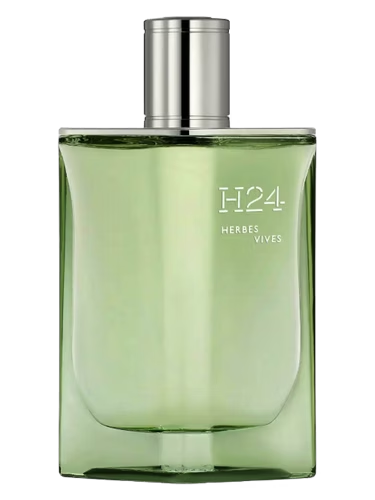
Most Popular Scents Using Tangelo
What is tangelo?
Tangelo is a hybrid citrus fruit created by crossing a tangerine with either a grapefruit or a pomelo, valued in perfumery for its bright, sweet-tart aromatic profile.
What does tangelo smell like?
It offers a vibrant, juicy, and sparkling scent that blends the honeyed sweetness of tangerine with the refreshing, zesty bitterness of grapefruit.
How is tangelo essence extracted?
The essential oil is primarily obtained through cold pressing (expression) of the fresh fruit peel, a process that preserves its delicate and volatile aromatic compounds.
What are some top perfumes featuring tangelo?
Notable fragrances featuring tangelo include Acqua di Parma Fico di Amalfi, Atelier Cologne Clémentine California, and Jo Malone London Grapefruit.
When are tangelos in season?
Tangelos are typically harvested from late fall through early spring, with peak availability and aromatic intensity occurring between December and March.