Fragrance Notes Are Layers Of Scent That Are Layered To Form The Final Fragrance. Fragrance Notes Are Categorised Into Three Main Elements Based On How Long They Take To Evaporate, And How Long They Typically Last Following Application: Top Notes, Heart Notes And Base Notes.
Tamanu
Tamanu oil presents a unique, deep, and earthy profile in perfumery, characterized by a distinct nutty and warm aroma. Derived from cold-pressed kernels, it features rich, slightly bitter undertones and a resinous texture, often used to lend a natural, complex depth to base notes, evoking tropical forest woodiness.

Origin & Extraction Of Tamanu
Tamanu oil, extracted from the nuts of the Calophyllum inophyllum tree, has a long and esteemed history in traditional medicine and cosmetics across Polynesia and Southeast Asia, where it is often referred to as "the oil of the gods" or "green gold." Its traditional uses focused primarily on its remarkable skin healing and anti-inflammatory properties. However, its complex, deep, and warm nutty aroma, characterized by earthy and slightly bitter undertones, was recognized for its aromatic qualities long before its formal incorporation into Western fine perfumery. The oil's natural resinous texture also suggests its potential as a natural fixative, helping to anchor volatile scents.
Tamanu's relevance in modern perfumery is relatively contemporary, emerging primarily in niche and artisanal fragrances that seek to incorporate unique, natural, and complex aromatic materials beyond the traditional European palette. Perfumers utilize the note not just for its subtle warm and nutty scent but for its ability to lend an exotic, naturalistic depth and woody texture to base compositions. It serves as an anchor, often evoking the scent of tropical forests or ancient resins, distinguishing fragrances that aim for an earthy, deep, and sophisticated natural feeling, moving beyond simple nutty or woody accords.
The primary method for extracting tamanu oil is mechanical cold pressing of the dried kernels found within the fruit's nuts. Historically, indigenous communities in Southeast Asia and the Polynesian islands harvested the fallen fruit, removed the shells, and cured the pale kernels in the sun for one to two months. During this traditional drying process, the kernels undergo a chemical transformation, turning a dark, brownish-red color and developing a sticky, oil-rich consistency and a sweet aroma. Once cured, these kernels were manually pressed to release the thick, greenish-yellow oil, a labor-intensive process that remains the gold standard for preserving the oil's bioactive properties.
Modern commercial production has optimized these traditional techniques through the use of mechanical hydraulic presses, which apply significant force to break the seed structure and maximize oil yield without the use of high heat or toxic solvents. Recent scientific developments have introduced non-conventional extraction methods to improve efficiency and isolate specific bioactive compounds like coumarins and resins. These include ultrasound-assisted extraction (UAE), which uses cavitation to rupture cell walls, and supercritical CO2 extraction, which captures delicate aromatic molecules. Additionally, advanced refining processes such as ethanol-based deresination and centrifugation are now employed to purify crude oil for high-end pharmaceutical and cosmetic applications.
Tamanu oil, with its unique nutty, earthy, and resinous aroma, is increasingly valued by niche and designer houses for adding a sophisticated, natural depth to their base notes. While it is not a traditional cornerstone of classical French perfumery, its emergence in the modern era signals a trend toward incorporating complex, exotic natural oils. It lends a deep, tropical forest woodiness that distinguishes a fragrance from simpler woody or oriental accords. Houses like Tom Ford have utilized such rich, textured notes to achieve their signature luxurious and enveloping scent profiles.
- * * *
The note has found particular favor among houses seeking to infuse their compositions with a distinctive sense of place, often evoking the exoticism of Southeast Asia and Polynesia where the Tamanu tree originates. This unique aromatic profile allows perfumers to create a warm, slightly bitter, and grounding foundation. Contemporary fragrances often pair Tamanu with white florals or bright citrus notes, using its warm nuttiness to anchor and extend the more volatile top and heart notes, contributing significantly to a fragrance's longevity and sillage. This sophistication appeals greatly to consumers of high-end and artisanal lines, including those from brands such as Guerlain.
- * * *
Beyond mainstream luxury, Tamanu is a critical element in the collections of artisanal and niche perfumers who prioritize unique, natural materials. Brands like Lattafa Perfumes and Yves Saint Laurent occasionally feature this note to achieve specific effects—from adding an unexpected earthy twist to gourmands, to providing a rich, subtle complexity in deep woody oriental compositions. Its use often indicates a fragrance designed to feel grounded and organic, standing in contrast to compositions relying solely on synthetic fixatives and common woody notes.
Sustainability Of Tamanu
Sustainability of Tamanu
- Utilizing the plant for landscape restoration and the reforestation of degraded lands, such as burned areas, former mining sites, and waterlogged peat soils
- Promoting the use of tamanu oil as a sustainable, non-edible alternative feedstock for biofuel to reduce reliance on palm oil and protect food security
- Adopting organic farming practices and environmentally friendly extraction processes to protect soil health and local biodiversity
- Supporting local community empowerment and socio-economic development through the establishment of ethical and sustainable tamanu industries
- Integrating tamanu cultivation into green finance models, such as the Green Waqf Project, to promote ethical business practices and equitable resource distribution
Trivia
Tamanu oil is so highly regarded in Polynesian culture that it was once considered sacred, with local legends claiming that gods would take their naps under the shade of the tamanu trees.
Most Popular Scents Using Tamanu
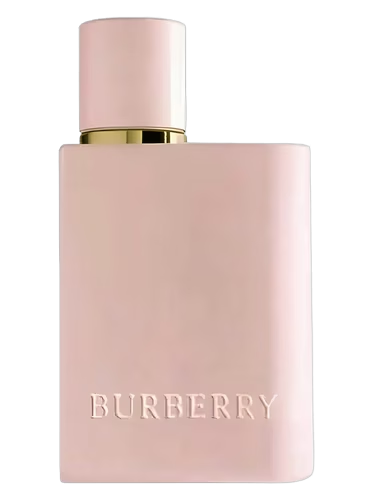
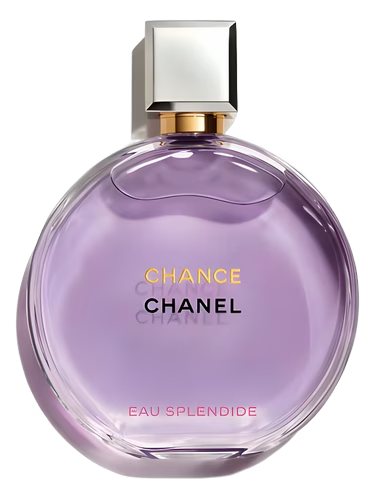
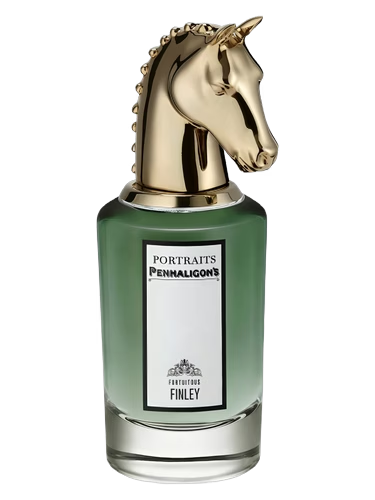
What is Tamanu?
Tamanu oil, often called green gold, is extracted from the nuts of the Calophyllum inophyllum tree native to Polynesia and Southeast Asia, traditionally used for its healing properties and now valued in niche perfumery.What does Tamanu smell like?
It offers a unique, deep, and earthy profile characterized by a warm, nutty aroma with rich, slightly bitter undertones and a resinous, woody texture.How is Tamanu oil extracted?
The primary method is mechanical cold pressing of dried kernels that have been sun-cured for one to two months to develop their characteristic dark color and sweet, oily aroma.What are some top perfumes featuring Tamanu?
While often found in skincare-focused brands, it is featured in products like Krave Beauty Great Barrier Relief, Sioris You Look So Young Night Cream, and the Shiro Oil Collection.When is Tamanu in season?
The tropical evergreen tree typically blooms twice a year, predominantly in spring and early summer, though it can produce fruit year-round in its native coastal habitats.