Fragrance Notes Are Layers Of Scent That Are Layered To Form The Final Fragrance. Fragrance Notes Are Categorised Into Three Main Elements Based On How Long They Take To Evaporate, And How Long They Typically Last Following Application: Top Notes, Heart Notes And Base Notes.
Star Apple
A tropical fruit note with a unique profile, offering a tonic, refreshing, and distinctly milky scent. Derived from Chrysophyllum cainito, it captures the essence of its purple-hued flesh, lending a creamy, exotic sweetness and coolness to compositions, perfect for modern, comforting, and unusual fruity accords.

Origin & Extraction Of Star Apple
The Star Apple (Chrysophyllum cainito) is a tropical fruit native to the Caribbean and Central America, and its use in traditional perfumery is minimal, as historical fragrance notes largely favored European botanicals. The note's relevance in fine fragrance is a relatively modern phenomenon, gaining traction only as perfumers began exploring photorealistic and exotic fruity accords in the late 20th and early 21st centuries. Its unique profile, described as milky, creamy, and refreshing, was sought after to introduce unusual textures and tropical complexity beyond conventional fruity notes like apple or pear.
In contemporary perfumery, the Star Apple note is generally synthesized to capture its distinct creamy-milky quality and exotic sweetness. It is often employed in niche and designer compositions focused on creating a tropical or comforting atmosphere. Its role is usually to add a modern, lush sweetness and a cooling, lactonic texture to the heart or base of a fragrance, helping to smooth out sharper notes and providing a unique, comforting anchor for exotic fruity-floral blends.
Extraction Methods of Star Apple
The extraction of aromatic and bioactive compounds from the star apple (Chrysophyllum albidum) primarily focuses on the seeds and fruit pulp. Historically, traditional methods involved simple maceration, where powdered seeds or fruit tissues were soaked in solvents like alcohol or water for extended periods—ranging from 12 to 72 hours—to capture essential oils, pectin, and medicinal properties. These folk methods often included boiling and manual pressing to disintegrate tissues and release the fruit's inner essence.
In modern commercial and laboratory settings, Soxhlet extraction has become the standard for obtaining high-quality seed oil, typically utilizing normal hexane as a solvent at temperatures between 65°C and 67°C for several hours. For the fruit's pulp and peel, advanced alkaline and acid hydrolysis techniques are employed to extract pectin, involving precise pH control and ethanol precipitation. Recent developments also include the use of gas chromatography-mass spectrometry (GC-MS) to profile the chemical constituents of the extracts and the application of submerged fermentation systems using specific fungi to enhance the production of enzymes from star apple waste, promoting a more efficient and sustainable extraction process.
The Star Apple note, valued for its unique milky, creamy, and exotic sweetness, is a specialty ingredient primarily found in modern and niche perfumery where creators seek to invoke lush, tropical complexity. While it is not a classic historical note like Bergamot, its distinct profile provides a contemporary, comforting lactonic texture often utilized to smooth and deepen fruity-floral compositions.
- One notable example where a Star Apple accord contributes significantly is in the fragrance **Tropical Punch** by Imaginary Authors, where its creamy sweetness balances sharper fruit notes to create a cohesive and deeply immersive tropical experience.
The note is also utilized by houses aiming to capture a photorealistic interpretation of exotic fruit markets or rainforests. Its cooling, refreshing quality allows it to blend seamlessly into watery or green structures, preventing them from becoming too sharp. This makes Star Apple an excellent choice for modern fragrances that prioritize transparency and a unique, sweet fruit signature.
- Another fragrance that features this note is **Cassis et Framboise** by L'Artisan Parfumeur, which uses the milky undertone of Star Apple to lend a comforting, round texture to the overall fruity blend.
Due to its modern relevance, the Star Apple note is a favorite for designers who wish to differentiate their fruity releases from traditional staples. It provides a subtle layer of sophistication, moving beyond simple fruitiness by adding a creamy, almost custard-like depth, ensuring the fragrance has both immediate freshness and a satisfying, soft dry-down.
Sustainability Of Star Apple
Sustainability of Star Apple
- Reducing carbon footprint by increasing the use of recycled and renewable materials in products, aiming for 100% circularity
- Transitioning the global supply chain to 100% renewable electricity by 2030 to decarbonize manufacturing processes
- Prioritizing low-carbon transportation methods, such as ocean freight, to reduce shipping emissions by up to 95%
- Implementing zero-waste initiatives at supplier facilities to divert millions of metric tons of waste from landfills
- Restoring and protecting natural ecosystems through high-quality carbon removal projects like the Restore Fund
- Conserving water resources through the Supplier Clean Water Program, saving billions of gallons of freshwater annually
Trivia
The star apple's name is derived from the star-shaped pattern visible in its pulp when the fruit is cut transversely, and it was famously the favorite fruit of King Christophe of Haiti, who held court under the shade of a massive specimen.
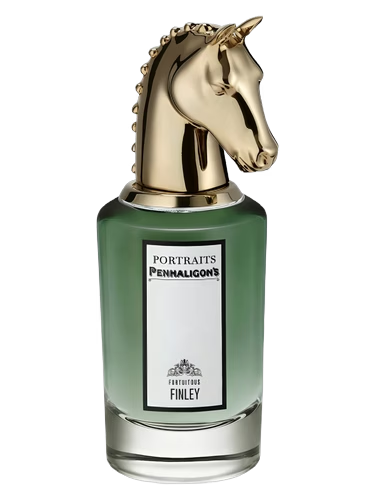
Most Popular Scents Using Star Apple


What is Star Apple?
The Star Apple is a tropical fruit native to the Caribbean and Central America, valued in modern perfumery for its unique, milky, and creamy aromatic profile.What does Star Apple smell like?
It offers a refreshing and tonic scent with a distinctly milky, lactonic texture and exotic sweetness, often compared to a creamy fruit custard.How is Star Apple essence extracted?
Aromatic compounds are primarily obtained through solvent extraction of the seeds and pulp, or synthesized in labs to capture its specific creamy-milky quality.What are some top perfumes featuring Star Apple?
Notable fragrances including this note are Escada Taj Sunset, Versace Versus, Tropical Punch by Imaginary Authors, and Cassis et Framboise by L Artisan Parfumeur.When is Star Apple in season?
The fruit is typically harvested from late winter through early summer, with peak abundance occurring between January and June depending on the tropical region.