Fragrance Notes Are Layers Of Scent That Are Layered To Form The Final Fragrance. Fragrance Notes Are Categorised Into Three Main Elements Based On How Long They Take To Evaporate, And How Long They Typically Last Following Application: Top Notes, Heart Notes And Base Notes.
Squash
Soft, warm, and powdery, the Squash note in perfumery features a unique blend of sweet orange blossom, refined vanilla, and delicate floral elements, often highlighted by a distinct, subtle salty undertone. It provides a comforting, slightly gourmand warmth and refined sweetness to compositions.

Origin & Extraction Of Squash
The Squash note in perfumery, typically referring to the profile of winter squashes or gourds (like pumpkin or butternut squash), does not have a long history in classic perfumery, which historically focused on floral, citrus, and resinous notes. Its rise is directly linked to the late 20th and early 21st centuries, coinciding with the massive popularity of the 'gourmand' fragrance family. Perfumers began to explore comforting, edible, and abstract notes drawn from cuisine and holidays, specifically seeking out the creamy, sweet, and spiced aromatic characteristics associated with cooked squash, rather than the raw vegetal scent.
This note is rarely derived from natural squash essential oils but is often a synthesized accord, blending sweet elements like vanilla and orange blossom with a subtle savory or salty undertone to capture its unique character, as described in its odor profile. It is often employed in modern, autumnal, and cozy fragrances to provide refined sweetness, warmth, and a comforting, powdery texture, making it a distinct and contemporary element used to bridge fruity, floral, and gourmand compositions.
The extraction of oil from squash, particularly from the seeds of species like Cucurbita pepo and Cucurbita moschata, is primarily achieved through solvent extraction. Historically, this involves drying the seeds at room temperature and then crushing them into a ground material. This material is then subjected to a multi-hour extraction process using solvents such as petroleum ether or hexane within a Soxhlet extractor, followed by distillation to remove the solvent and recover the resulting oil.
Modern and advanced techniques for extracting squash seed oil include supercritical CO2 extraction, which operates at lower temperatures to preserve heat-sensitive compounds and avoid chemical residues. Additionally, mechanical cold pressing is utilized to extract "virgin" oils, where the seeds are pressed to squeeze out the oil without the use of heat or chemical solvents, maintaining the oil's natural aromatic and nutritional profile. Recent experimental developments also explore ultrasound-assisted extraction and specialized filtration methods to improve yield and purity.
The Squash note, particularly in its warm, sweet, and powdery incarnation, is most famously utilized in the autumnal or holiday-themed gourmand category of modern perfumery. While not common in classic French fragrances, it gained prominence alongside the pumpkin spice trend, creating cozy and comforting scent profiles. These fragrances often use the squash accord—blending notes like vanilla, cinnamon, and orange blossom—to evoke the scent of spiced desserts and seasonal treats. A prominent example of a fragrance leveraging this cozy warmth is **Bath & Body Works Sweet Cinnamon Pumpkin**, which, while not fine fragrance, highlights the mass market appeal of this specific accord.
- The use of the Squash note is tied directly to the rise of 'edible' gourmand fragrances since the late 20th century.
In the niche and artistic perfume world, the Squash note is sometimes used in abstract ways to provide unexpected sweetness and texture, moving beyond simple seasonal warmth. One fragrance often credited with exploring this territory is **Demeter Pumpkin Pie**, which aims for a photorealistic, simple rendition of the cooked gourd with spices. This showcases the note's versatility: it can act as a simple, comforting backdrop, or as the central, sweet element in a composition designed for novelty or hyper-realism.
- The subtle salty undertone mentioned in the note's profile is often employed to cut through the richness of the vanilla, ensuring the composition retains an appealing, non-cloying texture.
Due to its modern, synthesized nature, the Squash note allows perfumers to inject a refined, powdery warmth into compositions that bridge floral, fruity, and gourmand families. While pure Squash is rare in high-end designer pieces, its characteristic profile—sweet orange blossom, vanilla, and gentle spice—is a component of complex scents like **Thierry Mugler A *Men Pure Tonka**, which feature dense, rich, and slightly savory facets, often drawing parallels to comforting, autumnal food notes.
Sustainability Of Squash
Sustainability of Squash
- Utilizing green chemistry and renewable energy sources in the manufacturing of fragrance oils to minimize the consumption of natural resources
- Implementing zero-waste production goals by upcycling by-products from other industries, such as citrus peels or wood waste, to create high-value aromatic components
- Reducing environmental impact through the development of eco-friendly air freshener formats, such as bio-bars or charcoal-based systems, that minimize the use of synthetic plastics
- Adopting eco-conscious formulation practices that prioritize biodegradable and non-toxic ingredients to ensure safety for both consumers and the planet
- Promoting circular economy principles through the use of recyclable packaging materials and encouraging the return or refill of fragrance containers
Trivia
Squash is a quintessential scent of Japanese car fresheners that is actually based on a popular Japanese citrus soda called Ramune, rather than the vegetable its name implies.
Most Popular Scents Using Squash
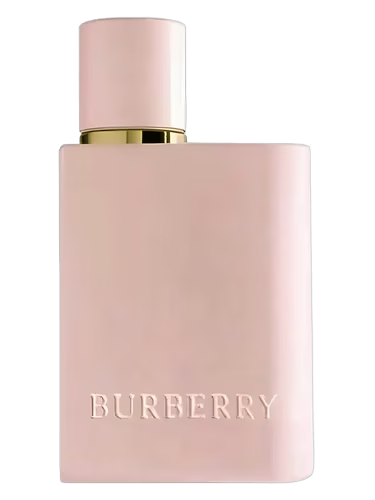
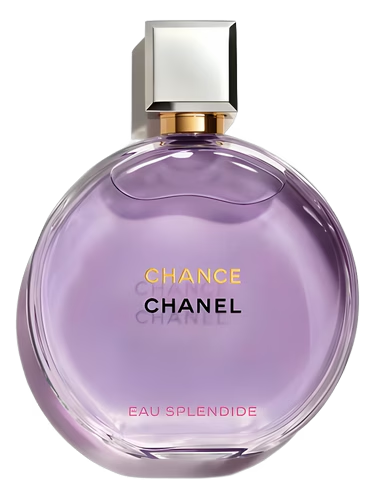

What is the Squash note in perfumery?
In perfumery, the Squash note is typically a contemporary synthesized accord designed to evoke the creamy, warm, and spiced characteristics of winter squashes like pumpkin or butternut squash.What does Squash smell like?
It features a soft, warm, and powdery profile that blends sweet orange blossom and refined vanilla, often highlighted by a distinct, subtle salty undertone.How is natural squash oil extracted?
Essential oil is primarily obtained from squash seeds through mechanical cold pressing or solvent extraction to preserve the oil's natural aromatic and nutritional profile.What are some top perfumes featuring the Squash note?
Notable fragrances include Air Spencer Squash, Nui Cobalt Squash Blossom, Solstice Scents Gunnerson's Pumpkin Patch, and Hexennacht Babooshka.What is the trivia behind the Squash scent in air fresheners?
The "Squash" scent famous in Japanese car fresheners is actually based on a popular citrus soda called Ramune rather than the actual vegetable.