Fragrance Notes Are Layers Of Scent That Are Layered To Form The Final Fragrance. Fragrance Notes Are Categorised Into Three Main Elements Based On How Long They Take To Evaporate, And How Long They Typically Last Following Application: Top Notes, Heart Notes And Base Notes.
Soursop
Soursop offers an exotic, intensely tropical scent, blending vibrant freshness with a creamy, sweet richness. It features bright, zesty citrus and tart nuances, complemented by notes reminiscent of pineapple and strawberry, settling into a unique, sophisticated sweetness often described as creamy or subtle pear/quince.

Origin & Extraction Of Soursop
Soursop (Annona muricata), native to the tropical regions of the Americas and the Caribbean, has a long history in traditional medicine and culinary use due to its distinctive aromatic and flavor profile. However, its history as a distinct, celebrated note in fine perfumery is relatively short and modern. Unlike classic ingredients such as rose or bergamot, soursop did not feature in the foundational structures of French or European perfumery. Its use coincided with the late 20th and early 21st-century trend toward exotic, photorealistic fruit notes, driven by advancements in aroma chemistry that allowed perfumers to accurately capture its delicate and complex scent.
In modern perfumery, the Soursop note is primarily utilized in contemporary fragrances, particularly niche and tropical compositions, where it provides a unique sweet-creamy richness blended with bright, tart accents. Its complexity—often described as a mix of pineapple, strawberry, and creamy pear—makes it an excellent tool for adding an unexpected, sophisticated twist to fruity-floral and gourmand accords. It is sought after for its ability to convey a sense of vibrant, humid, and intensely exotic freshness, distinguishing it from more common tropical or creamy fruit notes like banana or coconut.
Extraction Methods of Soursop
Historically, soursop extraction focused on simple, traditional techniques such as decoction and maceration, where leaves or bark were boiled in water or soaked in spirits to create medicinal teas and tinctures. For the fruit's seeds, manual mechanical pressing was used to obtain soursop oil, a process that evolved into modern cold-pressing to preserve the oil's nutrient profile without using heat. In laboratory settings, conventional methods like Soxhlet extraction and hydrodistillation became standard for isolating essential oils and fatty acids from the seeds and leaves.
Recent advancements have introduced non-conventional, highly efficient techniques such as Microwave-Assisted Extraction (MAE) and Ultrasound-Assisted Extraction (sonication), which significantly reduce processing time while increasing the yield of bioactive compounds like acetogenins. Innovative cellular and supercritical CO2 extraction methods are also increasingly employed to capture high-purity, solvent-free extracts for the pharmaceutical and skincare industries, ensuring the potency of delicate phytochemicals is maintained.
The Soursop note is a distinctive, exotic element that lends a creamy, tropical freshness to modern fragrance compositions, making it a favorite in contemporary and niche perfumery. While it lacks the historical prominence of classic citrus notes, Soursop's complex aroma—which combines zesty tartness with creamy sweetness—is utilized to create unique, vibrant openings.
- One notable example showcasing the Soursop note is L'Occitane Au Brésil Flor de Graviola (Graviola being another name for Soursop), where its bright, fruity, and slightly herbaceous qualities are brought to the forefront, providing a luminous and uplifting tropical experience.
- Another fragrance that utilizes this unique note is De Lirius by Renier Perfumes, which likely leverages the note's complexity to blend its exotic sweetness with other accords, aiming for a sophisticated, multifaceted scent.
- The Soursop note has also appeared in broader market releases such as Surreal Ocean by Avon, demonstrating its versatility in providing a modern, fresh, and slightly sweet-tropical twist to aquatic and fruity-floral categories.
In general, Soursop is often deployed by perfumers who are seeking a sophisticated, photorealistic fruit aroma that stands apart from more common notes like pineapple or mango. Its ability to bridge bright, zesty top notes with a soft, creamy base makes it an excellent choice for luminous, sun-drenched compositions, appealing to consumers looking for an unexpected and refined tropical signature.
Sustainability Of Soursop
Sustainability of Soursop
- Promoting circular economy principles by upcycling fruit by-products such as peels, seeds, and leaves into bio-based products, nutraceuticals, and biofuels to reduce environmental waste
- Integration into agroforestry systems to enhance biodiversity, provide wildlife habitats, and improve soil health through natural erosion control and nutrient cycling
- Adoption of organic farming and Integrated Pest Management (IPM) strategies, utilizing the tree's natural bioactive compounds to reduce reliance on synthetic chemical pesticides
- Implementation of water-efficient practices, including mulching and sheet mulching, to improve moisture retention and protect soil microclimates
- Supporting socio-economic resilience by empowering smallholder farmers through fair trade practices, technical training, and improved access to premium export markets
- Collaborating with global initiatives like Grow Billion Trees Partners to drive reforestation, carbon sequestration, and the restoration of degraded tropical lands
Trivia
Despite its name, a ripe soursop is actually sweet and is often described as a "fruit salad in one" because its flavor and aroma simultaneously mimic a combination of pineapple, strawberry, citrus, apple, and banana.
Most Popular Scents Using Soursop
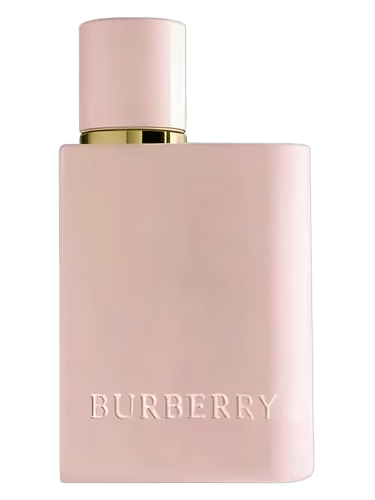
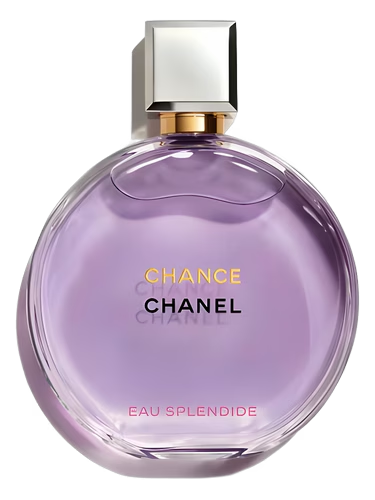
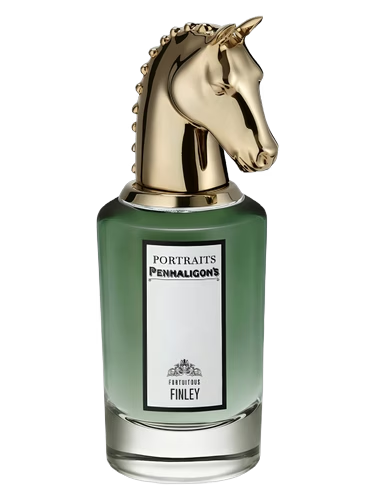
What is Soursop?
Soursop, also known as Graviola, is a fruit native to the tropical regions of the Americas and the Caribbean, recently popularized as an exotic note in modern niche and tropical perfumery.What does Soursop smell like?
It offers an intensely tropical scent featuring zesty citrus and tart nuances blended with creamy sweetness reminiscent of pineapple, strawberry, and pear.How is Soursop essence extracted?
While traditionally macerated, modern extraction for fragrance and oils includes cold-pressing seeds or using advanced techniques like Microwave-Assisted Extraction (MAE).What are some top perfumes featuring Soursop?
Notable fragrances include L'Occitane Au Brésil Flor de Graviola, Renier Perfumes De Lirius, Wild Veil Soursop, and Haus of Gloi Imp.When is Soursop in season?
As a tropical evergreen, it can bear fruit year-round, but peak harvest typically occurs between May and September in the Caribbean and Central America.