Fragrance Notes Are Layers Of Scent That Are Layered To Form The Final Fragrance. Fragrance Notes Are Categorised Into Three Main Elements Based On How Long They Take To Evaporate, And How Long They Typically Last Following Application: Top Notes, Heart Notes And Base Notes.
Sour Cherry
Sour Cherry offers a deeply rich, sweet, and tart fruity profile, capturing the intense juiciness of the fruit. In perfumery, this note is famously complex, often featuring a signature bitter or nutty undertone reminiscent of marzipan or almond, which originates from the cherry pit. It provides a dense, sensual, and slightly gourmand dimension.

Origin & Extraction Of Sour Cherry
The Sour Cherry note, while based on a fruit with ancient culinary and medicinal uses, has a complex and relatively modern history in fine perfumery. For centuries, the rich, dark, and often bitter-sweet scent profile associated with cherries—particularly the almond-like facet derived from the cherry pit (which contains benzaldehyde)—was often achieved indirectly through notes like almond, heliotrope, or tonka bean, which share that distinctive 'nutty' aroma. It wasn't until the 21st century, driven by the rise of gourmand and highly photorealistic scent categories, that Sour Cherry emerged as a dedicated, celebrated, and distinct note.
The popularity of Sour Cherry exploded following the release of a few seminal fragrances that showcased its dense, sensual, and slightly bitter character. This note is valued for its ability to deliver an intensely juicy sweetness contrasted by an elegant, dark complexity, often bridging the gap between fruity, floral, and true gourmand accords. Its modern application emphasizes the full, complex aroma—the tart pulp, the dark liqueur, and the signature marzipan-like nuance—making it a key ingredient for creating deep, seductive, and highly evocative contemporary fragrances.
Extraction Methods of Sour Cherry
Historically, the extraction of sour cherry essence was rooted in culinary and medicinal preservation, dating back centuries. Traditional methods involved maceration and decoction, where the fruit was steeped in solvents like water or alcohol, or simmered in sugar syrups to create preserves and medicinal cordials. In the 17th century, specific techniques such as boiling cherries in a sugar-and-water solution (seething) until the syrup thickened were documented for year-round preservation. Another historic approach involved the use of vinegar before sugar saturation to maintain the fruit's integrity, including the stems and leaves.
Modern commercial and scientific extraction primarily focuses on recovering bioactive compounds, particularly anthocyanins and polyphenols, from the fruit's pomace (skin and flesh) and pits. Conventional techniques include solvent extraction using varying ratios of ethanol and water, often acidified with hydrochloric acid to stabilize delicate pigments. For industrial juice production, mechanical pressing is the standard first step, after which the remaining residues are further processed.
Latest advancements emphasize "green" and high-efficiency extraction technologies to maximize nutrient yield while reducing energy consumption. These include ultrasonic-assisted extraction (UAE) and microwave-assisted extraction (MAE), which use sound waves or electromagnetic radiation to rupture cell walls and release aromatic compounds. Other contemporary methods include supercritical fluid extraction (SFE) using CO2, cellulase-assisted extraction, and microencapsulation through lyophilization (freeze-drying) to stabilize volatile components into fine powders for use in the food and fragrance industries.
The Sour Cherry note achieved its modern iconic status largely through the launch of fragrances that embraced its decadent, complex profile. The most prominent example is undoubtedly TF Lost Cherry, which ignited a global trend for deep, gourmand cherry scents. This fragrance showcases the note's full spectrum: a vibrant, boozy cherry liqueur combined with the rich, almond-like bitterness of the cherry pit, resulting in a dark, sensual, and highly seductive aroma that defined the luxury cherry fragrance category.
- * * *
Beyond the blockbuster success of the luxury segment, the Sour Cherry note has been skillfully woven into other major houses to add complexity and depth. Guerlain notably utilized this note in Black Perfecto by La Petite Robe Noire, offering a darker, edgier take on their classic cherry signature. Here, the sour cherry blends with a blend of leather and black tea, emphasizing the note's bitter almond facets and moving the composition away from simple sweetness towards a more sophisticated, rock-and-roll sensibility.
- * * *
In contemporary perfumery, the Sour Cherry note continues to evolve, often pairing with oriental and amber bases for enhanced longevity and warmth. An excellent illustration of this modern approach is Kayali's Invite Only Amber | 23, where the tart, juicy cherry serves as a bright counterpoint to a rich, resinous foundation of amber, vanilla, and woods. This blending demonstrates the versatility of Sour Cherry, allowing it to bridge the gap between fruity freshness and a long-lasting, deep gourmand dry-down.
Sustainability Of Sour Cherry
Sustainability of Sour Cherry
- Promoting a circular economy by repurposing waste by-products, such as transforming cherry pits into biochar for water purification and as a modifier to improve the durability of asphalt
- Implementing integrated crop production and eco-friendly agricultural practices, including the use of drip irrigation, soil moisture probes, and fertigation to optimize resource use
- Supporting social and economic sustainability through cooperation with local communities and participation in Ethical Trade Forums to ensure fair working conditions for farmers and workers
- Advancing sustainable extraction methods, such as ultrasound-assisted and green extraction techniques, to recover high-value antioxidant compounds from pomace and skins
- Adopting climate adaptation strategies, including the cultivation of hardy dwarf varieties and high-density planting to improve resilience against volatile weather patterns
- Utilizing digital technology and predictive modeling (Big Data) to optimize harvest volumes and reduce the consumption of water, fertilizers, and energy
- Enhancing soil health and reducing erosion by incorporating pruning remains back into the soil and using organic mulch and compost as natural fertilizers
Trivia
Sour cherry is unique in perfumery because its scent is often recreated using benzaldehyde, the same organic compound that gives bitter almonds their distinct aroma, which is why cherry notes frequently possess a mysterious, marzipan-like quality.
Most Popular Scents Using Sour Cherry
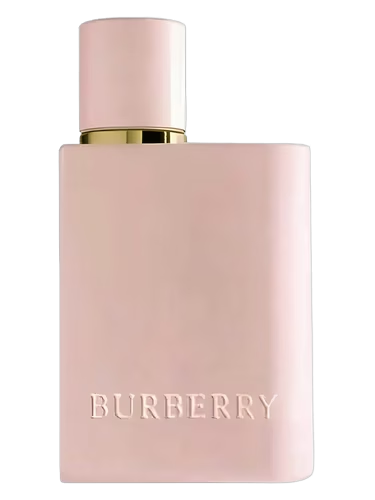
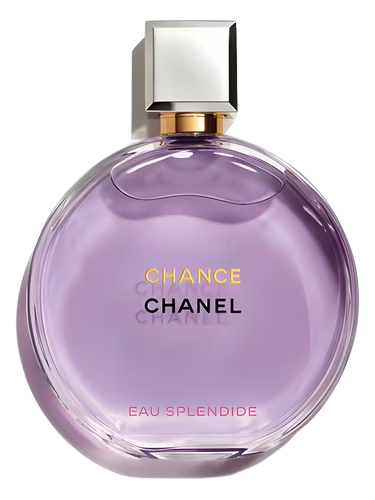
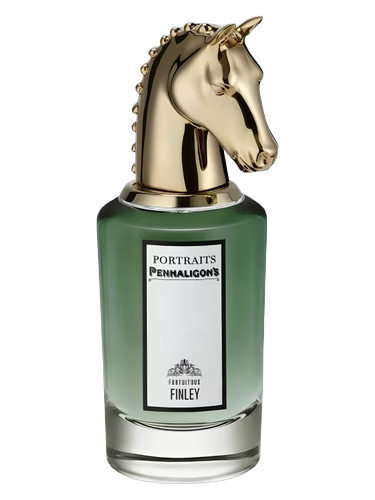
What is Sour Cherry?
Sour Cherry is a natural hybrid fruit note in perfumery, valued for its deep, sweet, and tart profile that often features a signature bitter almond-like undertone from the cherry pit.What does Sour Cherry smell like?
It offers a rich, juicy, and intensely tart fruity aroma with complex facets of marzipan, almond, and sometimes boozy liqueur-like qualities.How is the Sour Cherry note created?
While historically extracted through maceration, the scent is often recreated in modern perfumery using benzaldehyde and other molecules to capture its specific nutty and fruity essence.What are some top perfumes featuring Sour Cherry?
Iconic fragrances including this note are Tom Ford Lost Cherry, Guerlain Black Perfecto by La Petite Robe Noire, Kayali Invite Only Amber 23, and BDK Rouge Smoking.When is Sour Cherry in season?
The fruit has an exceptionally brief harvest window, typically spanning two to three weeks from late June through July in the Northern Hemisphere.