Fragrance Notes Are Layers Of Scent That Are Layered To Form The Final Fragrance. Fragrance Notes Are Categorised Into Three Main Elements Based On How Long They Take To Evaporate, And How Long They Typically Last Following Application: Top Notes, Heart Notes And Base Notes.
Silverberry
Silverberry (Elaeagnus) offers a delicate, sweet, and intensely fragrant profile, combining creamy floral aspects—like honeysuckle or gardenia—with subtle, ripe fruitiness and a gentle, powdery vanilla or almond undertone. It provides a luminous, warm, and sophisticated sweetness in a composition.

Origin & Extraction Of Silverberry
The Silverberry, derived from the *Elaeagnus* genus, has a history rooted primarily in horticulture and traditional Eastern use rather than classical Western perfumery. While the intensely fragrant flowers of certain varieties, often likened to honeysuckle, gardenia, or creamy jasmine, have been appreciated for centuries, the isolation and formal utilization of the "Silverberry" note in fine fragrance are relatively recent developments. Unlike foundational ingredients such as rose or citrus, Silverberry oil or absolute does not appear in historical records of 18th or 19th-century perfumery. Its use signals a modern trend toward incorporating more complex, photorealistic, and globally sourced floral-fruity notes that move beyond traditional white flower accords.
In contemporary perfumery, the Silverberry note is valued for its ability to bridge creamy florals with subtle, powdery sweetness and a hint of ripe fruitiness. It is often employed in niche and artisanal fragrances that seek to create unique, luminous, and comforting scent profiles. Perfumers use this note to achieve a sophisticated sweetness that is less cloying than heavy gourmands, offering a warm, delicate, and enduring floral aspect, particularly in compositions aimed at conveying natural elegance and gentle complexity.
Extraction Methods of Silverberry
Historically, the extraction of silverberry essence and bioactive compounds involved traditional maceration and manual processing. This included crushing the fruit manually to create mashes for juice, wine, and tinctures, or simmering the fruit pulp in distilled water at high temperatures to create aqueous extracts used in traditional medicine for wound healing and anti-inflammatory treatments.
Modern extraction techniques have evolved to include ultrasound-assisted extraction (UAE), which utilizes high-power ultrasound to induce acoustic cavitation. This process degrades cell membranes and tissues, significantly increasing the yield of delicate compounds such as lycopene and beta-carotene. Additionally, green synthesis methods are now employed to create silver nanoparticles using silverberry extract as a reducing agent, while advanced filtration and centrifugation are used to ensure the purity and stability of the final essence.
The Silverberry (Elaeagnus) note, valued for its unique blend of creamy white florals, gentle sweetness, and subtle almond/vanilla facets, is a specialized ingredient often sought out by niche and sophisticated designer houses. Because it lacks the volatile sharpness of traditional top notes, it is frequently used to provide a luminous, warm, and enduring sweetness in the heart and base of a composition. This delicate profile makes it a perfect complement to other soft white flowers, gourmand notes, and musky bases, creating a sense of comforting, natural elegance.
- The note is prominently featured in certain niche lines that explore complex floral-fruity themes, such as fragrances where its honeysuckle-like creaminess blends seamlessly with apricot or osmanthus accords.
A notable example that utilizes Silverberry's subtle, warm-sweet character is found in fragrances like **L'Eau d'Hiver** by Frederic Malle (often featuring its floral-almond facet) or compositions that center around the *Elaeagnus* flower, such as some of the earlier works by the house of Jo Malone. While often listed generically as 'White Flower Accord' or similar notes, the distinctive creamy, powdery, and slightly fruity nature of Silverberry is crucial in establishing the plush texture and delicate sweetness in sophisticated, ethereal fragrances. The note ensures the scent remains bright and complex without becoming heavy or overly tropical.
In modern perfumery, Silverberry appeals to perfumers creating complex, photorealistic nature scents. Its sweet yet gentle profile is used to bridge the sharp opening citrus notes with a richer, warmer dry-down. For instance, in fragrances that aim to evoke an Asian garden or Mediterranean warmth, this note helps translate the scent of flowering shrubs and ripening fruit, contributing to the overall longevity and luminosity, similar to the effect achieved in certain Guerlain Aqua Allegoria flankers or selected offerings from Acqua di Parma, even if the specific note name isn't always disclosed.
Sustainability Of Silverberry
Sustainability of Silverberry
- Utilizing silverberry for ecological restoration and native plant reclamation in disturbed sites, such as mine spoils, oil sands tailings, and industrial areas
- Enhancing soil health through the plant's natural nitrogen-fixing capabilities, which reduces the need for synthetic fertilizers and supports nearby plant growth
- Promoting biodiversity by providing a vital food source and nesting cover for wildlife, including moose, deer, songbirds, and pollinators
- Implementing drought-resistant and hardy landscaping choices, such as xeriscaping, to conserve water resources and minimize maintenance requirements
- Fostering social responsibility through reconciliation pledges and partnerships with First Nations to implement culturally appropriate restoration programs
Trivia
The silverberry plant, specifically the Ebbinge's silverberry, is a nitrogen-fixing shrub that can improve soil fertility for neighboring plants while producing a scent so powerful it is noticeable from up to 10 meters away.
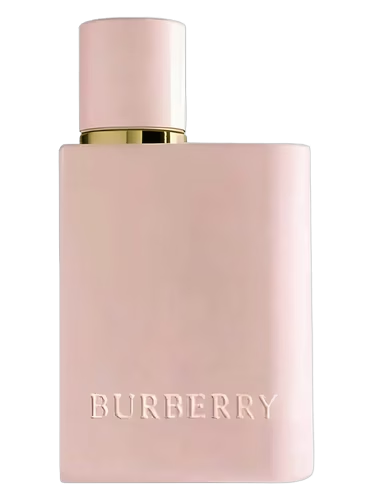
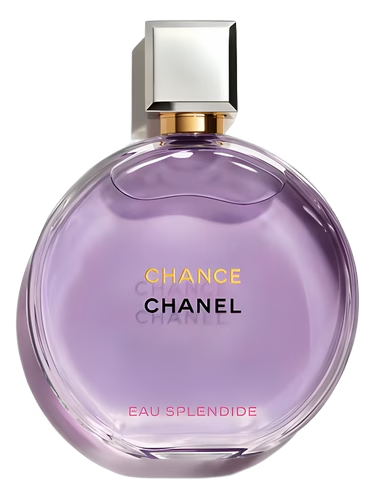
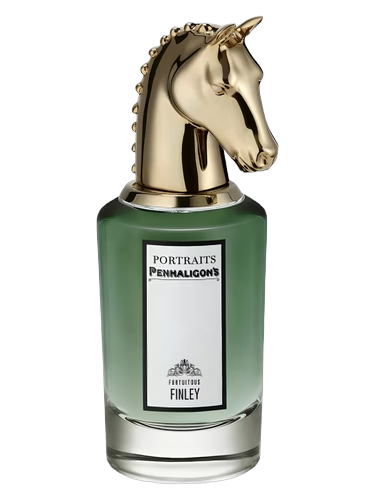
Most Popular Scents Using Silverberry
What is Silverberry?
Silverberry, derived from the Elaeagnus genus, is a fragrant plant native to North America and Asia, recently adopted in fine fragrance for its unique ability to bridge creamy florals with subtle fruitiness.What does Silverberry smell like?
It offers a delicate, sweet, and intensely fragrant profile that combines creamy floral aspects, such as honeysuckle or gardenia, with ripe fruitiness and a gentle, powdery vanilla or almond undertone.How is Silverberry essence extracted?
While historically extracted through maceration, modern techniques include distillation and ultrasound-assisted extraction (UAE) to capture and preserve its delicate aromatic compounds.What are some top perfumes featuring Silverberry?
Notable fragrances featuring this note include Woudacieux Haute Parfumerie Inule K'Iris Royal, Frages Fragrances Silver Berries, and Buhara Silverberry Essential Oil Perfume.When is Silverberry in season?
The plant typically blooms from late spring to early summer, between May and July, with fruit ripening occurring from late summer into early autumn.