Fragrance Notes Are Layers Of Scent That Are Layered To Form The Final Fragrance. Fragrance Notes Are Categorised Into Three Main Elements Based On How Long They Take To Evaporate, And How Long They Typically Last Following Application: Top Notes, Heart Notes And Base Notes.
Shea Butter
Shea Butter, especially in its raw form, offers a dense, creamy, and nourishing aroma. It is characterized by rich, nutty, earthy undertones, often accompanied by a subtle, warm smokiness derived from its traditional preparation. It is primarily used to impart a soft, smooth, and slightly gourmand texture to fragrances.

Origin & Extraction Of Shea Butter
Shea butter, derived from the nut of the African shea tree (*Vitellaria paradoxa*), has a history rooted deeply in West and East African traditional uses, where it was valued for its nourishing, healing, and cultural significance. Historically, it was used not just as a moisturizer and cooking oil, but also in traditional ceremonies and as a cherished natural remedy, symbolizing purity and protection. The product, often characterized by a dense, creamy texture and a nutty, earthy, slightly smoky aroma in its raw form, primarily served as a cosmetic and medicinal staple for centuries before its formal introduction to Western markets.
Its relevance to modern perfumery is more contemporary, as perfumers began incorporating ingredients that offer unique textures and subtle gourmand or nutty nuances. While the actual volatile oil is not a traditional essential oil note like citrus or florals, "Shea Butter" is utilized as an accord to impart a creamy, soft, smooth texture, and a warm, slightly nutty undertone to fragrances. It is primarily used to enhance the drydown, giving compositions a feeling of nourishment and comfort, bridging the gap between cosmetic and fine fragrance trends.
Extraction Methods of Shea Butter
Historically, shea butter is produced through a traditional water-based extraction method passed down through generations of West African women. This labor-intensive process begins with harvesting fallen fruit, de-pulping, boiling, and sun-drying the nuts. Once dried, the nuts are cracked and the kernels are roasted, ground into a paste, and hand-kneaded with water to form an emulsion. The fat is then separated by adding boiling water, which causes the pure butter to rise to the surface where it is skimmed off, filtered, and cooled to solidify.
Modern commercial production has transitioned toward more efficient mechanical and chemical processes to increase yield. Latest methods include the use of mechanical screw press expellers that physically crush kernels to squeeze out the oil. Large-scale industrial operations often combine expeller pressing with solvent extraction using n-hexane to recover residual fats from the kernel cake. Additionally, advanced sustainable techniques are emerging, such as enzyme-assisted aqueous extraction, supercritical CO2 extraction, and microwave-assisted technology, which aim to improve purity and reduce environmental impact while maintaining the butter's bioactive properties.
Shea Butter, known for its creamy, nutty, and warm aroma, is increasingly utilized in modern fragrance to impart a comforting, nourishing texture, bridging the gap between skincare and fine fragrance. While it may not be a core historical note in classic French perfumery, its role in contemporary compositions is to enhance the drydown with a subtle gourmand smoothness. Early examples of its use often appeared in body care-focused lines that extended into fine fragrance.
- A prominent commercial example of this ingredient can be found in the body care category that translates to scent, such as Shea Butter Soft Embrace by Victoria's Secret (2009) and Apricot & Shea by Avon (2013), where the note is explicitly highlighted to emphasize softness and comfort.
In more recent years, Shea Butter has been adopted by niche and modern designer houses seeking complex, textural depth. These fragrances use the note to anchor sweeter accords or to give a creamy, earthy counterpoint to bright top notes. This use allows the perfume to feel richer and more substantive, mimicking the natural, nourishing quality of raw shea.
- Examples of this contemporary approach include Clean Vanilla by Overose (2025) and Natural by Khye Fragrances (2023), which integrate the nutty, creamy facets of Shea Butter into their compositions to provide a unique texture and warmth that is less overtly gourmand than notes like caramel or vanilla alone.
Furthermore, some houses have successfully paired Shea Butter with complementary notes, particularly those in the citrus, wood, and coconut families, to create balanced and highly sophisticated scents. This strategic pairing leverages the buttery, dense quality of shea against fresher or sharper elements, preventing the fragrance from becoming too light or too heavy.
- This balancing act is seen in fragrances like Coconut 2024 by Bath & Body Works and X Santal by Bibbi Paris (2024), where Shea Butter adds a smooth, creamy dimension to the tropical and woody structures, respectively.
Sustainability Of Shea Butter
Sustainability of Shea Butter
- Empowering women through the establishment of cooperatives and fair-trade partnerships that ensure fair distribution of value and financial independence
- Supporting the regeneration of shea parklands by planting thousands of native saplings annually and training local communities in sustainable agroforestry management
- Implementing zero-waste and circular economy initiatives by upcycling shea side-streams and waste into organic fertilizer, compost, animal feed, and fuel briquettes
- Promoting climate resilience and biodiversity conservation by protecting natural shea ecosystems, which act as critical carbon sinks in West Africa
- Enhancing health and environmental protection by distributing energy-efficient cookstoves that reduce wood consumption and minimize toxic smoke during processing
- Improving community infrastructure through projects focused on clean water access, such as borehole renovation and maintenance in remote harvesting regions
Trivia
Raw shea butter has a naturally smoky aroma because the shea nuts are traditionally roasted over open flames before the butter is extracted.
Most Popular Scents Using Shea Butter
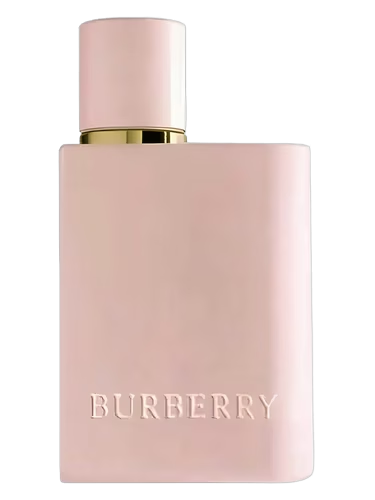
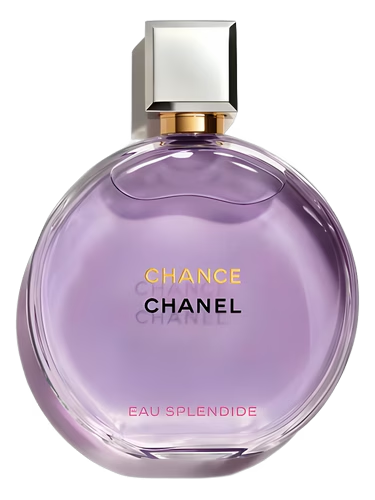
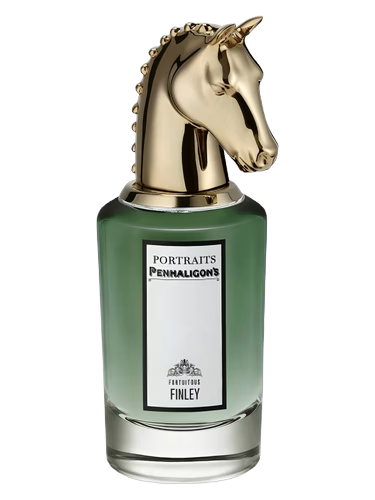
What does Shea Butter smell like?
In its raw form, Shea Butter has a dense, creamy, and nutty aroma with earthy undertones and a subtle, warm smokiness derived from the traditional roasting of the nuts.How is Shea Butter used in perfumery?
It is primarily used as an accord to impart a soft, smooth, and nourishing texture to fragrances, often enhancing the drydown with a subtle gourmand or nutty warmth.Where does Shea Butter originate?
The shea tree is native to the African Shea Belt, a dry savanna region stretching across 21 countries from West to East Africa, including Ghana, Nigeria, and Burkina Faso.How is Shea Butter essence extracted?
Historically, it is produced through a labor-intensive, water-based method involving de-pulping, boiling, roasting, and hand-kneading the kernels to separate the fat.What are some top perfumes featuring Shea Butter?
Notable fragrances include The Body Shop Shea, Overose Clean Vanilla, Bibbi Paris X Santal, and Victoria's Secret Shea Butter Soft Embrace.Is Shea Butter a common note in classic perfumery?
While not a core historical note in classic French perfumery, it is increasingly used in modern niche and designer scents to bridge the gap between skincare textures and fine fragrance.