Fragrance Notes Are Layers Of Scent That Are Layered To Form The Final Fragrance. Fragrance Notes Are Categorised Into Three Main Elements Based On How Long They Take To Evaporate, And How Long They Typically Last Following Application: Top Notes, Heart Notes And Base Notes.
Serrano Pepper
Serrano Pepper offers a distinctive profile that combines soft, warm, and powdery floral elements with a subtle sweetness. It features a unique blend of orange blossom, refined vanilla, and delicate salty notes, giving it a surprising complexity and modern twist in fragrance compositions.

Origin & Extraction Of Serrano Pepper
The history of the Serrano Pepper note in perfumery is relatively modern, emerging from a broader trend of incorporating unexpected, spicy, and photorealistic notes into contemporary fragrance design. Historically, spices like black pepper and pink pepper were common for adding zest, but the Serrano Pepper, which originates in the mountainous regions of Puebla and Hidalgo, Mexico, offers a unique profile. While the chili itself has ancient culinary roots, its specific application in fine fragrance has been driven by perfumers seeking novel ways to introduce warmth, complexity, and a delicate tension between heat, freshness, and the modern interpretation of gourmand-floral accords, as suggested by its odor profile (orange blossom, vanilla, salty notes).
Unlike classic notes such as Bergamot or Neroli, the Serrano Pepper note does not have a long legacy in traditional Eau de Cologne. Its relevance lies in niche and experimental perfumery from the late 20th and early 21st centuries. In this context, it functions less as a purely "hot" spice and more as a sophisticated accent, providing a surprising lift or a subtle, almost metallic edge. This modern usage allows the pepper's aromatic characteristics to bridge volatile top notes with richer, more stable heart and base notes, securing its place as an intriguing ingredient for cutting-edge, complex compositions.
Extraction Methods of Serrano Pepper
Historically, the aromatic and pungent essences of peppers like the serrano were obtained through simple infusion and maceration techniques. Traditional methods involved steeping fresh or dried peppers in oils or high-proof alcohols for several weeks to draw out the capsaicinoids and volatile compounds. Manual processing, such as the mechanical "bursting" of capsaicin blisters followed by oil rinsing, was also used to manage and collect the heat-inducing resins from the fruit's interior walls.
Modern commercial and laboratory extraction of serrano pepper components utilizes more advanced and efficient technologies. Steam distillation is frequently used to isolate volatile oils, while organic solvent extraction—often employing ethanol or hexane—remains a standard for producing concentrated oleoresins. Recent developments include supercritical fluid extraction (SFE) using CO2, which allows for high-purity extracts without toxic solvent residues, and pressurized liquid extraction (PLE), which optimizes yield by using elevated temperatures and pressures. Additionally, ultrasonic-assisted extraction (UAE) and microwave-assisted extraction (MAE) are increasingly used to accelerate the process and improve the recovery of delicate antioxidant compounds.
The Serrano Pepper note, with its complex profile blending floral, vanilla, and salty nuances, is highly utilized in niche perfumery to create unexpected and provocative tensions. It often serves to temper the sweetness of gourmand elements or to introduce a subtle, warm, and slightly metallic sparkle to otherwise traditional accords. The incorporation of chili notes is a hallmark of experimental houses that push the boundaries of conventional fragrance structures.
- *
One notable fragrance that features a prominent chili pepper accord, closely capturing the unique heat and green-gourmand complexity suggested by Serrano Pepper's profile, is **L'Artisan Parfumeur's Piment Brûlant**. This fragrance famously uses chili to add fire to a rich dark cocoa and vanilla composition, offering an aromatic warmth that resonates with the modern, spicy-sweet interpretation of the note. Similarly, some modern compositions, like certain scents within the Tom Ford Private Blend line, employ a red pepper or chili note to provide an invigorating lift to deep, resinous bases, ensuring the opening remains bright and unexpected before settling into warmth.
- *
The sophisticated use of Serrano Pepper in contemporary perfumery aims for dimension rather than raw spice. It acts as an olfactory contrast, often seen in fragrances seeking a "fresh gourmand" or "spicy floral" designation. For instance, in fragrances where a focus is on orange blossom and delicate salinity, like in **Estée Lauder's Bronze Goddess** variations, a subtle pepper note provides the metallic lift and dry heat necessary to prevent the white flowers and sweetness from becoming overly cloying, ensuring a sophisticated and enduring presence.
Sustainability Of Serrano Pepper
Sustainability of Serrano Pepper
- Reducing reliance on synthetic fertilizers through the use of biofertilizers and plant growth-promoting microorganisms to prevent soil and water pollution
- Adopting precision irrigation methods such as drip and subsurface systems to minimize water waste and energy consumption while enhancing carbon sequestration
- Implementing Integrated Pest Management (IPM) strategies to prioritize biological and mechanical controls over chemical pesticides, protecting local biodiversity
- Encouraging the cultivation of climate-resilient and high-yield varieties like NuMex Enchantment to improve socio-economic outcomes for small-scale growers
- Promoting ethical labor practices and fair pricing through potential third-party certifications to ensure long-term community resilience and worker safety
Trivia
The name of the serrano pepper is a direct reference to the "sierras," or mountain ridges, of the Mexican states of Puebla and Hidalgo where the pepper first originated.
Most Popular Scents Using Serrano Pepper
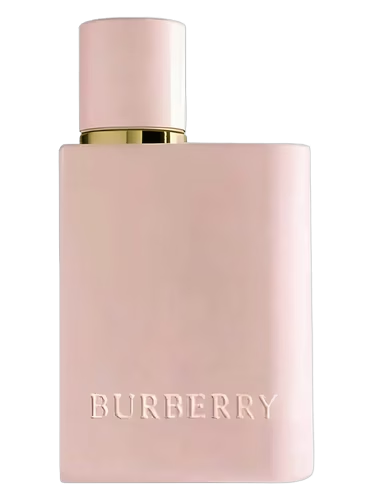
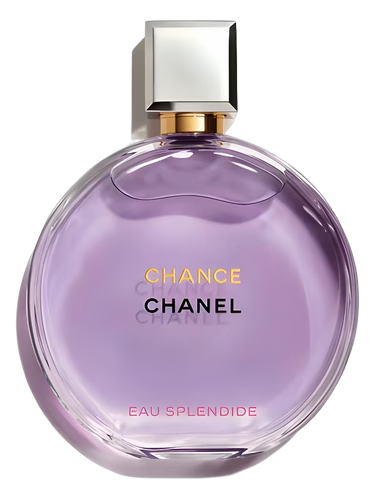
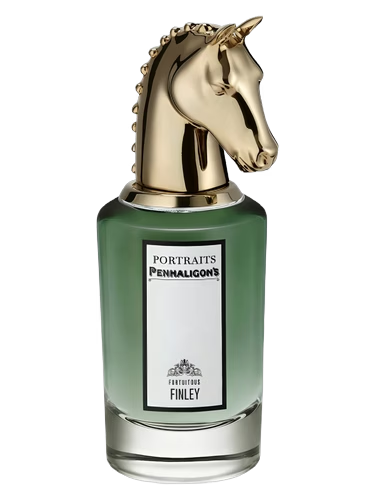
What is Serrano Pepper?
Serrano Pepper is a modern fragrance note inspired by the chili pepper native to the mountains of Mexico, used in niche perfumery to add a sophisticated, spicy-floral twist.What does Serrano Pepper smell like?
It offers a complex profile of soft, warm, and powdery floral elements mixed with orange blossom, refined vanilla, and delicate salty notes for a surprising metallic edge.How is Serrano Pepper essence extracted?
In modern perfumery, its components are typically recreated synthetically or obtained through advanced methods like supercritical fluid extraction (SFE) to isolate specific aromatic compounds.What are some top perfumes featuring Serrano Pepper?
One notable fragrance that highlights this unique spicy and green-gourmand complexity is Gallagher Fragrances Cadence.When is Serrano Pepper in season?
As a crop, it is primarily available from late spring through early fall, with peak harvests in summer and winter depending on the specific region in Mexico.