Fragrance Notes Are Layers Of Scent That Are Layered To Form The Final Fragrance. Fragrance Notes Are Categorised Into Three Main Elements Based On How Long They Take To Evaporate, And How Long They Typically Last Following Application: Top Notes, Heart Notes And Base Notes.
Seriguela
Seriguela offers a vibrant, juicy, and exotic fruit note, blending the sweet-tartness of plum and apricot with a subtle, zesty, green tropical edge. It provides a luminous, succulent opening with a unique resinous nuance, often used to introduce a distinctive, lively, and sun-drenched sweetness to modern compositions.

Origin & Extraction Of Seriguela
Seriguela, derived from the fruit of the *Spondias purpurea* tree native to the Americas, is a relatively modern and exotic addition to the perfumer's palette, lacking the centuries of tradition associated with classic European fragrance notes like rose or jasmine. Traditionally, the fruit, also known as Spanish plum or jocote, has been valued primarily in Central and South American cultures for its culinary and medicinal uses. Its incorporation into fine perfumery reflects a contemporary trend, emerging primarily in the late 20th and early 21st centuries, where perfumers have increasingly sought out unique tropical and photorealistic fruit notes to innovate beyond conventional structures.
The relevance of the Seriguela note in modern perfumery stems from its complex olfactory profile, which balances a juicy, sweet-tart fruitiness (reminiscent of plum and apricot) with a subtle, zesty, and green tropical edge. This complexity makes it ideal for contemporary, luminous compositions, particularly in the niche and tropical-themed fragrance categories, where it is used to provide a distinctive, lively, and sun-drenched opening that is both recognizable and sophisticated.
Extraction Methods of Seriguela
Historically, aromatic compounds and essential oils from seriguela (Spondias purpurea L.) leaves have been obtained through traditional steam-dragging distillation using a Clevenger-type apparatus. This method involves passing pressurized steam through the plant material to evaporate volatile oils, which are then condensed and collected. For the fruit itself, traditional processing often involves manual pulping and direct gravimetry to separate the peel and pulp for use in food products or medicinal preparations.
Modern extraction techniques have expanded to include ultrasound-assisted extraction (UAE) and microwave-assisted methods, which optimize the recovery of bioactive compounds like pectin and phenolics from the fruit's residue. Recent studies emphasize the use of experimental designs, such as fractional factorial and Box-Behnken designs, to refine parameters like temperature, time, and pH. Additionally, advanced chemical analysis using spectrometry is now standard for verifying the purity and composition of the resulting extracts.
The Seriguela note, offering a vibrant blend of sweet-tart plum and apricot with a tropical edge, is a contemporary choice that resonates strongly within Brazilian perfumery. One notable example is Gigi by Avatim (2017), which utilizes the unique juiciness of Seriguela to craft a luminous and spirited scent for women. This inclusion highlights the modern trend of incorporating authentic, exotic fruit notes to achieve a signature 'sun-drenched' sweetness that stands out from more conventional fragrance compositions.
- * * *
Another popular Brazilian fragrance that features Seriguela is Capricho College by O Boticário (2014). In this composition, the note is likely used to provide a youthful, zesty, and lively character, contributing to a fragrance that is fresh yet distinctly fruity. The use of Seriguela in these accessible lines demonstrates its growing appeal beyond niche perfumery, solidifying its place as a recognized and distinctive exotic fruit element in modern mass-market scents.
- * * *
The note is also reappearing in newer releases, such as Gigi Hair by Avatim (2025), indicating its continued relevance as a differentiating element. While global mainstream luxury brands like Dior and Guerlain may not feature the note as prominently as a signature ingredient, the existence of Seriguela in the databases associated with these brands suggests its potential use as a subtle facet within complex compositions, lending an unexpected, vibrant tropical lift to otherwise traditional accords.
Sustainability Of Seriguela
Sustainability of Seriguela
- Reducing food waste by repurposing fruit residues—including peels and pulp that comprise nearly 40% of production—into high-value nutritional flours and ingredients for the food industry
- Promoting a circular economy by upcycling byproduct side-streams from juice and pulp processing into artisanal beverages, craft beers, and functional foods
- Supporting agro-socioeconomic resilience and local livelihoods by providing stable income for smallholder farmers through the cultivation of Spondias species in traditional agricultural habitats
- Preserving genetic biodiversity by cultivating seriguela in home gardens and traditional fences, which helps protect specific haplotypes from disappearing due to the reduction of tropical dry forests
- Enhancing nutritional security and sustainability by developing low-cost, vitamin-rich food products derived from underutilized fruit residues and traditional local varieties
Trivia
Seriguela is known for its medicinal properties and is often used in traditional remedies in its native regions.
Most Popular Scents Using Seriguela
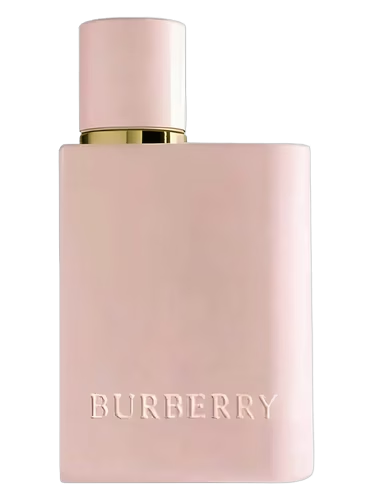
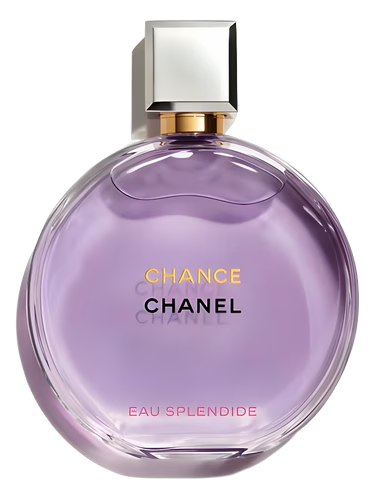
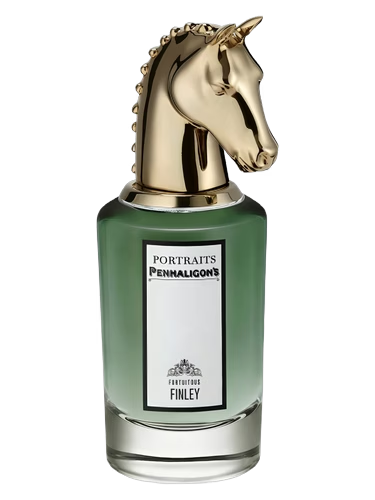
What is Seriguela?
Seriguela is an exotic fruit note derived from the Spondias purpurea tree, native to the Americas and common in Brazil, valued in modern perfumery for its vibrant, tropical character.What does Seriguela smell like?
It offers a complex, juicy profile that blends the sweet-tartness of plum and apricot with a zesty, green tropical edge and a unique resinous nuance.How is Seriguela essence extracted?
The aromatic compounds are typically obtained through distillation of the leaves or by processing the fruit pulp and peel using modern techniques like ultrasound-assisted extraction.What are some top perfumes featuring Seriguela?
Notable fragrances include Avatim Gigi, O Boticário Capricho College, Avatim Gigi Hair, and Piatan Splash Seriguela.When is Seriguela in season?
The fruit follows a distinct regional cycle, typically peaking between December and March in Brazil and from April to June in the Philippines.