Fragrance Notes Are Layers Of Scent That Are Layered To Form The Final Fragrance. Fragrance Notes Are Categorised Into Three Main Elements Based On How Long They Take To Evaporate, And How Long They Typically Last Following Application: Top Notes, Heart Notes And Base Notes.
Sea Buckthorn
Sea Buckthorn offers a bright, tart, and highly aromatic profile, blending sharp, slightly acidic orange and apple notes with a warm, fruity sweetness. It often includes subtle floral facets (like orange blossom and neroli) and a green, clean undertone, delivering an invigorating, complex, and uplifting top-to-heart note.

Origin & Extraction Of Sea Buckthorn
Sea Buckthorn (Hippophae rhamnoides) has a long and storied history, primarily rooted in traditional medicine and nutrition, particularly across Eurasia, including Tibet and Mongolia, where its berries were valued for their resilient properties and versatile remedies. While its use in ancient contexts was nutritional and therapeutic, it was not a classical or foundational note in Western perfumery, which historically favored Mediterranean citruses like Bergamot and Neroli for fresh openings.
The relevance of Sea Buckthorn in perfumery is relatively modern. It emerged as contemporary perfumers began seeking unique, complex, and photorealistic fruity notes that offered a tart, bright profile with subtle aromatic depth. Its ability to blend sharp, slightly acidic facets with a warm, complex sweetness makes it a sophisticated top or heart note, appealing to modern tastes for invigorating and natural compositions.
Extraction Methods of Sea Buckthorn
Historically, sea buckthorn oil was obtained through simple manual techniques such as sedimentation or centrifugation of raw pressed juice from the fruit pulp. Traditional "folk methods" for home extraction often involve oil infusion, where crushed seeds or pulp are steeped in a carrier oil for several weeks, or mechanical pressing using a mortar and pestle. Another traditional approach includes freeze-thaw separation, where frozen pulp is thawed slowly to allow a layer of oil to form on the surface for skimming.
In modern commercial production, the primary and preferred method is supercritical CO2 extraction. This advanced technology uses pressurized carbon dioxide at low temperatures to effectively dissolve and capture bioactive compounds from both the seeds and the pulp-flakes. While mechanical screw pressing and cold pressing remain common for producing high-quality, solvent-free oils, supercritical extraction is favored for its high efficiency, purity, and ability to preserve delicate nutrients like omega fatty acids and carotenoids without the use of harmful chemical solvents or high heat.
Sea Buckthorn is an increasingly popular note in modern perfumery, valued for its complex and invigorating profile that bridges sharp citrus and warm fruity sweetness. While not a classical note like Bergamot or Lemon, it has found a prominent place in contemporary niche and designer creations seeking a bright, sophisticated twist. A notable example of its use in a clean, fresh context is L'Eau d'Issey Pour Homme Fraiche by Issey Miyake (2015), where the Sea Buckthorn contributes to a vibrant, energetic, and luminous opening, elevating the traditional fresh aquatic structure.
- Other modern scents, such as Cloud Collection by ZARKOPERFUME (2017), highlight the note's ability to blend seamlessly into unique and atmospheric compositions, offering a sophisticated tartness.
Beyond designer fragrances, Sea Buckthorn has been embraced by niche and independent houses, particularly in fragrances that emphasize natural, unusual, or regional influences. For instance, the note is utilized in Brocard's Облепиха и крыжовник - Sea buckthorn and Gooseberry (2018), where it is the central theme, showcasing its tart, complex, and slightly bittersweet character alongside other complementary fruit notes. This use emphasizes the ingredient’s photorealistic and invigorating quality.
The versatility of Sea Buckthorn allows it to appear across various fragrance families, from light Eaux de Toilette, such as Durance Eau De Toilette Wild Sea Buckthorn, to more complex, aromatic blends. Its inclusion signals a departure from overly simple citrus scents, offering perfumers a richer palette that includes green, fruity, and slightly spicy nuances, which adds complexity and depth, helping the top notes maintain presence longer into the fragrance's development.
Sustainability Of Sea Buckthorn
Sustainability of Sea Buckthorn
- Promoting ecological restoration by acting as a pioneer species that stabilizes soil, prevents erosion, and combats desertification through its deep, fibrous root system
- Enhancing soil fertility naturally via nitrogen-fixing bacteria in root nodules, reducing the need for synthetic fertilizers in agricultural and reforestation projects
- Supporting biodiversity by providing dense foliage for wildlife habitats and nutrient-rich berries as a food source for birds and pollinators
- Adopting organic farming and wild-harvesting practices that prohibit the use of pesticides and herbicides to protect both the environment and harvesters
- Implementing fair trade and social responsibility initiatives that ensure fair pay, safe working conditions, and poverty alleviation for local communities in remote harvesting regions
- Utilizing circular economy principles by repurposing all parts of the plant—including leaves, seeds, and stems—for medicinal, nutritional, and cosmetic applications
Trivia
Sea buckthorn is often called the Holy Fruit of the Himalayas because it can survive extreme temperatures ranging from -43°C to 40°C and was used by NASA to protect astronauts from cosmic radiation.
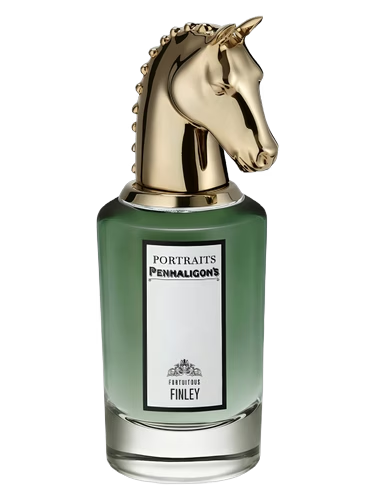
Most Popular Scents Using Sea Buckthorn


What is Sea Buckthorn?
Sea Buckthorn is a resilient deciduous shrub native to Eurasia, particularly the Himalayas, whose vibrant orange berries are used in modern perfumery for their unique, tart, and complex fruity profile.What does Sea Buckthorn smell like?
It offers a bright, acidic aroma blending orange and apple facets with a warm, fruity sweetness, often accompanied by subtle floral nuances and a clean, green undertone.How is Sea Buckthorn essence extracted?
In modern perfumery, the preferred method is supercritical CO2 extraction, which preserves delicate aromatic compounds and nutrients from the fruit pulp and seeds without high heat.What are some top perfumes featuring Sea Buckthorn?
Notable fragrances include Issey Miyake L'Eau d'Issey Pour Homme Fraiche, Zarkoperfume Cloud Collection, and Brocard Sea Buckthorn and Gooseberry.When is Sea Buckthorn in season?
The shrub typically flowers in late May, and its berries ripen to a vibrant orange between late August and mid-September, with harvest peaking in September and October.