Fragrance Notes Are Layers Of Scent That Are Layered To Form The Final Fragrance. Fragrance Notes Are Categorised Into Three Main Elements Based On How Long They Take To Evaporate, And How Long They Typically Last Following Application: Top Notes, Heart Notes And Base Notes.
Sarsaparilla
Sarsaparilla offers a warm, sweet, and distinctly spicy root beer aroma. It is often described as woody, earthy, and slightly camphorous, reminiscent of wintergreen or sassafrass. This complex profile provides a comforting, slightly vintage, and clean depth to compositions, bridging sweet notes with dry, herbal undertones.

Origin & Extraction Of Sarsaparilla
Sarsaparilla's history as an aromatic ingredient primarily stems from its long-standing use in traditional folk medicine and as a flavoring agent for beverages, notably the precursor to modern root beer. Derived from the roots of the Smilax plant, it was historically valued for its earthy, sweet, and slightly medicinal scent profile. Unlike foundational citrus or floral notes, Sarsaparilla did not play a central role in early fine European perfumery. Its use was more common in regional and smaller-scale fragrance preparations, often capitalizing on its clean, comforting, and mildly camphorous characteristics.
In modern perfumery, Sarsaparilla is valued as a unique, non-conventional ingredient, often incorporated to evoke a sense of nostalgia or to introduce a distinctively sweet, spicy, and earthy depth. Its aromatic link to 'root beer' or 'vintage soda' is frequently utilized in contemporary compositions, particularly in niche or gourmand fragrances seeking a comforting, warm, and slightly vintage accord. It serves to bridge sweeter heart notes with drier, woody bases, offering complexity and an unexpected twist to fragrance structures.
Extraction Methods of Sarsaparilla
Historically, the aromatic and medicinal essence of sarsaparilla was obtained by drying the roots of the tropical Smilax vine in the sun, followed by bundling them for export. In 19th-century domestic and commercial production, these roots were often brewed into hot teas or simmered to create a concentrated syrup for root beer and medicinal tonics. Traditional herbal preparations, such as decoctions, involve simmering 3-6 grams of the dried root in water, while tinctures utilize a 1:5 ratio in 40% alcohol to macerate the botanical material over several weeks.
Modern extraction methods have evolved to include sophisticated sequential separation techniques to isolate specific bioactive compounds like flavonoids and saponins. This process typically begins with an ethanol extraction of the rhizome (Smilax glabra), followed by concentration and filtration. The resulting extract is often refined using macroporous adsorbent resin technology, where the filtrate is subjected to water and ethanol elution to improve purity. For scientific and pharmaceutical applications, advanced techniques such as solvent removal, lyophilization (freeze-drying), and liquid chromatography/mass spectrometry (LC/MS-IT-TOF) are employed to verify chemical constituents and ensure the stability of volatile components.
Sarsaparilla, with its distinctive warm, spicy, and root beer-like aroma, is a note that typically finds its home in contemporary and niche perfumery, appealing to those seeking a nostalgic or gourmand twist. It provides a unique bridge between sweet, comforting facets and dry, earthy, or woody undertones. Its use is less about adherence to classic fragrance structures and more about adding a surprising, clean depth, often utilized in smaller, artisanal houses.
- One notable example of Sarsaparilla's modern deployment is in the realm of artisanal fragrance, such as **Rock Lobster** by Ricardo Ramos Perfumes de Autor (2022). This type of composition often leverages the note's complexity—its slightly camphorous and sweet-spicy character—to create a memorable, non-mainstream scent profile that is both comforting and intriguing.
- Similarly, niche brands have embraced Sarsaparilla to evoke specific moods or vintage concepts. Fragrances like **Iles d'Or** by Molinard (2022) or **Boheme Confection** by Aftelier (2022) integrate the root note to ground sweeter elements or enhance an overall earthy, woody theme, demonstrating its versatility in complex, layered structures.
The rise of Sarsaparilla in fine fragrance reflects a growing trend in perfumery toward incorporating unique, photorealistic, and unconventional ingredients, moving beyond traditional floral and citrus hierarchies. While it may not feature in historical classics like Bergamot or Lemon, its application in modern scents like **Eiverwold** (Havenhollow, 2025) and **Yum Kaax** (Coyotl, 2024) confirms its position as a valued component for creators aiming for sophisticated, warm, and highly distinctive aromas.
Sustainability Of Sarsaparilla
Sustainability of Sarsaparilla
- Promoting sustainable harvesting by using manual "wildcrafting" techniques that involve taking only the main root of mature plants while leaving secondary roots to propagate
- Supporting forest conservation as the presence of wild sarsaparilla serves as a natural indicator of healthy, undisturbed soils and vibrant understory ecosystems
- Implementing responsible sourcing of living, food-grade, and organic ingredients that are as close to their natural state as possible to minimize chemical processing
- Utilizing wild-harvested and abundant local resources to reduce the environmental impact of large-scale monoculture farming
- Encouraging ethical production standards that prioritize cruelty-free practices and safe conditions for both workers and the environment
Trivia
Sarsaparilla is a member of the lily family and is a woody vine that can grow up to 50 meters in height, with roots that were historically used in Ayurvedic medicine to calm the mind and prepare one for dreaming.
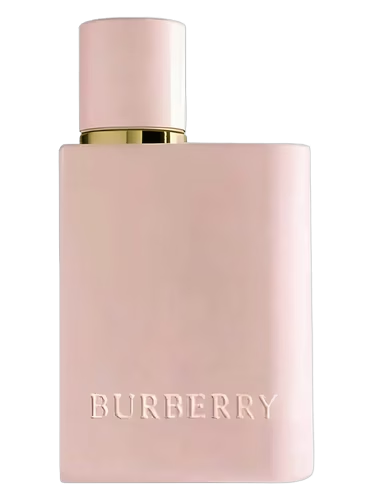
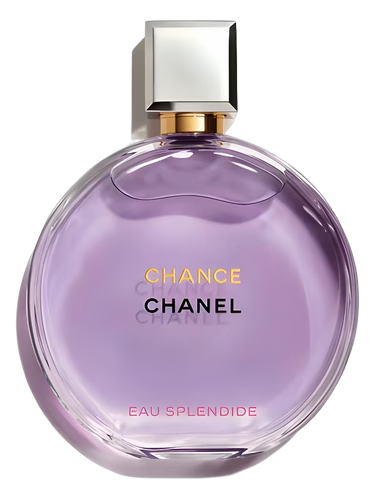
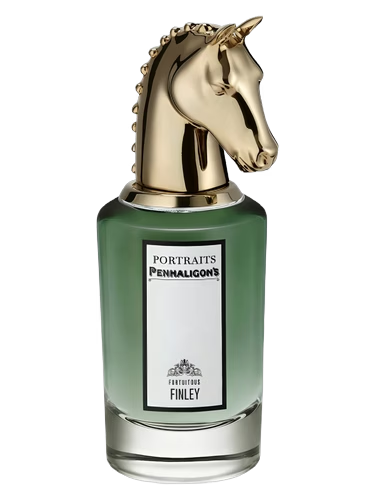
Most Popular Scents Using Sarsaparilla
What is Sarsaparilla?
Sarsaparilla is a fragrance note derived from the roots of the Smilax plant, a woody vine native to tropical and temperate regions of the Americas, known for its historic use in traditional medicine and beverages.What does Sarsaparilla smell like?
It offers a warm, sweet, and distinctly spicy profile reminiscent of root beer, with woody, earthy, and slightly camphorous facets similar to wintergreen or sassafras.How is Sarsaparilla essence extracted?
The aromatic essence is primarily obtained through the distillation of the dried roots of the Smilax vine, though modern techniques also include ethanol extraction and filtration.What are some top perfumes featuring Sarsaparilla?
Notable fragrances include Rock Lobster by Ricardo Ramos, Iles d'Or by Molinard, Boheme Confection by Aftelier, and Mandorlo di Sicilia by Acqua di Parma.When is Sarsaparilla in season?
Wild sarsaparilla begins its cycle in early spring with coppery leaves, blooms from May to June with greenish-white flowers, and produces ripened berries by late summer or early fall.