Fragrance Notes Are Layers Of Scent That Are Layered To Form The Final Fragrance. Fragrance Notes Are Categorised Into Three Main Elements Based On How Long They Take To Evaporate, And How Long They Typically Last Following Application: Top Notes, Heart Notes And Base Notes.
Rose Apple
Rose Apple offers a delicate, fresh profile reminiscent of white rose petals and tea roses, with a slightly green and less intense character. It features a litchi-like sweetness and pink floral notes, complemented by a hint of orange blossom. It is fresh and dewy, often providing a soft, sweet fruitiness.

Origin & Extraction Of Rose Apple
Rose Apple (Syzygium jambos) is native to Southeast Asia and has historically been valued primarily for its unusual culinary profile and ornamental beauty, rather than as a traditional perfumery material. Unlike staple floral and fruit notes with centuries of documented use in classical European fragrance (like Rose or Bergamot), Rose Apple’s delicate and complex scent—reminiscent of white rose and litchi—only recently gained recognition as perfumers began exploring unique, photorealistic, and exotic fruit/floral hybrids. Its use reflects a contemporary trend toward crafting lighter, more nuanced, and dewy compositions.
In modern fine perfumery, the Rose Apple note is typically synthesized or derived through headspace technology to capture its unique dewy, sweet, and lightly green floral-fruity aroma. It is employed strategically in the 21st century, often in niche and designer fragrances, to provide an ethereal sweetness and refreshing lift that is softer than conventional fruit notes. It serves to bridge the gap between fresh, watery fruit accords and light, pink floral hearts, adding complexity and a touch of exoticism to contemporary airy and fresh compositions.
Extraction Methods of Rose Apple
Historically, the aromatic essence of rose apple was captured through traditional methods such as maceration, enfleurage, and simple hydrodistillation. In maceration, petals were soaked in carrier oils like almond or jojoba for several weeks until the oil absorbed the delicate floral scent. Enfleurage, an ancient technique for thermally unstable flowers, involved spreading petals on layers of odorless fat to capture the volatile oils, which were then extracted with alcohol. Early distillation often used the traditional Deg and Bhapka method, a copper-still system where steam passed through bamboo pipes into a cooled receiver.
Modern commercial production primarily utilizes steam distillation and solvent extraction to produce high-quality essences. Steam distillation is the most common method, breaking down cell walls with heat to release aromatic compounds into a condenser. Solvent extraction, using hexane or ethanol, creates a "concrete" that is further refined into a highly concentrated "absolute," favored in high-end perfumery for its rich, true-to-life aroma. The latest advancements include supercritical CO2 extraction, which uses carbon dioxide under high pressure at low temperatures to produce a pure, solvent-free extract that perfectly preserves the fruit's delicate, rose-like nuances without heat degradation.
The Rose Apple note, prized for its delicate, dewy scent that bridges white rose petals and litchi-like sweetness, is increasingly utilized in modern perfumery to create light, ethereal compositions. Its complexity offers a sophisticated, soft fruitiness that is much more nuanced than traditional fruit notes. One fragrance that showcases this note is Natura's Jambo Rosa e Flor de Caju (2025), which likely uses Rose Apple to amplify a sweet, pink floral core, lending a contemporary freshness and gentle exoticism to the overall scent profile.
- Rose Apple often features in fragrances that aim for an airy, romantic, or tropical-inspired sweetness, moving beyond heavy florals or overly sharp citruses.
In niche and artisanal houses, Rose Apple is selected for its unique ability to lend a photorealistic, watery texture to a composition. For example, SAKUNA Fragrance's Yellow-Footed Green Pigeon (2023) incorporates this note, using its subtle green and dewy qualities to suggest a natural, botanical environment. This type of deployment highlights the Rose Apple note's versatility, proving it can support both sweet, feminine scents like We Pink's 4Dreams (2025) and more conceptual, unisex offerings.
- Other fragrances that have featured the Rose Apple note include Icone de Style Velours by Unique Art Parfum and Le Temps des Lilas by Houbigant, demonstrating its adoption across various fragrance genres.
The contemporary relevance of Rose Apple stems from the desire for transparent, sophisticated sweetness. It provides an immediate, uplifting effect similar to classic top notes, but with a lingering, gentle fruity-floral residue that helps anchor the freshness into the heart of the fragrance. Its usage helps define scents that are light, memorable, and effortlessly elegant, making it a valuable addition to modern fragrance collections seeking exotic yet refined notes.
Sustainability Of Rose Apple
Sustainability of Rose Apple
- Fostering orchard biodiversity and resilience by maintaining a variety of fruit species to protect against pests, diseases, and climate impacts
- Implementing organic farming practices such as building soil organic matter, promoting fungal understories, and avoiding the use of synthetic herbicides
- Adopting regenerative agricultural techniques including the use of natural fertilizers like cow dung or poultry manure and maintaining proper tree spacing for optimal airflow
- Participating in EcoCertified programs and global certifications to ensure sustainable land stewardship and the protection of local pollinators
- Supporting local socio-economic sustainability through projects that introduce agricultural mechanization and training for rural communities in rose-derived product manufacturing
Trivia
The rose apple note is often described as a "fantasy note" in perfumery because, despite its name, the scent is frequently more reminiscent of delicate white rose petals or tea roses with a hint of green orange blossom than of a typical crisp apple.
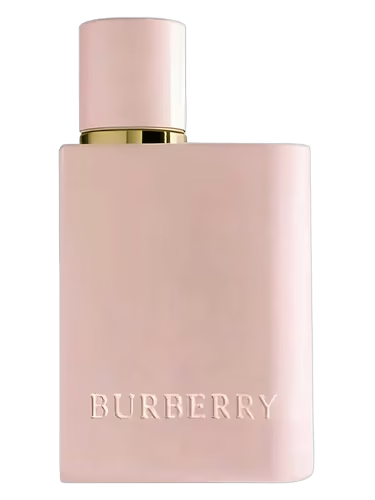
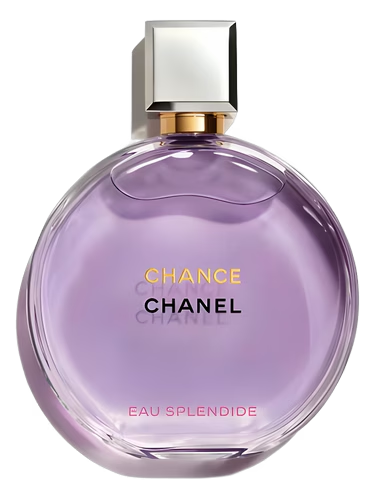
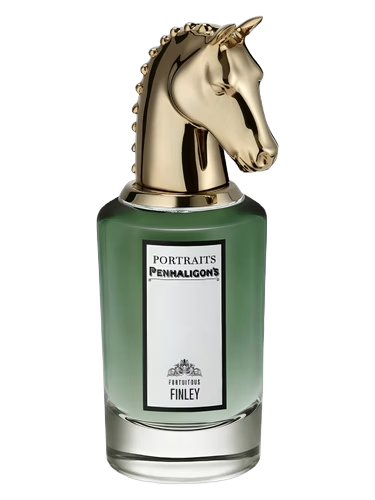
Most Popular Scents Using Rose Apple
What is Rose Apple?
Rose Apple (Syzygium jambos) is a fruit native to Southeast Asia prized in modern perfumery for its exotic, dewy, and light fruity-floral profile.What does Rose Apple smell like?
It offers a delicate, fresh aroma reminiscent of white rose petals and litchi, with a soft, watery sweetness and a hint of green orange blossom.How is Rose Apple essence extracted?
Commercial production primarily uses steam distillation and solvent extraction, while the latest supercritical CO2 technology is used to preserve its delicate, heat-sensitive nuances.What are some top perfumes featuring Rose Apple?
Notable fragrances include Hermes Un Jardin sur le Toit, Kayali Eden Juicy Apple, Revlon Scentblendz Rose Apple, and Jean Marc Paris Pink Apple.When is Rose Apple in season?
The tree is a prolific producer with two primary annual fruiting seasons, typically occurring from May to September and November to March.