Fragrance Notes Are Layers Of Scent That Are Layered To Form The Final Fragrance. Fragrance Notes Are Categorised Into Three Main Elements Based On How Long They Take To Evaporate, And How Long They Typically Last Following Application: Top Notes, Heart Notes And Base Notes.
Rind Bergamot
Rind Bergamot captures the intense, zesty essence of the fruit's peel. It's a highly aromatic, bright, and slightly tart citrus note, often more concentrated and sharper than Bergamot oil derived from the whole fruit. It provides an immediate, refreshing lift, with delicate spicy undertones and a dry, clean finish.

Origin & Extraction Of Rind Bergamot
While Rind Bergamot is technically an intensely focused, zestier extraction of the common Bergamot note, its use in perfumery is aligned with the history of Bergamot itself—a foundational ingredient in the original Eau de Cologne since the early 18th century. By concentrating the aromatic qualities specifically in the rind, perfumers have, over time, sought ways to enhance the natural lift and longevity of citrus top notes. The emphasis on the "rind" extraction is a more modern technique, utilized to achieve a sharper, drier, and more photorealistic burst of zest compared to oil derived from the whole fruit.
In contemporary perfumery, Rind Bergamot is valued for providing a crucial structural lift that is highly concentrated and less volatile. This allows it to shine in modern Eau de Cologne compositions and minimalist scents where the clarity and purity of the top note are paramount. Its dry, clean finish and slightly bitter undertone are leveraged to prevent compositions from becoming overly sweet, making it indispensable for niche and high-end fragrances that require an elegant, invigorating, and sophisticated citrus opening.
Extraction Methods of Bergamot
The primary method for extracting bergamot essential oil is cold expression of the fruit's peel, a process that avoids heat to preserve its delicate, floral-citrus aromatic compounds. Historically, this was a labor-intensive manual task known as the "sponge method," which involved cutting the fruit in half, removing the pulp, and pressing the rind against a natural sponge to collect the oil. In 1840, the invention of the "macchina calabrese" (Calabrian machine) by Nicola Barillà revolutionized the industry by using a system of rotating metal cups with blades and spikes to mechanically rupture the oil glands.
Modern commercial production utilizes advanced mechanical peelers (pelatrice) that rasp the fruit's surface under a water spray to create an emulsion of oil and water, which is then separated using high-speed centrifuges. Recent technological developments focus on safety and purity, such as fractional distillation to create bergaptene-free oil, which removes phototoxic compounds for safer skin application. Other contemporary advancements include the use of supercritical carbon dioxide extraction and isotope ratio mass spectrometry (GC-C-IRMS) to verify the authenticity of the oil against adulteration.
As a highly concentrated and intense form of the classic citrus note, Rind Bergamot is increasingly favored in niche and modern perfumery for its superior brightness and zesty longevity. While traditional Bergamot forms the core of classic Eaux de Cologne, Rind Bergamot offers perfumers a tool to create a sharper, more photorealistic, and long-lasting citrus opening. This quality makes it popular in fragrances that prioritize intense freshness and effervescence, often replacing standard Bergamot oil in high-end compositions.
- A notable modern use is found in sophisticated, clean scents where the bitter, dry undertones of the rind complement aromatic herbs or white florals.
Rind Bergamot lends an invigorating, high-definition burst to numerous contemporary fresh fragrances. It features prominently in scents that aim for a transparent, crystalline clarity, particularly those built around oceanic or mineral accords. Because of its intensity, it only requires a small amount to make a strong impact, helping to define the scent's initial character and elevate the overall composition with its clean, bright acidity. It is sometimes used in conjunction with other citruses to enhance their zesty facets.
- Examples of fragrances utilizing an emphasized Bergamot rind profile include certain modern interpretations of the Eau de Cologne structure, such as those from the **Acqua di Parma Blu Mediterraneo** line, or ultra-fresh masculine releases like **Dior Homme Sport** (2012 formulation) where the opening zest is highly pronounced.
The concentration of Rind Bergamot makes it a powerful top note that beautifully segues into heavier heart notes without disappearing instantly, a common issue with highly volatile citrus oils. This persistence is key in transitional compositions, helping to bridge the vibrant opening to the core of the fragrance. Its slightly bitter, dry finish also works exceptionally well when paired with materials like vetiver, cedar, and green tea, securing its place as an elegant, essential component in sophisticated fresh and aromatic woody perfumes, such as **Le Labo Bergamote 22**.
- Blooming typically occurs during the spring months for the bergamot orange tree, though favorable conditions can extend this into early summer
- Fruit ripening and harvest are carefully timed between November and March to optimize essential oil yield and quality
- Wild bergamot flowers primarily from midsummer to early fall, typically between June and September
- The plant remains of interest through late summer and early autumn as seed heads develop, providing food for wildlife
- Dormancy occurs in late fall and winter, with new growth and maintenance such as pruning occurring in the spring
Sustainability Of Rind Bergamot
Sustainability of Bergamot
- Promoting a circular economy by repurposing waste, such as using juice and remaining peels as fertilizer or for pharmaceutical and nutraceutical products
- Adoption of organic farming practices and underground irrigation to conserve water and resources
- Establishing producer consortia and cooperatives to ensure fair income and socio-economic resilience for smallholder farmers
- Implementation of responsible sourcing policies and third-party audits by major fragrance houses to ensure ethical labor conditions and biodiversity protection
- Research and education initiatives, such as the Adopt-an-Herb program, to support sustainable development and clinical study of bergamot derivatives
Trivia
Bergamot is the signature flavor and aroma of Earl Grey tea, and it was one of the original ingredients in the first Eau de Cologne developed in the early 18th century.
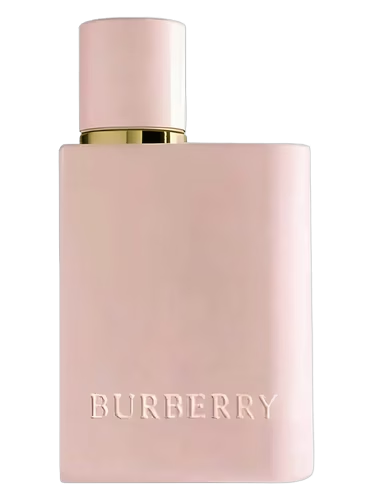
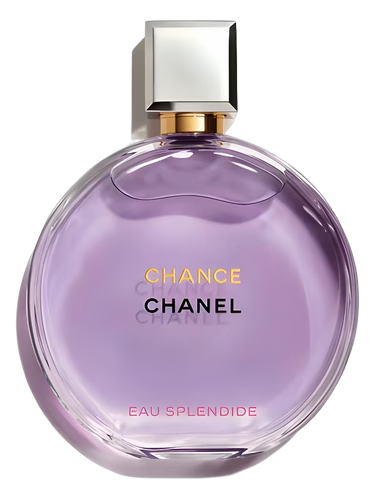
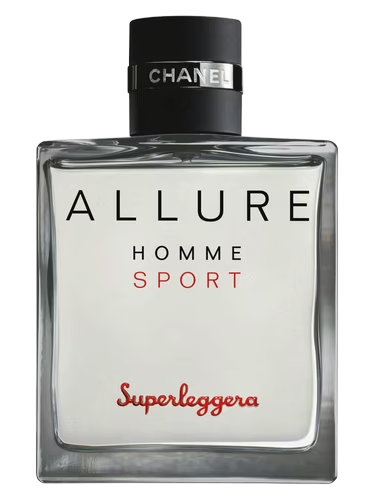
Most Popular Scents Using Rind Bergamot
What is Rind Bergamot?
Rind Bergamot is an intensely aromatic fragrance note derived specifically from the peel of the bergamot fruit, offering a sharper, zestier, and more concentrated citrus profile than standard bergamot oil.
How does Rind Bergamot smell?
It features a bright, slightly tart, and highly aromatic scent with delicate spicy undertones and a dry, clean finish that provides a photorealistic burst of citrus zest.
How is Rind Bergamot essence extracted?
The essence is primarily obtained through cold expression (pressing) of the fruit's peel, a mechanical process that avoids heat to preserve its delicate floral-citrus aromatic compounds.
What are some top perfumes featuring Rind Bergamot?
Notable fragrances include Le Labo Bergamote 22, Dior Homme Sport, Versace Pour Homme, Montblanc Explorer, and various scents from the Acqua di Parma Blu Mediterraneo line.
When is Rind Bergamot in season?
While the tree blooms in the spring, the fruit is carefully harvested between November and March to optimize the yield and quality of the essential oil found in the rind.