Fragrance Notes Are Layers Of Scent That Are Layered To Form The Final Fragrance. Fragrance Notes Are Categorised Into Three Main Elements Based On How Long They Take To Evaporate, And How Long They Typically Last Following Application: Top Notes, Heart Notes And Base Notes.
Red Mulberry
Red Mulberry presents a subtle, complex fruity profile that is often sweet, musky, and lightly tart, distinct from brighter berries. It offers a sophisticated, cool sweetness with nuances of red fruit and a mature, slightly green-woody undertone, lending a unique, reserved depth to compositions.

Origin & Extraction Of Red Mulberry
The use of Red Mulberry (*Morus rubra*) in perfumery is relatively niche and modern, as its subtle, complex fruity profile—sweet, musky, and lightly tart—is challenging to capture accurately compared to brighter, more volatile citrus notes or heavily cultivated berries. Historically, mulberries have a long presence in cultivation across Asia and the Americas, primarily for silk production (white mulberry) and food, rather than essential oil extraction for classical European perfumery. Therefore, it lacks the foundational history seen in notes crucial to 18th-century Eau de Cologne structures.
In contemporary perfumery, Red Mulberry notes are employed to add a sophisticated, reserved depth to compositions, often within the 'red fruit' or gourmand categories. Its unique character, which includes a slightly green-woody undertone, makes it desirable for niche houses seeking to introduce exotic, mature sweetness distinct from generic berry accords. The inclusion of Red Mulberry reflects a modern trend toward incorporating highly specific, less-common fruit elements for nuanced complexity and depth.
Extraction Methods of Red Mulberry
Historically, red mulberry extracts were primarily obtained through simple maceration or infusion techniques, where fruits or leaves were soaked in water or alcohol to capture their flavor and medicinal properties. Traditional methods for tea involved air-drying the leaves and steeping them in hot water, while fruit extracts for natural pigments and medicines often relied on prolonged soaking and manual filtering.
Modern commercial and scientific extraction of red mulberry has advanced to more precise methods to maximize the yield of bioactive compounds like anthocyanins and flavonoids. Common contemporary techniques include ultrasound-assisted extraction (UAE) and enzyme-assisted extraction (EAE), which use ultrasonic waves or specific enzymes like cellulase to break down plant cell walls more efficiently. Additionally, supercritical fluid extraction (SFE) using carbon dioxide is employed for high-purity results without organic solvent residue, alongside vacuum concentration and lyophilization (freeze-drying) to stabilize the delicate aromatic and nutritional components for use in supplements and cosmetics.
The Red Mulberry note, with its sophisticated balance of sweet, musky, and lightly tart red fruit nuances, is increasingly utilized in modern perfumery to create unique, reserved compositions that stand apart from traditional berry accords. It provides a deeper, slightly woody sweetness that appeals to contemporary tastes, particularly in fragrances focused on natural and exotic fruit profiles.
A notable example featuring this distinctive fruit is the Brazilian fragrance, Natura's Amora Vermelha e Jabuticaba, launched in 2020. This scent pairs the complex sweetness of Red Mulberry (Amora Vermelha) with the native Brazilian Jabuticaba, highlighting the note's ability to ground the composition and provide a mature, sophisticated sweetness without becoming overly sugary or volatile, ensuring a lasting fruity impression.
Further demonstrating its appeal in contemporary markets are fragrances like Jean-Pierre Sand Style Heel Happy (2021) and Jequiti's Eu Minhas Escolhas de Verdade (2024). These examples illustrate how the Red Mulberry note is being adopted by both designer and mass-market brands to introduce complexity and a vibrant, yet refined, red fruit character to their latest releases.
Sustainability Of Red Mulberry
Sustainability of Red Mulberry
- Conserving native biodiversity by identifying and protecting pure Morus rubra specimens to prevent genetic extinction through hybridization with invasive white mulberry
- Promoting the use of native species in wildlife plantings and agroforestry to provide critical high-energy food sources for songbirds and larval food for native butterflies
- Implementing natural habitat enhancement and afforestation projects that utilize the tree’s innate pest and disease resistance to reduce the need for synthetic chemical treatments
- Adopting sustainable land management practices, such as precision watering and organic mulching, to optimize water usage and improve soil health in urban and rural landscapes
- Supporting socio-economic resilience through research into native cultivars that offer commercial potential for small-scale farmers and nurseries
Trivia
In Ovid's Metamorphoses, the white berries of the mulberry tree were said to have turned permanently red and then deep purple after being stained by the blood of the tragic lovers Pyramus and Thisbe.
Most Popular Scents Using Red Mulberry
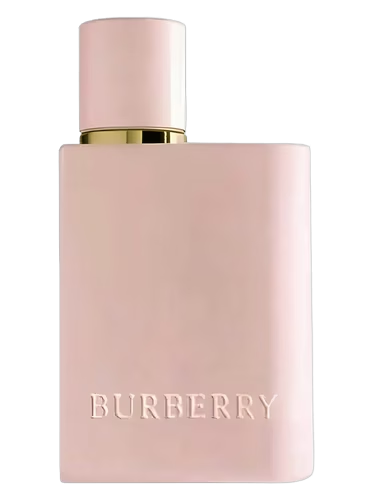
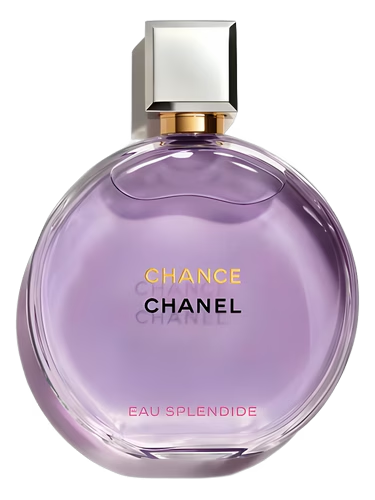
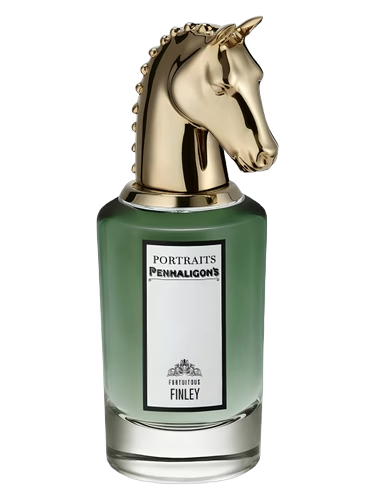
What is Red Mulberry?
Red Mulberry is a fruit native to North America, known in perfumery for its subtle, complex, and sophisticated fruity profile that is often sweet and musky.What does Red Mulberry smell like?
It offers a cool, reserved sweetness with nuances of red fruit, a light tartness, and a mature, slightly green-woody undertone.How is Red Mulberry essence extracted?
In modern perfumery, extraction is often achieved through solvent extraction, ultrasound-assisted extraction (UAE), or supercritical fluid extraction (SFE) to preserve its delicate aromatic components.What are some top perfumes featuring Red Mulberry?
Notable fragrances include Floris London Mulberry Fig, Natura Amora Vermelha e Jabuticaba, and Jean-Pierre Sand Style Heel Happy.When is Red Mulberry in season?
The tree typically flowers in April and May, with the fruit reaching full development and ripeness during the summer months from June to August.