Fragrance Notes Are Layers Of Scent That Are Layered To Form The Final Fragrance. Fragrance Notes Are Categorised Into Three Main Elements Based On How Long They Take To Evaporate, And How Long They Typically Last Following Application: Top Notes, Heart Notes And Base Notes.
Red Mandarin
Red Mandarin offers a sweet, juicy, and vibrant citrus aroma, slightly warmer and less tart than regular mandarin. It features a delightful blend of fresh, zesty top notes with a smooth, almost syrupy-sweet undertone, often evoking a candy-like brightness. It's uplifting and frequently used to lend a cheerful, sparkling opening to fragrances.

Origin & Extraction Of Red Mandarin
The history of mandarin orange in perfumery stretches back to its initial cultivation and appreciation, particularly in Asia. The "red" variant, however, represents a specific, sweeter, and warmer evolution of the note in modern fragrance. Unlike the foundational citrus notes like Bergamot or Lemon that dominated 18th-century Eau de Colognes, Red Mandarin's use became prominent in the late 20th and early 21st centuries. Its sweet, juicy profile—less sharp than traditional citruses—made it a favorite for modern perfumers seeking a cheerful and immediate sense of brightness and vitality in their top notes.
As perfumery moved toward more complex and gourmand compositions, Red Mandarin solidified its role. It is valued for its ability to transition seamlessly from a volatile top note to a warmer element, bridging the gap between sparkling citrus openings and richer floral or oriental hearts. Its subtle warmth allows it to linger longer on the skin than many other citruses, providing a lasting, optimistic impression that is favored in many contemporary designer and niche releases, often paired with white florals or creamy bases to enhance luminosity and depth.
Extraction Methods of Red Mandarin
The primary method for extracting red mandarin essential oil is cold expression (pressing) of the ripe fruit's peel. This mechanical process involves rupturing the oil glands in the zest to release the essence without the use of heat, which preserves the rich, warm, and sweet aromatic profile characteristic of the mature fruit. Historically, this was achieved through manual techniques like the sponge method, where the peels were pressed by hand against sponges to collect the oil, or the ecuelle a piquer, involving rolling the fruit over sharp needles. These traditional methods, while labor-intensive, were highly valued for their ability to capture the most delicate citrus notes.
Modern commercial production has transitioned to advanced mechanical expression using specialized machines like the pelatrice, which rasps the skin under a water spray to create an emulsion that is then separated by centrifugation. Recent developments in extraction focus on green technology and efficiency, including ultrasound-assisted hydrodistillation and supercritical carbon dioxide (scCO2) extraction. These latest techniques aim to improve yield and capture specific bioactive compounds while maintaining the authentic scent profile and reducing environmental impact through lower energy consumption and the elimination of petroleum-based solvents.
Red Mandarin, with its sweet, vibrant, and slightly candy-like aroma, is frequently utilized in contemporary perfumery to provide a cheerful and sparkling top-note opening. Its warmth makes it an excellent choice for balancing richer compositions. A notable example of its use is in the highly successful **Acqua di Parma Mandorlo di Sicilia**, where the red mandarin provides a bright, initial zest before transitioning into the creamy, balsamic heart of the fragrance, establishing a sophisticated yet uplifting scent profile.
- ***
The note is also prominently featured in lighter, often unisex, fragrances that seek a modern twist on the classic citrus cologne structure. In particular, it contributes to the signature complexity of fragrances like Hermès Terre d'Hermès Eau Très Fraîche. Here, the red mandarin is pushed to its brightest limits, offering an energetic, juicy quality that contrasts beautifully with the underlying woody and mineral notes, ensuring the fragrance feels both crisp and grounded.
- ***
For more intensely sweet and luxurious compositions, Red Mandarin's syrupy undertone is indispensable. In fragrances like **Viktor &Rolf Spicebomb Extreme**, the citrus note serves to cut through the heavy spice and vanilla, providing a momentary flash of luminosity. This blend allows the rich, almost gourmand facets of the mandarin to harmonize with the deeper base notes, giving the perfume a cheerful, vibrant lift that prevents it from becoming overwhelmingly dense.
Sustainability Of Red Mandarin
Sustainability of Red Mandarin
- Promoting a circular economy by repurposing waste from the juice industry, such as using leftover peels for essential oil extraction and pulp for animal feed
- Supporting biodiversity through the cultivation of varied citrus species and the maintenance of traditional orchards in primary growing regions like Italy and Brazil
- Adoption of water-efficient irrigation systems and organic farming practices to reduce chemical runoff and preserve soil health
- Implementing fair trade and responsible sourcing policies to ensure equitable income and ethical labor conditions for smallholder citrus farmers
- Utilizing cold-pressing extraction methods that require significantly less energy and produce fewer emissions compared to high-heat distillation processes
Trivia
The name mandarin originates from China, where the fruit was historically offered as a prestigious gift to Mandarins during festivals and remains a traditional symbol of abundance and good fortune during the Chinese New Year.
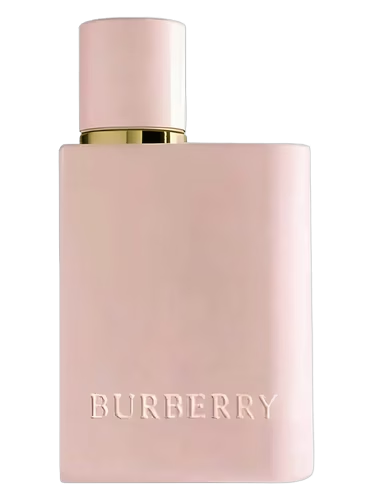
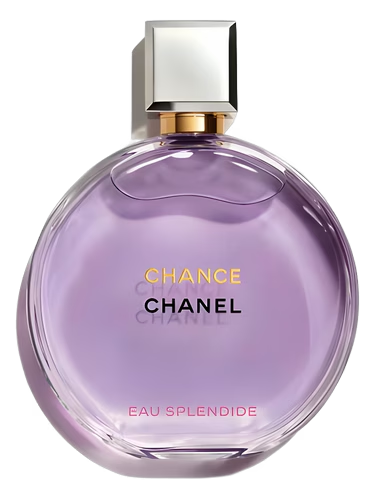
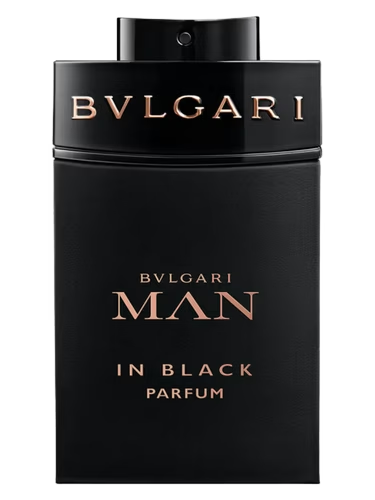
Most Popular Scents Using Red Mandarin
What is red mandarin in perfumery?
Red mandarin is a citrus note derived from the fully ripened peel of the Citrus reticulata fruit, known for being the sweetest and richest of the mandarin varieties with a warm, honeyed, and almost candy-like aroma.How is red mandarin oil extracted?
The essential oil is primarily obtained through cold expression (pressing) of the ripe fruit's peel, a mechanical process that preserves its delicate, sweet, and zesty aromatic compounds without using heat.What does red mandarin smell like?
It offers a vibrant, juicy, and intensely sweet citrus scent that is less sharp than lemon or bergamot, featuring smooth, floral undertones and a syrupy warmth.What are some top perfumes featuring red mandarin?
Notable fragrances that highlight red mandarin include Acqua di Parma Mandorlo di Sicilia, Hermès Terre d'Hermès Eau Très Fraîche, BDK Parfums Rouge Smoking, and Viktor&Rolf Spicebomb Extreme.When is red mandarin in season?
The red mandarin is primarily a winter fruit, typically reaching its peak ripeness and aromatic potency between November and February.