Fragrance Notes Are Layers Of Scent That Are Layered To Form The Final Fragrance. Fragrance Notes Are Categorised Into Three Main Elements Based On How Long They Take To Evaporate, And How Long They Typically Last Following Application: Top Notes, Heart Notes And Base Notes.
Red Fruits
Red Fruits offer a sweet, succulent, and intensely juicy aroma, encompassing notes like raspberry, strawberry, and cherry. This profile is bright, slightly tart, and highly uplifting, often used to introduce a playful, vibrant, and luminous top or heart note. It adds a delicious, mouthwatering quality and a youthful sweetness to compositions.

Origin & Extraction Of Red Fruits
The incorporation of Red Fruits (including notes like raspberry, strawberry, and cherry) into fine perfumery is a relatively modern phenomenon. Historically, fragrance palettes relied more heavily on natural floral, resinous, and animalic materials. While the scent of red fruits has always been desirable, capturing their intensely sweet, juicy, and often volatile aromas proved challenging for centuries. True red fruit notes gained prominence with the advancement of headspace technology and synthetic aroma chemistry in the late 20th century, which allowed perfumers to create photorealistic and stable fruity accords.
The rise of Red Fruits coincided with the shift toward sweeter and more gourmand fragrance categories starting in the 1990s and continuing into the 21st century. These notes are instrumental in modern fruity-floral, chypre, and gourmand compositions, where they are used to inject vitality, sweetness, and a youthful, mouthwatering appeal. They often serve as sparkling top notes or lively heart notes, moving beyond the traditional sharp citrus openings to offer a warmer, more vibrant initial impression.
Extraction Methods of Red Fruits
Historically, the extraction of essences and compounds from red fruits relied on traditional mechanical methods such as cold pressing and maceration. Cold pressing, one of the oldest techniques, involves using a screw press to extract antioxidant-rich liquids and juices from the inner fruit without the application of heat, thereby preserving delicate aromatic profiles. Maceration, another foundational method, involves soaking the fruit in solvents like alcohol or water for extended periods to slowly leach out pigments and flavor compounds.
In modern perfumery and industrial applications, conventional solvent extraction remains widespread, utilizing ethanol, methanol, or acidified water to capture anthocyanins and phenolic molecules. However, recent advancements have introduced "green" non-conventional techniques to improve yield and sustainability. These include Ultrasound-Assisted Extraction (UAE), which uses high-frequency waves to rupture cell walls, and Supercritical CO2 Extraction, which uses pressurized carbon dioxide to obtain high-purity, solvent-free extracts. Other cutting-edge methods include Microwave-Assisted Extraction (MAE) for rapid processing and Enzyme-Assisted Extraction (EAE), which employs pectinase to naturally break down fruit structures at low temperatures.
Red Fruits are a pivotal element in modern perfumery, especially within the gourmand and fruity-floral categories, offering a vibrant, juicy sweetness that provides a youthful and magnetic opening. One of the most commercially successful fragrances to champion this note is **Viktor &Rolf's Flowerbomb**. Although primarily known for its explosive floral bouquet, the inclusion of red fruits in the opening contributes to its sweet, almost confectionary appeal, setting a bright and uplifting tone before settling into its warm, patchouli base. This use demonstrates how red fruits can amplify the perceived sweetness and radiance of a fragrance.
- The red fruits accord is central to the identity of **Lancôme's La Vie Est Belle**, where a pronounced blackcurrant and pear accord, often interpreted as a blend of red fruits, provides the signature mouthwatering quality that complements the intense sweetness of the iris and praline base, cementing its status as a contemporary classic.
- Another fragrance that utilizes red fruits for a sophisticated, feminine effect is **Gucci Guilty Absolute Pour Femme**, which pairs blackberry (a dark red fruit) with woody notes, creating a rich, less overtly sweet interpretation that showcases the note's complexity.
The versatility of the Red Fruits note extends across different fragrance families. In fruity-chypre compositions, such as **Dior's Miss Dior Cherie** (the original formula), strawberry or other red berry notes provided an iconic, sparkling sweetness that modernized the traditional mossy chypre base. This contrast between the playful sweetness of the fruit and the deeper, more elegant base notes helped define the modern fruity-chypre structure, injecting vitality and contemporary flair. More recently, in the niche sphere, red fruits are employed to create high-contrast, juicy openings for fragrances that blend freshness with darkness, ensuring longevity and sophisticated sillage.
- For a purely juicy and uplifting expression of red fruits, **Bath and Body Works Japanese Cherry Blossom** remains an iconic example in the affordable fragrance market, where the cherry/red berry note drives the cheerful, lighthearted character.
The use of Red Fruits is often amplified in modern releases designed to evoke warmth and indulgence. The accord provides a delicious, slightly tart counterpoint to heavy dessert-like notes, preventing them from becoming cloying. For instance, in **Thierry Mugler's Angel Muse**, a sweet red fruit note helps cut through the heaviness of the hazelnut cream and vetiver, giving the gourmand composition a necessary sparkle and lift. This strategic deployment ensures that the fragrance maintains a vibrant energy, proving that red fruits are essential for creating depth and contrast, making them far more than just simple, fleeting top notes.
- Red fruits typically reach their peak harvest during the summer months, with varieties like strawberries, raspberries, and cherries flourishing from late spring through August
- Autumn brings the harvest of pomegranates and certain apple and pear varieties that feature red skins and berry-like undertones
- In tropical regions, fruits like red mangoes and passion fruit may be available during the warmer months of the southern hemisphere's spring and summer
- While many red fruits are now available year-round due to global sourcing, their aromatic and flavor profiles are most intense when harvested during their natural local peak
Sustainability Of Red Fruits
Sustainability of Red Fruits
- Implementing integrated pest management and biological control methods, such as introducing beneficial insects, to reduce reliance on synthetic pesticides
- Adopting precision agriculture and efficient irrigation systems to optimize water usage and maintain soil health under changing climatic conditions
- Committing to a circular economy by transitioning to 100% recycle-ready or compostable clamshell packaging to reduce plastic waste and greenhouse gas emissions
- Promoting biodiversity and soil stabilization by cultivating resilient, native varieties that prevent erosion and support local pollinator populations
- Supporting local and Indigenous communities through sustainable foraging practices and cooperatives that ensure fair livelihoods and preserve land-based knowledge
Trivia
The earliest documented use of red fruits in perfumery dates back to ancient Egypt, where extracts of these fruits were blended with essential oils to create primitive perfumes and medicinal ointments.
Most Popular Scents Using Red Fruits
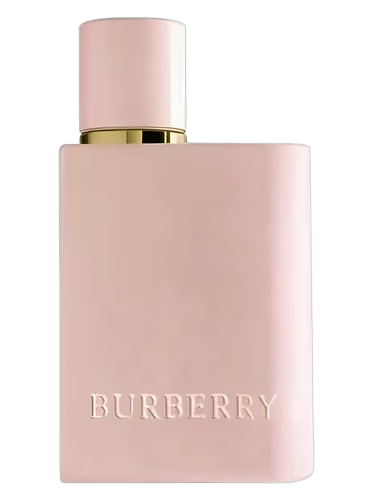
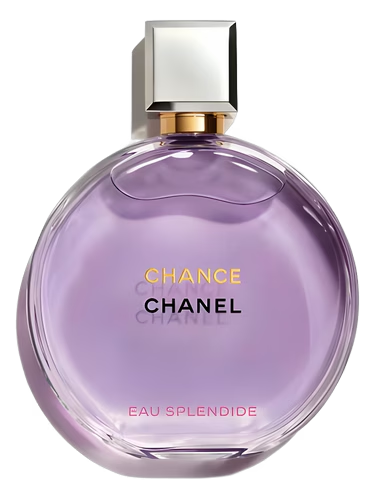
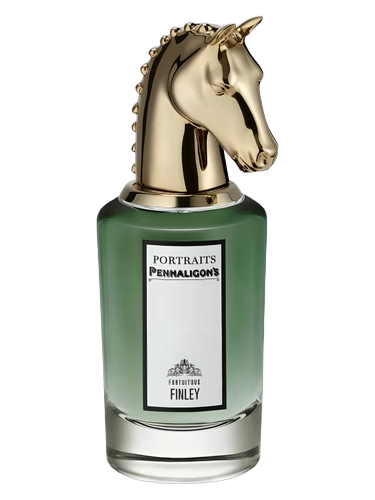
What are Red Fruits in perfumery?
Red Fruits refer to a category of fragrance notes encompassing sweet, succulent, and juicy aromas like raspberry, strawberry, and cherry, often used to add a youthful and vibrant character to perfumes.What do Red Fruits smell like?
They offer a bright, intensely juicy, and slightly tart aroma that adds a mouthwatering, playful sweetness and luminous lift to fragrance compositions.How is Red Fruit essence extracted?
In modern perfumery, these notes are captured using solvent extraction or advanced "green" techniques like Supercritical CO2 and Ultrasound-Assisted Extraction to preserve their delicate profiles.What are some top perfumes featuring Red Fruits?
Iconic fragrances include Viktor&Rolf Flowerbomb, Lancome La Vie Est Belle, Dior Miss Dior Cherie, and Gucci Guilty Absolute Pour Femme.When are Red Fruits in season?
Red fruits typically reach their peak harvest during the summer months, with varieties like strawberries and raspberries flourishing from late spring through August.