Fragrance Notes Are Layers Of Scent That Are Layered To Form The Final Fragrance. Fragrance Notes Are Categorised Into Three Main Elements Based On How Long They Take To Evaporate, And How Long They Typically Last Following Application: Top Notes, Heart Notes And Base Notes.
Red Currant
Red Currant offers a bright, complex, and invigorating scent that balances tart citrus and earthy greens. It features a sparkling, slightly bitter zest combined with juicy tropical fruit and prominent cassis (black currant) nuances. This profile is fresh and uplifting, often utilized to provide a sophisticated, grounded sweetness and vitality.

Origin & Extraction Of Red Currant
The use of Red Currant in fine perfumery is a relatively modern development, as many classic fragrance structures were built upon traditional Mediterranean citruses (like Bergamot and Lemon) or heavier floral and resinous notes. Red Currant, part of a broader trend of incorporating photorealistic and vibrant fruit notes, gained prominence primarily in contemporary fragrances. It is valued not just for its sweetness, but for its complex profile—balancing tartness, a sparkling zest similar to citrus, and the deep, slightly green, earthy nuances associated with cassis (black currant). This complexity allows it to bridge the volatile top notes with the richer heart notes.
Red Currant is particularly popular in modern feminine compositions where its bright, invigorating, and slightly grounded sweetness offers vitality without becoming heavy or overly gourmand. Its sophisticated character makes it a versatile ingredient for adding a sparkling, fresh lift to floral, fruity, and chypre compositions. While its history may not span centuries like Neroli or Sandalwood, its excellent deployment in contemporary scents, such as Guerlain's Grosellina, solidifies its place as a key ingredient for achieving a vivid, modern fruity signature in perfumery.
Extraction Methods of Red Currant
Historically, the extraction of red currant essence and juice was a labor-intensive manual process. In the 15th century, berries were often seeded by hand using a goose feather, particularly in Bar-le-Duc, France, to produce clear, high-quality preserves. Traditional methods for obtaining juice involve simmering the crushed berries in water for approximately 10 minutes and then straining the mixture through a jelly bag or layers of cheesecloth. To ensure a clear liquid, the bag is allowed to drip naturally without twisting or pressing, while purees are traditionally created by pressing softened, steamed fruit through a food mill or sieve to remove skins and seeds.
In modern commercial and industrial production, red currants are processed through automated factory lines where raw materials move through high-speed washing, cutting, and mechanical pressing systems. Modern botanical extraction for perfumery and pharmaceutical use often employs advanced techniques such as ultrasound-assisted extraction (UAE), microwave-assisted extraction (MAE), and pressurized-liquid extraction (PLE). These methods utilize controlled temperatures and hydroalcoholic solvents (like ethanol) to efficiently capture volatile aromatic compounds and polyphenols. Furthermore, steam extraction and lyophilization (freeze-drying) are frequently used to create concentrated extracts and stable powders while preserving the delicate, tart aromatic profile of the fruit.
Red Currant is highly valued in modern perfumery for its ability to deliver a bright, tart, and invigorating top note that adds complexity without being overly sweet. This sophisticated balance makes it a favorite in contemporary fruity-floral and fresh compositions. One notable fragrance to successfully feature this note is **Guerlain's La Petite Robe Noire**, where the Red Currant provides a sparkling, tart opening that sets the stage for the cherry and rose heart, injecting a youthful and vibrant energy into the composition.
Another popular use of Red Currant can be found in the fresh, dynamic structure of scents designed for daily wear. Its slightly bitter, zesty profile, which often incorporates black currant (cassis) nuances, helps to bridge volatile citrus openings with deeper, greener hearts. This effect is brilliantly showcased in the popular **Jo Malone London Blackberry & Bay**, where the Red Currant (and its close relation, cassis) enhances the juicy, verdant character of the blackberry and bay leaf, ensuring a luminous and long-lasting freshness.
In addition to these examples, Red Currant has been central to specific limited or niche releases, such as **Guerlain’s Aqua Allegoria Grosellina**, which highlighted the note's invigorating zest and slightly grounded sweetness to create a vivid, modern fruity signature. The continued adoption of Red Currant in high-end fragrances confirms its status as a versatile ingredient capable of providing vitality and a complex, refined sweetness across various fragrance categories.
Sustainability Of Red Currant
Sustainability of Red Currant
- Promoting a circular economy by repurposing agricultural side-streams, such as using organic prunings for propagation and leaf mold or compost for natural fertilization
- Implementing water-efficient irrigation strategies, such as drip or rill irrigation, to deliver moisture directly to the shallow root systems and minimize evaporation
- Reducing reliance on synthetic chemicals through the adoption of integrated pest management, including the use of pheromone dispensers for mating disruption and biological controls
- Enhancing soil health and biodiversity by using organic mulches like straw or wood chips to suppress weeds, maintain soil temperature, and improve soil structure
- Supporting socio-economic resilience by maintaining traditional crops and exploring sustainable packaging solutions, such as open-topped cardboard punnets, to reduce single-use plastics
- Adopting low-input farming models for hardy, perennial varieties that require minimal human intervention and provide high nutritional returns with a lower environmental footprint
Trivia
Unlike most botanical ingredients, red currant cannot be naturally extracted for perfumery because the fruit's volatile aroma compounds are too fragile and degrade instantly when processed, forcing perfumers to use "reconstructed accords" or synthetic molecules to recreate its tart, sun-kissed scent.
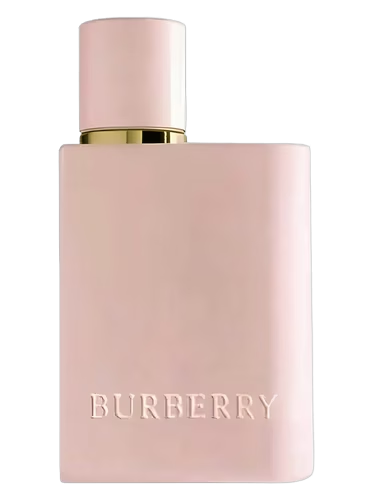
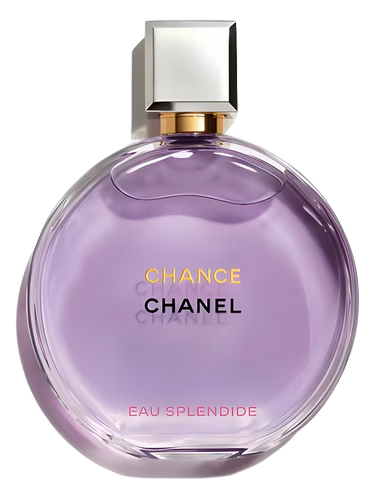
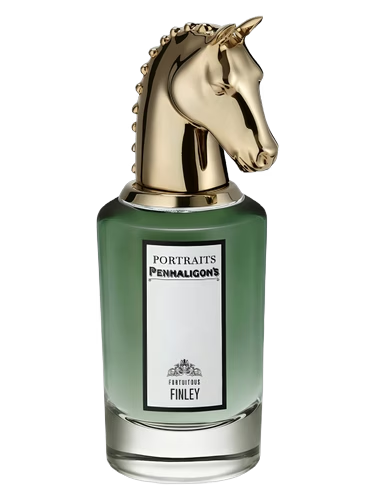
Most Popular Scents Using Red Currant
What is Red Currant?
Red Currant is a fruit note native to Western Europe that has become a popular component in modern perfumery for its vibrant, tart, and sophisticated character.What does Red Currant smell like?
It offers a bright and invigorating scent that balances tart citrus and earthy greens with a sparkling, slightly bitter zest and juicy tropical fruit nuances.Can Red Currant be naturally extracted for perfume?
No, the fruit's volatile aroma compounds are too fragile to survive natural extraction, so perfumers use reconstructed accords or synthetic molecules to recreate its scent.What are some top perfumes featuring Red Currant?
Notable fragrances include Carolina Herrera Very Good Girl, Moschino Cheap & Chic I Love Love, Guerlain Aqua Allegoria Grosellina, and Jo Malone London Green Almond & Redcurrant.When is Red Currant in season?
Red currants follow a seasonal cycle where they bloom in early spring and reach their ripening peak during the summer months of June, July, and August.