Fragrance Notes Are Layers Of Scent That Are Layered To Form The Final Fragrance. Fragrance Notes Are Categorised Into Three Main Elements Based On How Long They Take To Evaporate, And How Long They Typically Last Following Application: Top Notes, Heart Notes And Base Notes.
Red Apple
Red Apple presents a fresh, vibrant, and instantly recognizable sweet-tart fruity profile. It is juicy and crisp, often employed as a synthetic note to offer an uplifting, tonic quality that blends well with florals, woods, and musk. It lends a smooth complexity and contemporary brightness, particularly in top notes.

Origin & Extraction Of Red Apple
The use of Apple, and specifically Red Apple, as a distinct fragrance note is a relatively modern phenomenon in perfumery, largely driven by the development of synthetic aroma molecules. Unlike ancient and classic notes such as rose or frankincense, apple does not yield a usable essential oil through traditional methods. Early perfumery mostly avoided the note, but its popularity surged in the late 20th and early 21st centuries as perfumers sought fresh, youthful, and photorealistic fruity accords. The Red Apple note provides a juicy, vibrant, and sweet-tart quality that is immediately recognizable and highly mass-appealing.
Red Apple became particularly influential in the creation of fruity-floral and gourmand compositions, moving beyond the traditional citrus-heavy openings. Its prominence in fragrances like Donna Karan's DKNY Be Delicious (2004) cemented its status as a contemporary top note, symbolizing urban vitality and crisp freshness. Today, the synthetic note is valued for its stability, brightness, and its ability to blend harmoniously with white florals, spices, and soft musks, ensuring a modern, uplifting, and widely accessible scent profile.
Extraction Methods of Red Apple
Historically, the aromatic profile of red apples was influenced by traditional selective breeding and chance seedlings. For centuries, humans have developed varieties like the Red Delicious by nudging pollen between different species or selecting for specific traits such as thick skin to enhance shelf life. Other traditional methods include grafting, where two different apple strains are combined to create hybrids, a process famously associated with the development of the Granny Smith apple.
In modern practice, the extraction of bioactive compounds and aromatic essences from red apples involves advanced chemical and mechanical techniques. Modern methods include organic solvent extraction using mixtures of ethanol and acetone, often enhanced by ultrasonic treatment and negative pressure to improve efficiency and reduce oxidation. Additionally, green extraction techniques such as pressurized liquid extraction (PLE) utilize high temperatures and pressures to recover polyphenols and antioxidants from apple pomace, while lyophilization (freeze-drying) is used to stabilize samples for analysis. Today, breeders also employ genetic markers and genome sequencing to predict apple characteristics long before trees bear fruit, streamlining the creation of new varieties like red-fleshed hybrids.
The Red Apple note is perhaps most famously immortalized in the realm of modern perfumery by Donna Karan's DKNY Be Delicious (2004). This iconic fragrance centered its entire composition around the crisp, juicy, and vibrant aroma of the Red Apple, presenting a fresh, youthful, and distinctly urban scent profile. The use of Red Apple as a prominent, singular fruit note helped define the fruity-floral category of the early 21st century, moving away from the more traditional citrus openings to provide an immediate, uplifting, and mass-appealing burst of freshness.
- Red Apple is utilized to provide a sense of invigorating clarity and a smooth, sweet-tart complexity to compositions.
- The note’s synthetic origin allows it to be more stable and long-lasting than natural fruit oils, ensuring the top notes persist.
Beyond its most famous application, the Red Apple note often lends a supporting, luminous sweetness to various designer and niche compositions. In men’s fragrances, it is frequently paired with aromatic or spicy notes to inject a youthful vitality. For instance, the original Boss Bottled by Hugo Boss uses a crisp apple note in its opening to provide a cheerful contrast to the warm, spicy heart of cinnamon and cloves and a woody vanilla base, defining a modern, sophisticated masculine signature that remains immensely popular.
In contemporary fragrance, Red Apple continues to appear across genres, particularly in gourmand or sweet fruity-floral blends where its juicy profile enhances the overall delectable feel. Scents like Nina by Nina Ricci often feature a bright apple note, blending it with caramelized sugar and praline to create a whimsical, dessert-like aroma. This versatility demonstrates the note’s ability to act as both a clean, crisp opener and an integral part of a richer, warmer, and sweeter composition.
Sustainability Of Red Apple
Sustainability of Red Apple
- Achieving carbon neutrality across the entire product footprint by 2030 through a 75 percent reduction in emissions compared to 2015 levels
- Increasing the use of recycled and renewable materials, such as 100 percent recycled cobalt in batteries and 99 percent recycled rare earth elements in magnets
- Transitioning the global supply chain to 100 percent renewable electricity, avoiding millions of metric tons of greenhouse gas emissions annually
- Eliminating plastic from packaging by moving to 100 percent fiber-based designs and implementing zero-waste programs at supplier facilities
- Conserving and replenishing water resources through the Supplier Clean Water Program and advanced irrigation and soil management in growing regions
- Designing products for longevity and energy efficiency, consistently meeting high environmental standards like ENERGY STAR and EPEAT
Trivia
In Greek mythology, the red apple was considered sacred to Aphrodite, and throwing one at someone was a traditional way to declare your love for them.
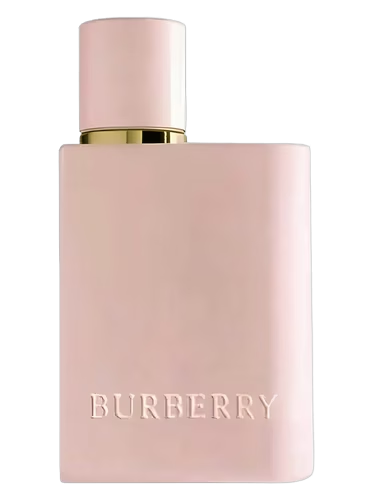
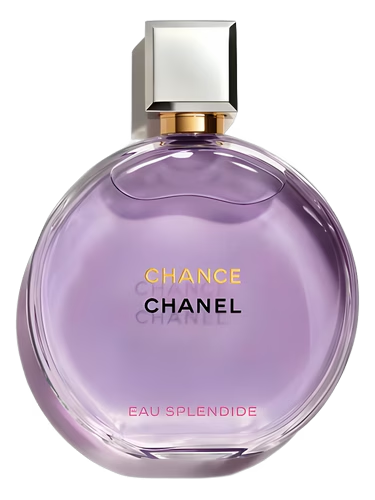
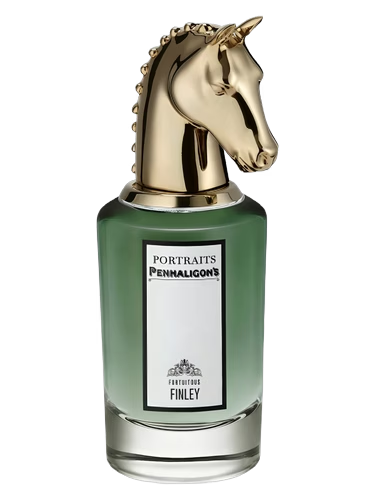
Most Popular Scents Using Red Apple
What is Red Apple?
Red Apple is a fresh, vibrant synthetic fragrance note used in modern perfumery to recreate the sweet-tart and juicy aroma of the fruit, as natural apples do not yield usable essential oil through traditional extraction.What does Red Apple smell like?
It features a crisp, succulent, and instantly recognizable sweet-fruity profile that provides an uplifting, tonic quality to fragrances, often blending well with florals and musks.How is Red Apple essence created?
Since it cannot be naturally extracted from the fruit for commercial perfumery, it is typically created as a synthetic accord using aroma molecules to achieve a stable and photorealistic scent.What are some top perfumes featuring Red Apple?
Notable fragrances include Donna Karan's DKNY Be Delicious, Kayali Eden Juicy Apple 01, Hugo Boss Boss Bottled, and Jo Malone London Peony & Blush Suede.When is Red Apple in season?
While the note is used year-round in perfumery, the fruit itself is primarily harvested in the fall, with peak ripeness occurring from September through October.