Fragrance Notes Are Layers Of Scent That Are Layered To Form The Final Fragrance. Fragrance Notes Are Categorised Into Three Main Elements Based On How Long They Take To Evaporate, And How Long They Typically Last Following Application: Top Notes, Heart Notes And Base Notes.
Rangpur
Rangpur offers a complex and effortlessly refreshing aromatic coolness. It is known for its abundant, very acidic, and tasty juice, rich in Vitamin C. In perfumery, Rangpur Mandarin is often featured in top notes for its zesty, bright citrus character, providing an initial burst of energetic freshness.

Origin & Extraction Of Rangpur
Rangpur, a distinct citrus hybrid of mandarin and lime, does not possess the long history in perfumery of foundational notes like Bergamot or Lemon. Its use is primarily a modern development, gaining prominence as perfumers began seeking more nuanced, complex, and exotic citrus profiles beyond the traditional European selection. Rangpur is valued for its unique blend of tartness (like lime) and tropical sweetness (like mandarin), offering a sophisticated twist on the classic Eau de Cologne structure.
In contemporary fragrance, Rangpur has been successfully deployed to inject an energetic, vibrant, and bitter-sweet freshness, often in high-end niche and designer scents. Its highly acidic and zesty character allows it to cut through heavier base notes, providing transparency and luminosity. Perfumes such as Gucci Guilty Pour Homme and Acqua di Parma Colonia Pura have notably utilized Rangpur in their top notes to deliver a modern, invigorating citrus blast that offers complexity and sophistication to the opening signature.
Extraction Methods of Rangpur Lime
Historically, the aromatic compounds of the Rangpur lime were captured through traditional cold methods such as the manual expression of the peel. These techniques, including the "oleo-saccharum" process where zest is macerated with sugar, were favored to preserve the delicate, heat-sensitive volatile oils. For culinary and medicinal uses, the fruit was often processed through boiling and sugar-saturation to create marmalades and syrups, or the seeds were extracted using simple water washes to remove mucilage for propagation.
Modern extraction primarily utilizes mechanical cold pressing to isolate the essential oil, a process that preserves the unique heady citrus spark and warm floral-ginger spice profile. Recent developments have introduced green extraction technologies, such as using ethanolic-aqueous solvents and optimized temperatures to maximize the yield of bioactive compounds like limonin and hesperidin from food waste like peels. Furthermore, advanced in vitro organogenesis techniques are employed to study and improve the efficiency of Rangpur lime development from epicotyl and hypocotyl segments.
Rangpur, a distinctive citrus hybrid of lime and mandarin, gained notable popularity thanks to its use by Italian fashion house Gucci. Its bright, zesty, and slightly bitter character was prominently featured in the original **Gucci Pour Homme II**, giving the fragrance a sophisticated, energetic top note that stood out from traditional, sweeter citrus compositions. The freshness of Rangpur provided a vibrant contrast to the deeper, spicier, and woody base notes, making it a modern classic in men's perfumery.
- The use of Rangpur in designer fragrances signifies a shift towards more complex and nuanced citrus openings that are both uplifting and enduring.
Beyond its most famous application, Rangpur is also a key ingredient in select niche and high-end colognes seeking an elevated and intense citrus profile. For instance, it contributes a sharp, invigorating quality to various scents within the Acqua di Parma line, known for their dedication to classic Italian citrus notes. Its intense zest offers a refined, slightly green bitterness that helps to anchor the top notes, preventing them from fading too quickly and blending seamlessly into aromatic hearts.
- Rangpur is often sought after by perfumers looking for a unique, tart freshness that bridges the gap between the tartness of lime and the sweetness of mandarin.
While not as ubiquitous as Bergamot or Lemon, Rangpur's presence in a fragrance guarantees a modern and sophisticated twist. Its energetic, almost bitter-sweet profile makes it perfect for "fresh-spicy" categories. A lesser-known but beautiful example of its application is in specific summer-themed limited editions from brands like Jo Malone or Hermès, where it provides a cooling, effervescent lift, making the scent instantly refreshing and memorable.
Sustainability Of Rangpur
Sustainability of Rangpur Lime
- Adopting no-tillage (NT) practices and ecological mowing to create natural on-site mulch, which improves soil health, water infiltration, and carbon sequestration
- Utilizing Rangpur lime as a resilient, drought-tolerant, and disease-resistant rootstock to enhance the longevity and resource efficiency of citrus orchards
- Implementing integrated pest management (IPM) and organic soil blends to reduce reliance on synthetic chemicals and protect local biodiversity
- Promoting water-efficient management systems, such as advanced irrigation monitoring and mulch-assisted moisture retention, to mitigate environmental stress
- Supporting circular economy principles by repurposing leaves as natural pest deterrents and utilizing the fruit's longevity on the tree to reduce waste
- Preserving genetic diversity through the cultivation of traditional cultivars and supporting community-based conservation and nursery practices
Trivia
Despite its name and appearance, the Rangpur lime is not a true lime but a hybrid between a mandarin orange and a lemon, and it is the only "lime" that turns bright orange when fully ripe.
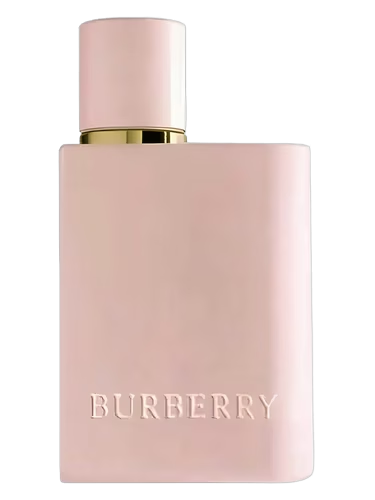
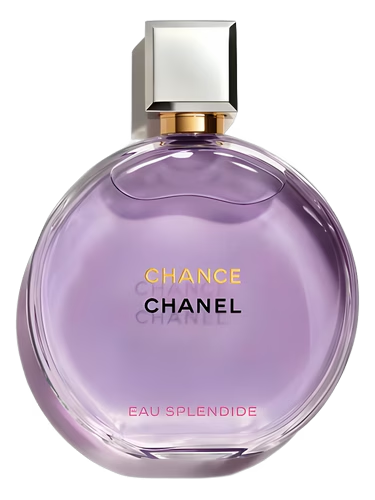
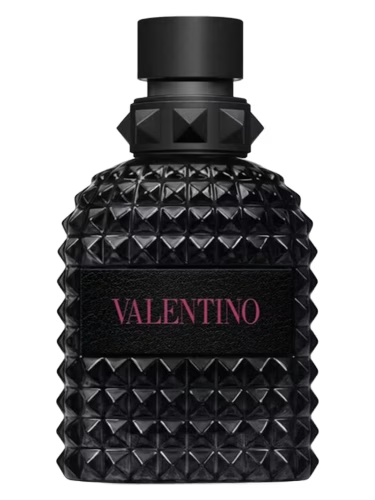
Most Popular Scents Using Rangpur
What is Rangpur?
It is a distinct citrus hybrid of mandarin orange and citron, known for its bright orange skin and intensely tart, lime-like acidity.How is Rangpur oil extracted?
The essential oil is primarily obtained through mechanical cold pressing of the fresh peel to preserve its volatile, heat-sensitive aromatic compounds.What does Rangpur smell like?
It features a complex, bittersweet citrus profile that combines the sharp tartness of lime with the juicy sweetness of mandarin and unique herbal, tea-like undertones.Is Rangpur a true lime?
No, despite its name, it is a hybrid of a mandarin and a citron and is the only "lime" variety that turns bright orange when fully ripe.When is the Rangpur lime in season?
While it can bear fruit year-round, its primary flowering occurs in spring, with the peak ripening and harvest season spanning from November to February.