Fragrance Notes Are Layers Of Scent That Are Layered To Form The Final Fragrance. Fragrance Notes Are Categorised Into Three Main Elements Based On How Long They Take To Evaporate, And How Long They Typically Last Following Application: Top Notes, Heart Notes And Base Notes.
Quince
Quince offers a complex, sweet, and green fruity profile, often likened to a blend of apple, pear, and tropical fruits (papaya, kiwi). It is intensely aromatic, featuring winey, slightly tart, and juicy nuances with subtle floral, estry, and mild melon undertones, providing a sophisticated, ripe freshness.

Origin & Extraction Of Quince
Quince (Cydonia oblonga) is one of the most ancient fruits, with historical relevance dating back to antiquity where it was associated with love and fertility, particularly in Greek and Roman cultures. Its intense, complex aroma—a blend of sweet, floral, and slightly tart nuances—was utilized in ancient scent preparations, pomanders, and waters long before modern perfumery developed. However, as an isolated, distinct note in Western fine fragrance, Quince has a relatively limited history compared to staples like rose or citrus. Traditionally, its scent was achieved through accords combining apple, pear, and certain floral esters, rather than direct extraction.
In modern perfumery, the Quince note has gained popularity primarily as part of the movement toward sophisticated fruity-floral compositions, notably in the 21st century. Perfumers now utilize natural and synthetic materials to capture its complex profile, which offers a unique balance of greenness, sweetness, and winey tartness, providing depth that pure apple or pear notes often lack. It is frequently employed to add an unexpected, ripe, and slightly exotic freshness, distinguishing a fragrance by moving beyond common fruit notes to achieve a nuanced, elegant opening or heart accord.
Historically, the extraction of aromatic and medicinal compounds from quince (Cydonia oblonga) focused on simple manual and thermal methods. For centuries, quince seeds were macerated in water or boiled to isolate their characteristic mucilage, while the fragrant peels were often simmered or steeped in water to capture their subtle, rounded aroma. These traditional "folk methods" relied on gentle heat to avoid destroying the fruit's delicate scent, which is more complex than standard citrus oils. In some traditional culinary and medicinal practices, quince was also processed into pastes or jams, where the seeds and peels remained as secondary by-products.
Modern commercial and scientific extraction has evolved to utilize more sophisticated techniques to maximize yield and preserve bioactive compounds like polyphenols and antioxidants. While cold pressing is occasionally attempted for seed oil, it often results in very low yields, leading producers to favor solvent extraction using petroleum ether or hexane. Recent advancements include the adoption of green chemistry principles, such as supercritical CO2 extraction and ultrasound-assisted extraction (UAE), which reduce the need for organic solvents. Additionally, hydrothermal treatments like "steam explosion" in autoclaves and high-pressure carbon dioxide (HPCD) treatments are being used to process agro-industrial waste into high-value food-grade ingredients. For stabilization, modern methods frequently employ lyophilization (freeze-drying) to protect volatile components from thermal degradation during the drying process.
The Quince note gained immense recognition and popularity following the launch of Chanel’s **Chance Eau Tendre**. This fragrance, and its various flankers, utilized Quince to introduce a sophisticated, sparkling, and slightly green freshness to its opening. It moves beyond typical apple or pear notes by lending a crisp, slightly tart, and luminous quality that beautifully complements the floral heart of jasmine and hyacinth, establishing Quince as a staple in modern, elegant fruity-floral compositions.
- This use case demonstrates how Quince provides structure and longevity to the top notes, preventing them from being purely volatile citrus.
Another iconic use of Quince is found in **Burberry Brit Sheer**, where the note is employed to give the opening a delicate, bright, and mouth-watering freshness. In this composition, Quince is blended seamlessly with litchi and yuzu, providing a sweet yet crisp texture that is distinctly modern and youthful. The note is essential in lifting the overall composition, offering a gentle, ripe fruity nuance that transitions smoothly into the soft floral heart of peony and peach blossom.
- Quince’s complex profile, reminiscent of both apple and pear, allows it to harmonize with a wide range of fruit and floral pairings.
While often used in feminine compositions, Quince's green and slightly tart facets can also lend a sophisticated freshness to unisex and traditionally masculine scents. However, it is most celebrated in the elegant feminine category, notably appearing in the broader range of high-end designer fragrances aiming for a contemporary, clean, and bright fruity signature. Its inclusion signifies a move towards nuanced fruity notes that are fresh, ripe, and slightly exotic, moving away from overtly synthetic or simple fruit accords, cementing its role as a key ingredient for achieving refined luminosity in fragrances like the popular **Acqua di Parma Fico di Amalfi**, where its citron-like quality shines.
- The note has found a strong footing in niche and artisanal perfumery where its complexity is leveraged for unique openings.
Sustainability Of Quince
Sustainability of Quince
- Utilizing a factory-direct model to eliminate middlemen, reducing the carbon footprint associated with traditional multi-stage supply chains
- Prioritizing the use of organic and recycled materials, including GOTS-certified organic cotton, organic linen, and GRS-certified recycled polyester
- Ensuring ethical manufacturing by partnering with mid-sized, family-run factories that hold BSCI and WRAP certifications to verify fair wages and safe working conditions
- Implementing waste-reduction strategies such as on-demand production to minimize inventory surplus and using compostable or recycled packaging materials
- Focusing on timeless, high-quality design to combat the "disposable" nature of fast fashion and extend the lifecycle of every garment
Trivia
Known as the "golden apple," the quince is often considered the true "forbidden fruit" of the Garden of Eden and the legendary fruit that Paris awarded to Aphrodite, rather than the common apple.
Most Popular Scents Using Quince
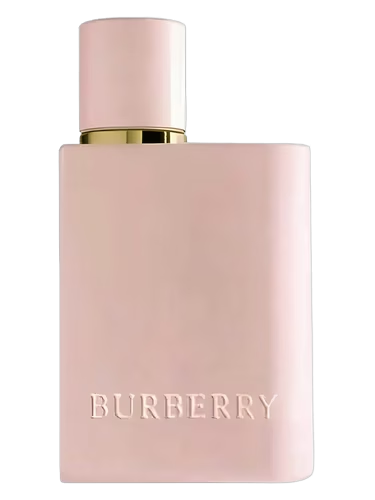
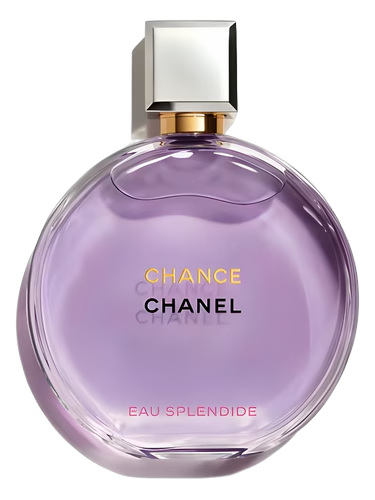
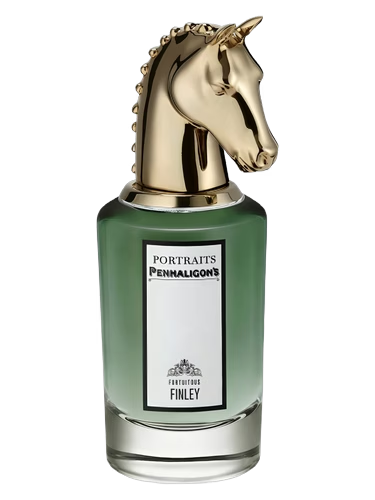
What is Quince?
Quince is an ancient pome fruit native to the Caucasus region, belonging to the Rosaceae family and prized in perfumery for its complex, fruity, and floral aromatic profile.What does Quince smell like?
It offers a sophisticated, ripe freshness characterized by a blend of sweet apple and pear facets, tart winey nuances, and subtle green or tropical undertones like guava or kiwi.How is Quince essence extracted?
While historically achieved through accords, modern perfumery utilizes natural distillation and advanced methods like supercritical CO2 extraction to capture its delicate volatile compounds.What are some top perfumes featuring Quince?
Iconic fragrances featuring this note include Chanel Chance Eau Tendre, Burberry Brit Sheer, Acqua di Parma Fico di Amalfi, and Britney Spears Fantasy.When is Quince in season?
Quince is primarily an autumn and winter fruit, with peak harvest occurring between October and December when the fruit turns golden yellow and its fragrance is most intense.