Fragrance Notes Are Layers Of Scent That Are Layered To Form The Final Fragrance. Fragrance Notes Are Categorised Into Three Main Elements Based On How Long They Take To Evaporate, And How Long They Typically Last Following Application: Top Notes, Heart Notes And Base Notes.
Quenepa
Quenepa offers a unique, complex aroma blending sweet and tart fruitiness with a slightly resinous, green edge. It has nuances of lime, lychee, and a subtle earthiness, providing a vibrant, juicy, and slightly acidic tropical touch, often used to impart freshness and exotic appeal in compositions.

Origin & Extraction Of Quenepa
Quenepa, also known as Spanish Lime or Mamoncillo, is a relatively recent and exotic note in the perfumer's repertoire. Unlike classic citruses such as Bergamot or Lemon, it does not have a long history rooted in traditional Eau de Cologne. Its introduction marks a modern trend toward incorporating rare, unique, and complex tropical fruit profiles to achieve vibrant freshness and exotic appeal. Its complexity, which blends tart and sweet fruitiness with a green, slightly earthy/resinous edge, makes it particularly valuable in niche and artisanal perfumery.
Modern perfumers utilize Quenepa to provide a sophisticated, juicy lift that distinguishes fragrances from conventional compositions. It is frequently employed in aquatic, fruity-floral, and green scents to evoke tropical landscapes, often bridging zesty top notes with warmer, fruity hearts. Its use is focused on contemporary fragrance narratives that seek a bright, slightly acidic complexity and a unique tropical signature, often pairing well with notes like lychee, passionfruit, or green elements such as petitgrain.
Extraction Methods of Quenepa
Historically, the extraction of quenepa (Melicoccus bijugatus) pulp was a manual process centered on home-based or artisanal methods. This involved cracking the firm green peel and hand-squeezing the gelatinous, salmon-colored pulp from the large central seed. Traditional culinary preparations, such as the Vieques liqueur Bilí, often involve macerating the whole fruit with sugar and rum, sometimes followed by a unique aging process where the mixture is buried underground for a month to allow the flavors to meld naturally.
Modern extraction techniques have become more specialized, utilizing mechanical and chemical methods to improve yield and capture bioactive compounds. For beverage production, commercial methods employ food processors, high-speed mixers, or vacuum pump systems to separate the pulp from the seed, with mechanical pressure being a key indicator of pulp adherence. In scientific research, advanced techniques such as freeze-drying (lyophilization) are used to concentrate the extract for medicinal studies, while ultrasound-assisted extraction and aqueous extraction at controlled temperatures (typically around 71°C) are employed to maximize the recovery of healthy polyphenols and antioxidants.
Quenepa, an exotic and complex tropical citrus note, is starting to find its way into niche and artisanal perfumery, valued for its unique blend of sweet, tart fruitiness, resinous depth, and green edge, which imparts a vibrant, slightly acidic tropical freshness to compositions.
- One example of a fragrance featuring this note prominently is **El Coqui** by RDZ Parfums, which utilizes the Quenepa fruit note alongside Aquatic notes, Green notes, Woody Notes, and Flor de Maga to capture the essence of Puerto Rico.
While still relatively uncommon in mainstream fragrance, the distinct profile of Quenepa makes it an exciting element for modern perfumers looking to add sophisticated, natural-smelling tropical facets, moving beyond traditional citrus notes like lime or grapefruit. This trend positions Quenepa as a signature element for innovative niche houses focused on exotic and complex scents.
Sustainability Of Quenepa
Sustainability of Quenepa
- Promoting agroforestry models that integrate quenepa palms with native canopy trees to reduce soil erosion and enhance regional biodiversity
- Supporting indigenous and village cooperatives to preserve ancestral farming knowledge and ensure ethical sourcing and fair economic returns for local communities
- Implementing community-led seed banks to safeguard genetic diversity and improve crop resilience against climate volatility and shifting weather patterns
- Adopting low-impact harvesting and organic practices, as many trees are foraged or grown as backyard plants without the need for synthetic fertilizers or pesticides
- Utilizing eco-friendly innovations such as solar-powered drying systems and sustainable packaging to reduce the carbon footprint of global exports
Trivia
The quenepa is often called the Spanish lime, but it is actually a member of the soapberry family, making it more closely related to the lychee and longan than to any true citrus fruit.
Most Popular Scents Using Quenepa
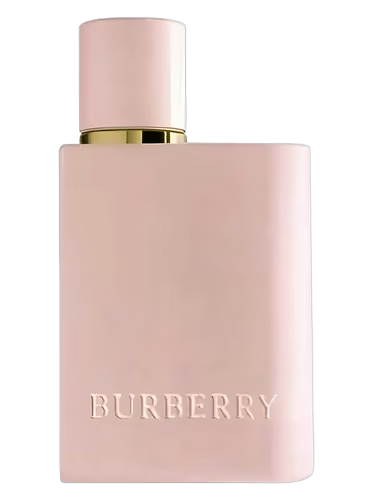
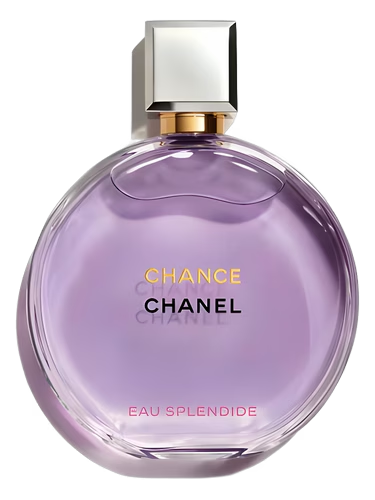

What is quenepa in perfumery?
Quenepa, also known as Spanish lime or mamoncillo, is an exotic fruit note used in modern perfumery to provide a unique, vibrant, and slightly acidic tropical freshness that distinguishes it from traditional citrus notes.
What does quenepa smell like?
It offers a complex, sweet, and tart fruity aroma with a slightly resinous green edge and nuances of lime, lychee, and subtle earthiness.
How is quenepa essence extracted for fragrances?
While traditional methods involve manual pulp separation or maceration, modern perfumery utilizes specialized distillation and mechanical extraction to capture its delicate aromatic compounds.
What are some top perfumes featuring quenepa?
The most prominent example of a fragrance featuring this note is El Coqui by RDZ Parfums, which uses it to capture a tropical, island-inspired essence.
When is quenepa in season?
Quenepa is a seasonal tropical fruit that primarily blooms in the spring, with its fruiting and harvest season spanning the summer months from June through September or October.
Is quenepa a true citrus fruit?
No, while often called the Spanish lime, it is actually a member of the soapberry family, making it more closely related to lychee and longan than to true citrus fruits like lemons or oranges.