Fragrance Notes Are Layers Of Scent That Are Layered To Form The Final Fragrance. Fragrance Notes Are Categorised Into Three Main Elements Based On How Long They Take To Evaporate, And How Long They Typically Last Following Application: Top Notes, Heart Notes And Base Notes.
Purple Yam
The aroma is sweet and slightly earthy, with a creamy feel reminiscent of sweet potatoes, but possessing a unique, slightly floral twist. It offers a complex yet effortlessly refreshing aromatic coolness. This profile is valued for its smooth texture and subtle complexity in fragrance compositions.

Origin & Extraction Of Purple Yam
Purple Yam (Ube), native to the Philippines, has a long history in traditional South East Asian cuisine, prized for its naturally sweet flavor, gentle vanilla-like aroma, and vibrant purple color. While classic perfumery relied heavily on European and Mediterranean ingredients, Ube's direct use in fine fragrance is a recent development. Its introduction coincides with the rise of the gourmand category in the late 20th and early 21st centuries, where perfumers began seeking unique, complex, and comforting food-based notes that offer novelty beyond traditional vanilla and caramel accords. Ube provides a sophisticated sweetness that bridges the gap between root vegetables and desserts.
The relevance of Purple Yam in modern perfumery lies in its complex profile—offering an earthy, creamy, and slightly nutty texture that is simultaneously refreshing and comforting. Its sweet potato-like body, combined with subtle vanilla and floral nuances, makes it an ideal note for contemporary compositions looking to impart smoothness, complexity, and a unique cultural flair. As fragrance houses increasingly explore rare and exotic ingredients, Ube serves as a distinctive aromatic element, valued for its ability to create original, soft, and long-lasting foundations in modern, often niche, gourmand and oriental scents.
Extraction Methods of Purple Yam
Historically, purple yam (Dioscorea alata) has been processed through simple manual techniques such as sun-drying, crushing, and aqueous extraction, where tubers were boiled or steeped in water to capture pigments and starches. Traditional methods also included the use of natural solvents like vinegar or alcohol to extract the vibrant anthocyanins for use as dyes in textiles and food coloring.
Modern extraction methods have become significantly more sophisticated to maximize yield and preserve bioactive compounds. Current commercial and laboratory standards include multi-stage maceration using varied solvents like ethanol and n-hexane, and advanced membrane separation technologies such as ultrafiltration and reverse osmosis to produce concentrated extracts. Innovation in the field has introduced ultrasound-assisted extraction and supercritical CO2 extraction, which offer higher efficiency and faster processing times compared to conventional methods. For powdered forms, technologies like freeze-drying (lyophilization) and spray-drying are now utilized to maintain the yam's nutritional integrity and vivid purple hue.
As a relatively novel and exotic gourmand ingredient in niche and experimental perfumery, Purple Yam (Ube) is not yet common in mainstream 'famous' perfumes. However, its unique profile—a blend of sweet potato, creamy coconut, and vanilla—makes it an appealing note for houses specializing in unique cultural gourmands. One notable example showcasing this distinctive tuberous sweetness is Ube Roll by a niche house focused on Filipino-inspired scents, which uses Ube to create a comforting, dessert-like texture, emphasizing its creamy and nutty facets rather than its earthiness.
- The note is primarily valued for providing a soft, long-lasting, and complex foundation that avoids the cloying sweetness of typical caramel or white sugar notes, appealing to sophisticated gourmand enthusiasts.
While Ube itself is rare, its aromatic qualities are sometimes mimicked or suggested in other well-known gourmand fragrances through a combination of sweet, root, and nutty notes. For instance, in Dior Homme Intense or certain interpretations of Iris, the powdery, cocoa-like root aspect (often from ingredients like Iris root or certain synthetics) is paired with vanilla and subtle woods to hint at a creamy, earthy sweetness similar to the Ube profile. These compositions, while not explicitly featuring Purple Yam, demonstrate the industry's embrace of complex, edible-sounding textures that Ube delivers naturally.
- The subtle floral twist mentioned in its profile allows it to blend seamlessly into oriental compositions, adding a layer of contemporary exoticism to traditional amber or vanilla bases.
Looking ahead, as perfumers continue to explore global cuisines for olfactory inspiration, Purple Yam is poised to gain traction, especially in the realm of limited-edition and artisanal scents. Currently, perfumes that share its creamy, nutty, and root-vegetable DNA, such as Lalique Le Parfum (with its bay leaf/almond contrast) or deep vanilla scents like Tihota Indult, provide a conceptual parallel. These fragrances are praised for their smooth, comforting presence, which is the exact textural role Purple Yam plays when used as an innovative, cultured sweet note in modern fragrance design.
Sustainability Of Purple Yam
Sustainability of Purple Yam
- Adopting organic farming techniques and pest control materials to replace harmful slash-and-burn methods and inorganic fertilizers
- Improving watershed ecosystems and preventing soil erosion through proper land preparation and sustainable cultivation practices
- Establishing direct purchasing agreements between smallholder farmers and food manufacturers to ensure financial security and fair income
- Supporting indigenous communities and local farmers by providing quality planting materials and access to global markets
- Reducing agricultural waste by upcycling B-grade tubers into shelf-stable products like purple yam flakes and flour
- Developing disease-resistant and high-yielding varieties through publicly-supported breeding programs to enhance crop resilience
- Promoting a circular economy by repurposing all parts of the tuber, including the use of peels and mucilage as functional food ingredients
Trivia
While ube is often confused with the purple sweet potato, it is a distinct tuber with a bark-like skin and a unique aroma frequently described as a natural blend of vanilla and pistachio with a hint of coconut.
Most Popular Scents Using Purple Yam
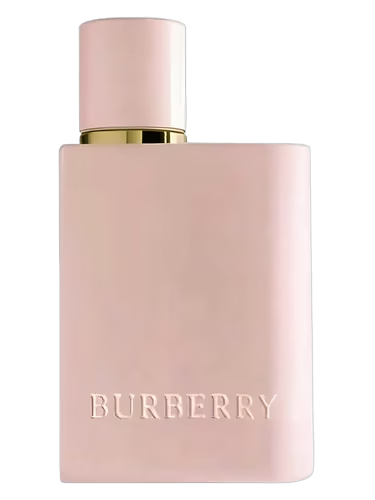
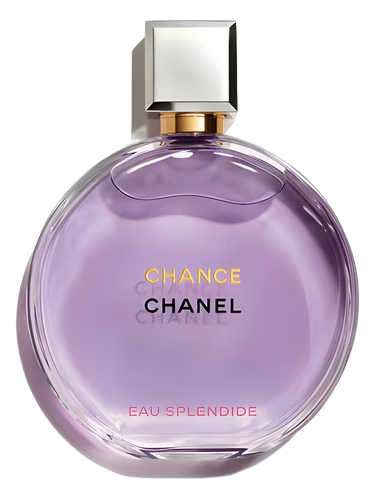
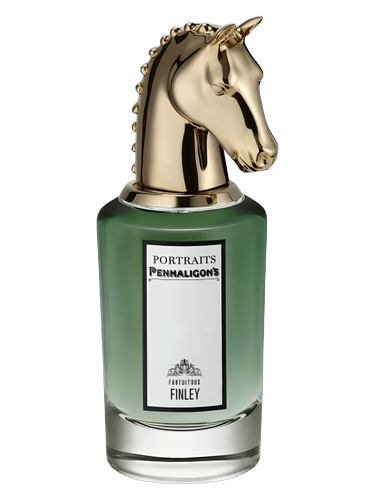
What is Purple Yam (Ube)?
Purple Yam, or Ube, is a starchy tuber native to the Philippines, prized in perfumery for its creamy, sweet, and slightly earthy aroma.What does Purple Yam smell like?
It features a unique scent profile reminiscent of sweet potatoes and vanilla, with nutty almond-like facets and a subtle floral twist.How is Purple Yam used in fragrances?
Ube is primarily used as a novel gourmand note, providing a smooth, comforting, and long-lasting foundation in niche and artisanal compositions.Is Purple Yam the same as Taro?
No, Purple Yam is a distinct species (Dioscorea alata) with a bark-like skin and a sweeter, more vanilla-like flavor compared to the milder, earthier taro.What are some perfumes that feature Purple Yam?
Notable fragrances include Snif Gentle Reminder, Damask Haus Ube Malasada, and Siren Song Elixirs Ube Boba Tea.