Fragrance Notes Are Layers Of Scent That Are Layered To Form The Final Fragrance. Fragrance Notes Are Categorised Into Three Main Elements Based On How Long They Take To Evaporate, And How Long They Typically Last Following Application: Top Notes, Heart Notes And Base Notes.
Prickly Pear
Prickly Pear offers a refreshing, light, and complex fruity note, highly valued in perfumery. It embodies nuances of watery sweetness, similar to watermelon, blended with the green, subtle sweetness of fig, and a mild, uplifting tropical essence. It provides a unique, sophisticated, fresh, and slightly sweet aroma.

Origin & Extraction Of Prickly Pear
Prickly Pear, derived from the Opuntia cactus (also known as the Barbary fig or tuna), has a long history in its native regions of the Americas and the Mediterranean for culinary and medicinal uses, but its application in fine perfumery is a relatively modern phenomenon. Unlike classic notes with centuries of use in Eau de Cologne, Prickly Pear emerged in the late 20th and 21st centuries as perfumers began exploring unique, subtle, and photorealistic fruit notes to move beyond conventional compositions. Its value lies in offering a light, refreshing, and sophisticated scent that blends watery sweetness with subtle green, fig-like nuances, providing a novel twist on the fruity-fresh category.
The contemporary relevance of the Prickly Pear note is tied to its ability to convey an exotic, subtle freshness without excessive sweetness or sharpness. It is particularly popular in modern, transparent, and aquatic compositions that aim to evoke Mediterranean or tropical landscapes. Perfumers utilize it strategically to add a sophisticated, naturalistic watery texture and a mild tropical essence, effectively bridging sparkling top notes with deeper heart notes in niche and designer fragrances.
Extraction Methods of Prickly Pear
The primary method for extracting prickly pear seed oil is cold expression (pressing), a mechanical process where cleaned and dried seeds are crushed and pressed without the application of heat. This technique is favored because it preserves the oil's heat-sensitive bioactive compounds, such as vitamin E and essential fatty acids. Historically, the process was extremely labor-intensive, often involving manual harvesting, depulping, and sun-drying of the seeds before using simple mechanical or hydraulic presses. Because each seed contains only about 5% oil, it can take up to 35 hours and nearly a ton of fruit to produce a single liter of oil.
Modern commercial production has transitioned to advanced mechanical screw presses and electric-powered expellers that optimize yield while maintaining low temperatures. Recent developments also include the use of sophisticated extraction techniques such as supercritical fluid extraction (SFE) using carbon dioxide, which allows for high-purity extracts rich in antioxidants like ferulic acid. Other innovative methods being explored include ultrasound-assisted extraction and microwave-assisted extraction, which aim to improve efficiency and antioxidant recovery compared to traditional solvent extraction methods like Soxhlet extraction.
The Prickly Pear note, prized for its refreshing, light, and watery sweetness reminiscent of fig and watermelon, has become a favorite in modern perfumery for adding a sophisticated, naturalistic freshness. It is particularly effective in compositions aiming for a subtle exotic or Mediterranean feel, avoiding the sharpness of traditional citruses. Its subtle tropical essence is often used to create transparent, luminous openings in fragrances. One notable utilization of this note is in fragrances from niche houses, where the unique character of Prickly Pear can be fully appreciated as a refined twist on the fruity-fresh category.
A fragrance that prominently features the Prickly Pear note is **Eau de Cartier Zeste de Soleil**. This scent uses the subtle sweetness and watery quality of the Prickly Pear to support a bright, citrus opening, lending the composition a dewy, sun-drenched texture that is both uplifting and easy to wear. This choice showcases the note's ability to inject an exotic, light humidity into a fresh fragrance, enhancing longevity and depth without relying on heavier base notes.
Another popular example is **Aqua di Parma Fico di Amalfi**, which often features facets of Prickly Pear (Barbary Fig) within its overall fig/fruit accord. While the fig is the central theme, the watery, light sweetness of the Prickly Pear contributes to the overall impression of a sun-ripened, complex fruit basket by the sea, highlighting its ability to blend seamlessly with other fruit and green notes to create an authentic, sophisticated Italian landscape. This demonstrates the versatility of Prickly Pear as a supporting note that offers complexity and a clean, invigorating lift.
Sustainability Of Prickly Pear
Sustainability of Prickly Pear
- Utilizing one of the world's most sustainable plants, which thrives in arid climates with up to 80% less water than traditional crops
- Promoting a circular economy by using all parts of the plant, including fruit for food, pads for livestock forage, and waste for bioenergy production
- Implementing natural land restoration and soil conservation practices, as the extensive root systems prevent erosion and lock in moisture
- Supporting carbon sequestration efforts through the plant's ability to act as a powerful carbon sink, storing CO2 in the soil to mitigate climate impacts
- Reducing environmental footprint by replacing synthetic materials with prickly pear-based alternatives like vegan leather and bioplastics
- Advancing social and economic resilience for smallholder farmers in drought-prone regions by providing a hardy, multi-purpose crop that ensures food security
Trivia
Prickly pear is the only cactus fruit native to the New World, and according to Aztec legend, the sun god Huitzilopochtli commanded the Aztecs to build their capital, Tenochtitlan, on the exact spot where they found an eagle perched on a prickly pear cactus devouring a snake.
Most Popular Scents Using Prickly Pear
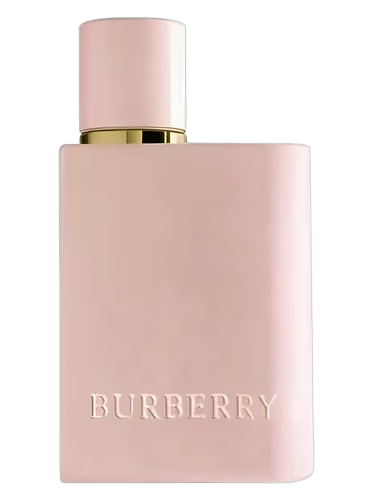
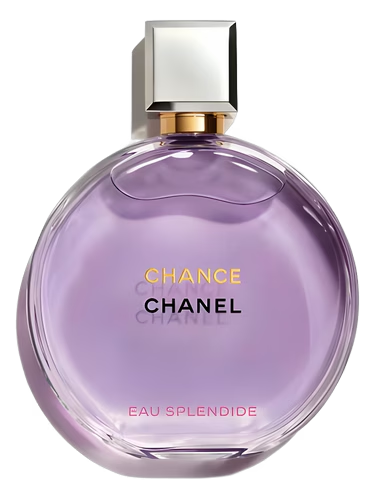
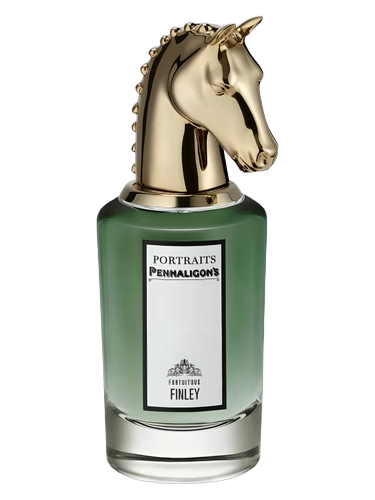
What is Prickly Pear?
Prickly Pear is a fragrance note derived from the Opuntia cactus, also known as the Barbary fig, which has emerged as a sophisticated and modern ingredient in contemporary fine perfumery.What does Prickly Pear smell like?
It offers a refreshing, light, and complex aroma characterized by watery sweetness similar to watermelon, blended with green, fig-like nuances and a mild tropical essence.How is Prickly Pear essence extracted?
The oil is primarily obtained through cold expression (pressing) of the seeds, a meticulous mechanical process that preserves the heat-sensitive aromatic compounds without using chemicals.What are some top perfumes featuring Prickly Pear?
Popular fragrances featuring this note include Diptyque Ilio, Mugler Alien Goddess Supra Florale, Givenchy L'Interdit Angelique Rouge, and Eau de Cartier Zeste de Soleil.When is Prickly Pear in season?
The peak season typically spans from late summer through early winter, with the primary harvest in the Northern Hemisphere occurring between September and December.