Fragrance Notes Are Layers Of Scent That Are Layered To Form The Final Fragrance. Fragrance Notes Are Categorised Into Three Main Elements Based On How Long They Take To Evaporate, And How Long They Typically Last Following Application: Top Notes, Heart Notes And Base Notes.
Pomelo
The Pomelo note offers a bright, refreshing citrus aroma, often likened to grapefruit but generally smoother and less tart. It presents a sweet, slightly bitter, and juicy character, lending a vibrant, uplifting quality to compositions, frequently used in top notes for a sparkling, zesty opening.

Origin & Extraction Of Pomelo
Pomelo, a large citrus fruit native to Southeast Asia, has a relatively recent history as a distinct, celebrated note in Western fine perfumery compared to classics like Bergamot or Lemon. Traditionally, its aroma was blended within general "grapefruit" or "citrus" accords. The shift toward recognizing Pomelo as an individual note began as perfumers sought alternatives to the sharper, more bitter qualities of grapefruit. Its introduction provided a smoother, sweeter, and more tropical variation of citrus, perfect for the modern era of light, vibrant, and highly wearable fresh fragrances.
The note truly gained prominence and popularity starting in the 21st century, particularly championed by niche houses who focused on creating hyper-realistic, ingredient-centric fragrances. Pomelo is prized for its ability to deliver an immediate, effervescent burst of freshness that is less volatile than many other citrus oils, often anchoring the top notes. It is frequently used to lend a clean, sparkling, and sunny quality to compositions, making it a key element in contemporary aquatic, sporty, and summer-focused scents.
The primary method for extracting pomelo essential oil is cold expression (pressing) of the fruit's thick, oil-rich outer peel. Historically, this was a manual process involving techniques such as the "sponge method," where rinds were pressed by hand against sponges to collect the volatile oils, or the "ecuelle a piquer," where the fruit was rolled in a bowl lined with spikes to puncture the oil glands. These traditional mechanical methods were favored because they preserved the delicate, fresh citrus aroma without the use of heat, which can oxidize and degrade the oil's complex chemical constituents.
In modern commercial production, extraction has evolved toward high-speed mechanical peelers and centrifugal separators that efficiently isolate the oil from the peel under a water spray. Recent technological advancements include the use of supercritical carbon dioxide (scCO2) extraction and microwave-assisted hydrodistillation, which offer shorter extraction times and higher purity. Additionally, innovative "ice-crystal wall-breaking" techniques have emerged, where the peel is slowly frozen to form ice crystals that rupture the oil cell walls, followed by thawing and pressing to achieve a more complete recovery of the essential oil.
Pomelo, a vibrant and increasingly popular citrus note, is often utilized to add a contemporary, uplifting, and slightly less bitter alternative to grapefruit in modern compositions. It is prized for its balance of sweetness, zesty brightness, and smooth character. A key example is **Aqua Allegoria Pamplelune** by Guerlain, which uses the bright, juicy nature of pomelo to create an exhilarating and effervescent top-note burst, softening the overall citrus profile while maintaining vitality.
The refreshing quality of the Pomelo note makes it a staple in many light, clean fragrances, especially those aimed at summer or daytime wear. It features prominently in perfumes that aim for a transparent, aquatic, or tea-like freshness. For instance, **Jo Malone London Grapefruit** cleverly uses Pomelo alongside grapefruit to deliver a multidimensional citrus opening that is simultaneously crisp and refined, enhancing the longevity of the top notes with its slightly sweeter edge.
Furthermore, Pomelo is used in niche and luxury perfumery to provide a sophisticated, exotic lift that complements floral or woody bases without overpowering them. Its nuanced profile allows it to blend seamlessly, as seen in **Atelier Cologne Pomélo Paradis**, where the note is celebrated for its juicy, sun-drenched quality, anchoring the composition with a radiant and long-lasting citrus core that avoids the sharp volatility of other citrus oils.
Sustainability Of Pomelo
Sustainability of Pomelo
- Adopting grass cultivation instead of clearing in orchards to improve ecosystem health, increase energy efficiency, and reduce reliance on non-renewable resources
- Implementing integrated nutrient management (INM) and optimized fertilization strategies, such as adding magnesium, to enhance yields while reducing carbon footprints and greenhouse gas emissions
- Promoting forest enrichment and agro-forestry techniques to increase biodiversity, enhance environmental services, and improve resilience to climate-related stresses like drought and heavy rainfall
- Utilizing water-fertilizer integration and controlled-release fertilizers to significantly lower nitrogen and phosphorus footprints compared to conventional farming practices
- Supporting local economies by providing smallholder farmers with sustainable production models that stabilize long-term income and reduce agricultural input costs
Trivia
The pomelo is one of the three original ancestor citrus species from which almost all modern citrus, including the orange and the grapefruit, are derived.
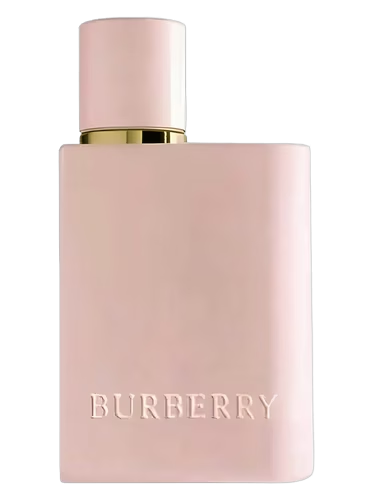
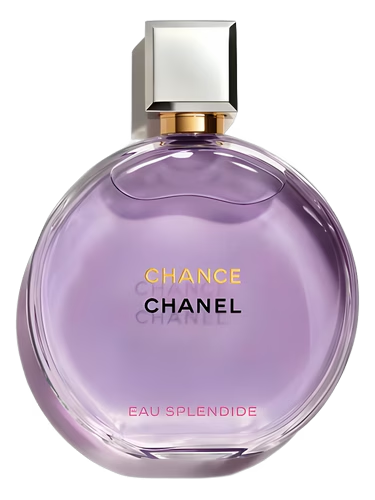
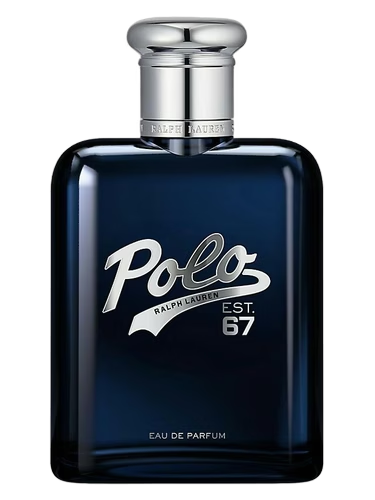
Most Popular Scents Using Pomelo
What is pomelo?
Pomelo is a large citrus fruit native to Southeast Asia and is one of the original ancestor species of modern citrus, known for its thick rind and refreshing aroma.
How is pomelo oil extracted?
The essential oil is primarily obtained through cold expression of the fruit's outer peel, preserving its fresh scent without the degradation caused by heat.
What does pomelo smell like?
It offers a bright, zesty, and sparkling citrus scent that is generally smoother, sweeter, and less bitter than grapefruit.
What are some top perfumes featuring pomelo?
Notable fragrances include Jo Loves Pomelo, Atelier Cologne Pomélo Paradis, Hermetica Pomeloflow, and Guerlain Aqua Allegoria Pamplelune.
When is pomelo in season?
The pomelo tree typically blooms in the spring, with the fruit reaching peak maturity and harvest readiness from late autumn through early spring.