Fragrance Notes Are Layers Of Scent That Are Layered To Form The Final Fragrance. Fragrance Notes Are Categorised Into Three Main Elements Based On How Long They Take To Evaporate, And How Long They Typically Last Following Application: Top Notes, Heart Notes And Base Notes.
Pomegranate
Pomegranate is typically treated as a fantasy fruity note in perfumery, offering a complex, vibrant character. It balances juicy sweetness with a distinct tart or sour edge. This profile is often enhanced by spicy and sometimes subtly leathery undertones, creating an uplifting, unconventional, and sophisticated top-to-heart scent.

Origin & Extraction Of Pomegranate
The Pomegranate (Punica granatum) holds deep cultural and historical significance across the Mediterranean, Middle East, and Asia, often symbolizing fertility, abundance, and eternal life. However, unlike essential historical ingredients such as citrus or rose, the pomegranate was not traditionally processed for its aromatic oil in classic Western perfumery. The natural fruit's oil yield is low, and the complex, tart, and juicy aroma is volatile, meaning the 'Pomegranate' note used in fragrance is largely a synthetic or "fantasy" accord, designed to capture the vibrancy of the fruit and its seeds.
Pomegranate gained prominence in fine perfumery during the late 20th and early 21st centuries, coinciding with the rise of modern fruity-floral and gourmand categories. Perfumers began seeking unique, non-traditional fruit notes to add unconventional brightness and a tart contrast to sweeter or deeper compositions. This note is famously featured in fragrances like Calvin Klein's Euphoria, where it provides a distinctive, uplifting, and slightly mysterious opening, establishing Pomegranate as a sophisticated, modern fruity component rather than a classical one.
Extraction Methods of Pomegranate
Historically, the extraction of pomegranate essence and juice was a labor-intensive manual process. Traditional techniques involved peeling the fruit by hand to separate the seeds (arils), which were then squeezed or pressed to release the juice. Another ancient method involved following the fruit's natural veins to open it like a flower, followed by tapping the exterior with a wooden spoon to dislodge the seeds. For medicinal uses, pomegranate bark and peels were often processed through simple water boiling or long-term soaking in solvents like honey or alcohol to capture bioactive compounds.
Modern commercial and scientific extraction has evolved to maximize the yield of antioxidants from the entire fruit, including the peel and seeds. While industrial juice production often utilizes mechanical pressing or centrifugal extraction of separated seeds, advanced techniques like Solid-Liquid Dynamic Extraction (SLDE) now allow for the simultaneous processing of peels and juice. Furthermore, innovative methods such as microwave-assisted extraction (MAE), ultrasound-assisted extraction (UAE), and supercritical CO2 extraction are employed to efficiently capture sensitive polyphenols and seed oils using less energy and fewer toxic solvents than traditional heat reflow or Soxhlet methods.
The Pomegranate note, valued for its complex balance of tartness and juicy sweetness, gained significant recognition in modern perfumery by providing an unconventional and uplifting fruit element. Its most famous deployment is arguably in **Calvin Klein's Euphoria**, where it delivers a distinctive, slightly mysterious, and intoxicating opening. This usage established Pomegranate as a sophisticated, contemporary fruit note, moving it beyond simple freshness into richer, more sensual compositions.
- Pomegranate is often used to add unconventional brightness and a tart contrast, preventing fragrances from becoming overly sweet or heavy.
Beyond its iconic use in designer fragrances, the Pomegranate note is also cherished in the niche and artisanal market for its ability to convey high-definition vibrancy. A notable example is in **Jo Malone London's Pomegranate Noir**, which showcases the note's darker, more complex side, blending the juicy fruit with deep, spicy, and woody accords. This interpretation emphasizes the sophisticated, wine-like facets of the fruit, giving it a rich, long-lasting presence that is far from volatile citrus openings.
- The note’s unique profile allows it to bridge fresh top notes with richer, enduring heart and base notes like patchouli and amber.
Another popular application is in compositions seeking a cheerful, sparkling, and refreshing fruit cocktail effect. Fragrances such as **DKNY Be Delicious** or others in the fruity-floral category often utilize Pomegranate to inject a vibrant, mouth-watering sweetness coupled with a slight, invigorating sharpness. This versatility confirms Pomegranate's modern status as an essential ingredient for creating distinct, memorable, and enduring fruity accords across a wide range of fragrance families.
Sustainability Of Pomegranate
Sustainability of Pomegranate
- Promoting a circular economy by upcycling pomegranate husks and peels into high-value products such as prebiotics, natural antimicrobials, and fiber-enriched food ingredients
- Implementing renewable energy solutions, including the transition to solar-powered processing plants and the use of 100% recycled plastic (rPET) for packaging
- Adopting precision resource management and data-driven farming practices to optimize energy consumption and reduce the environmental footprint of irrigation and fertilization
- Supporting socio-economic resilience through investment in community-led development and cooperatives that provide stable income and empower local farmers
- Enhancing carbon sequestration and biodiversity by utilizing pomegranate trees to restore marginal lands and improve soil health in semi-arid regions
Trivia
In Greek mythology, the change of seasons is attributed to the goddess Persephone eating pomegranate seeds, which bound her to the underworld for a portion of every year and created winter.
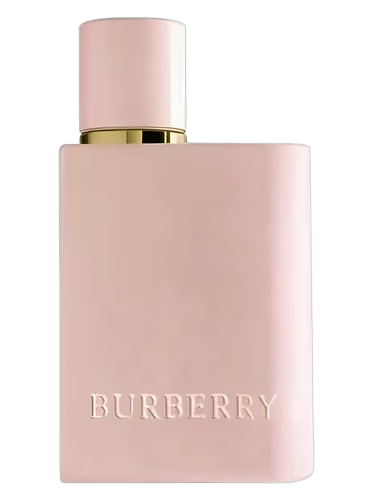
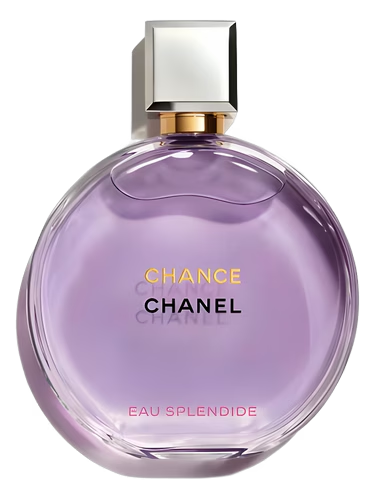
Most Popular Scents Using Pomegranate

What is Pomegranate in perfumery?
Pomegranate is considered a "fantasy" note because the fruit yields very little natural aromatic oil; therefore, perfumers reconstruct its scent using synthetic accords to capture its vibrant, juicy, and tart essence.What does Pomegranate smell like?
It offers a complex, multi-faceted aroma that balances sugary sweetness with a sharp, acidic tartness, often featuring subtle spicy, green, and leathery undertones.How is Pomegranate essence extracted?
While modern industrial methods like CO2 extraction and cold pressing are used to obtain seed oils for skincare, the fragrant note in perfumes is typically a synthetic reconstruction of the fruit's volatile aroma.What are some top perfumes featuring Pomegranate?
Iconic fragrances highlighting this note include Jo Malone London Pomegranate Noir, Calvin Klein Euphoria, Bvlgari Omnia Coral, and Guerlain Aqua Allegoria Granada Salvia.When is Pomegranate in season?
Pomegranates are a quintessential cool-weather fruit, typically harvested from September through February in the Northern Hemisphere and from March to May in the Southern Hemisphere.