Fragrance Notes Are Layers Of Scent That Are Layered To Form The Final Fragrance. Fragrance Notes Are Categorised Into Three Main Elements Based On How Long They Take To Evaporate, And How Long They Typically Last Following Application: Top Notes, Heart Notes And Base Notes.
Pokan
Poka is a sweet, gourmand adventure opening with Caramel Popcorn, Apple Pie, and Cinnamon. The heart features Roasted Hazelnut, Labdanum, and Dried Apricot, leading to a warm base of Vanilla, Musk, Tonka Bean, and Cedarwood. This profile suggests a rich, indulgent, and comforting fragrance experience.

Origin & Extraction Of Pokan
Pokan, as a specific, named citrus note (a type of mandarin), is not widely documented in classical perfumery history like foundational notes such as Bergamot or Lemon. However, its inclusion in modern fragrance—often described as a gourmand accord featuring notes like caramel popcorn and apple pie—reflects a trend toward conceptual and highly complex fruity-sweet notes. In this modern context, Pokan acts less as a single raw material and more as an aromatic idea, lending a juicy, warm, and comforting sweetness to the top and heart of a fragrance. This creative interpretation is favored by contemporary perfumers aiming to bridge traditional citrus freshness with the popular, layered sweetness of gourmand genres.
The contemporary relevance of the Pokan note lies in its versatile application across different fragrance houses, ranging from high-end niche brands (like Montale) to mass-market products (like Bath & Body Works). Its profile is used to provide a sophisticated, slightly exotic signature and to amplify existing gourmand structures, contrasting heavier base notes like vanilla, musk, and tonka bean with a bright, fruity lift. The note demonstrates how modern perfumery uses complex accords to mimic realistic dessert and comfort scents, ensuring the fragrance is both cheerful and long-lasting.
Extraction Methods of Ponkan
Historically, the essential oil of ponkan (Citrus reticulata Blanco) was primarily obtained through traditional methods such as hydrodistillation using a Clevenger-type apparatus, where the fruit peels are immersed in water and heated until evaporation. Another traditional technique is the "oleo saccharum" method, which involves macerating the citrus peels in sugar at room temperature to pull out the flavorful oils and create a concentrated syrup. Manual separation of the peel before processing was a common step to ensure a more efficient extraction of aromatic compounds.
Modern commercial and laboratory extraction techniques for ponkan have evolved to include more efficient and sustainable processes. Current methods often utilize ultrasound-assisted extraction (UAE) combined with microwave vacuum drying (MVD) to improve yield and reduce processing time. For the extraction of specific functional compounds like pectin or flavonoids (such as nobiletin and tangeretin), advanced methods include reflux extraction with organic solvents like ethanol or acetone, as well as alkaline extraction processes. These contemporary techniques are designed to preserve the bioactivity of the compounds while achieving high levels of purity suitable for pharmaceutical and nutraceutical applications.
As a modern and highly specific gourmand accord, Pokan (or Poka) is not derived from a traditional single citrus fruit but represents a contemporary blend designed to evoke warmth and indulgence. Consequently, it appears most prominently in niche and designer fragrances aiming for a distinctive, comforting, and edible profile rather than traditional freshness. These scents leverage the complexity of the note—combining sweet facets like Caramel Popcorn, Apple Pie, and Cinnamon—to create a rich, enveloping signature.
The Pokan accord is often highlighted in newer releases where a playful, edible sweetness is desired. One notable composition that features a similar sweet, indulgent profile is **Sweet Tooth** by Cheerful Scents, where its sugary character provides a unique counterbalance to lighter fruits. Additionally, fragrances in the gourmand family often incorporate these elements to enhance depth, such as the composition **Gourmand Delight**, utilizing the caramelized and spicy notes for a cozy feeling.
- The unique blend allows Pokan to sit comfortably between traditional food-inspired notes and complex, modern fragrance accords.
While the note name 'Pokan' is distinct, its profile is achieved by blending components like those found in **Pokan Gourmand Accord: Caramel Popcorn**. This results in a sweet core that provides longevity and depth far beyond that of typical volatile top-note citruses. Its inclusion is a sign of a rich, comforting, and complex olfactory experience, suggesting an evolution in the use of "citrus" notes towards more abstract, dessert-inspired creations.
Sustainability Of Pokan
Sustainability of Ponkan Mandarin
- Promoting a circular economy by repurposing juice industry waste into high-value essential oils, reducing landfill impact and adding value to by-products
- Implementing precision agriculture and water stewardship through the use of soil moisture sensors and daily irrigation to optimize resource efficiency
- Adopting integrated pest management and organic farming techniques, such as the use of arbuscular mycorrhizal fungi, to enhance soil health and reduce chemical reliance
- Supporting smallholder farmers through government-led replanting programs that provide disease-free saplings to ensure long-term agricultural resilience
- Investing in research and education programs to implement carbon emission tracking and responsible packaging across the citrus supply chain
Trivia
Known as the "Chinese Honey Orange" for its exceptional sweetness, the Ponkan tree often produces such heavy yields that its branches can actually break under the weight of the fruit, forcing growers to prop them up with sticks.
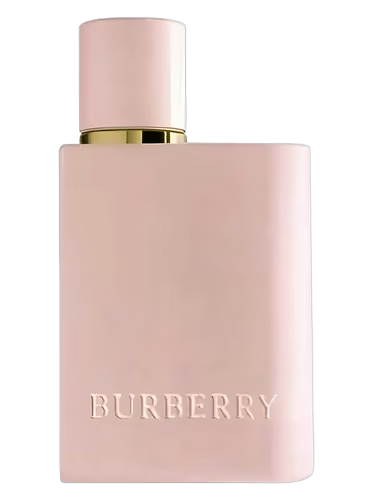
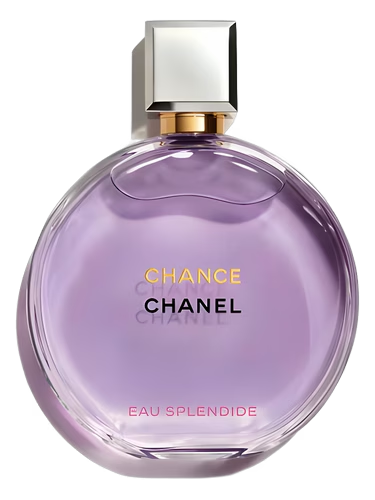
Most Popular Scents Using Pokan

What is Pokan?
Pokan is a specific variety of mandarin citrus, often referred to as a Japanese mandarin hybrid or "Chinese Honey Orange," prized for its sweet, low-acid profile and aromatic peel.
What does Pokan smell like?
In perfumery, it offers a bright, tangy citrus zest with sweet undertones, often interpreted in modern scents as a warm gourmand accord featuring notes of caramel popcorn and apple pie.
How is Pokan oil extracted?
The essential oil is traditionally obtained through cold expression or hydrodistillation of the fruit's peel, while modern methods may include ultrasound-assisted extraction to preserve aromatic purity.
What are some top perfumes featuring Pokan?
Notable fragrances incorporating Pokan or its gourmand accord include Parfums de Marly Sedley, Czech & Speake Vétiver Vert, and Sorcellerie Apothecary I Think About You Too.
When is Pokan in season?
The fruit typically ripens and is harvested during the late fall and winter months, specifically from November through January, following a spring blooming cycle.