Fragrance Notes Are Layers Of Scent That Are Layered To Form The Final Fragrance. Fragrance Notes Are Categorised Into Three Main Elements Based On How Long They Take To Evaporate, And How Long They Typically Last Following Application: Top Notes, Heart Notes And Base Notes.
Plantain
Plantain offers a creamy, sweet, and unique gourmand profile, often described as a less sweet, slightly greener, and more sophisticated take on banana. It provides a tropical, uplifting nuance with delectable undertones, ideal for adding warmth and a distinct, fruity complexity to modern fragrance compositions.

Origin & Extraction Of Plantain
The Plantain note, derived from the starchy, banana-like fruit, does not share the centuries-long legacy of classic perfumery notes like citruses or florals, which were foundational to historical compositions like the Eau de Cologne. Its incorporation into fine fragrance is a relatively modern phenomenon, gaining traction alongside a broader interest in exotic, tropical, and gourmand notes in the late 20th and early 21st centuries. Perfumers began seeking more nuanced, green, and less sugary tropical profiles, distinguishing the sophisticated aroma of the plantain from the overt sweetness of conventional banana notes.
In contemporary perfumery, the Plantain note is valued for its ability to introduce a unique complexity—a creamy, delectable sweetness paired with a slight green, starchy undertone that provides a natural, humid warmth. It is frequently employed in niche and designer compositions focused on tropical settings, gourmand accords, or exotic florals, where it adds depth and a distinct, uplifting fruitiness, positioning itself as a modern and sophisticated ingredient in the evolving fruity/gourmand fragrance family.
Historically, plantain has been processed through simple manual and folk methods to capture its medicinal properties. These traditional techniques include the "spit poultice," where leaves are chewed and applied directly to the skin, or mechanical bruising using a mortar and pestle to release beneficial compounds. For centuries, infusion has also been a staple, involving the steeping of fresh or dried leaves in solvents like olive oil, alcohol, or vinegar for several weeks to create herbal remedies and topicals.
Modern extraction methods have evolved to improve efficiency and preserve specific bioactive components. Current commercial production often utilizes 200-proof food-grade ethanol for high-quality tinctures or heated "hot infusions" using temperature-controlled devices to accelerate the process. In scientific and industrial applications, more advanced techniques are employed, such as supercritical CO2 extraction, multi-stage hydrophilic solvent treatments for polyphenol isolation, and mechanical defibrillation of pseudostems to extract plantain fibers for eco-friendly products like sustainable sanitary pads.
The Plantain note, prized for its creamy, less sugary, and slightly greener take on tropical fruit, is predominantly featured in contemporary niche and artisan perfumery. Its sophisticated profile is used to evoke authentic tropical settings or enhance gourmand compositions with a unique, starchy sweetness that differs from conventional banana or overly sweet fruit notes. This allows the fragrance to feel exotic, warm, and highly nuanced.
- A notable example of the Plantain note's deployment is in fragrances that aim for a deep, humid, jungle-like realism. While specific mainstream designer usage is rare, niche houses utilize it to create innovative fruit accords. For instance, certain experimental blends may incorporate Plantain to bridge bright florals with earthy, damp wood notes, creating a sense of natural decomposition and lush vegetation.
The note is often found supporting modern tropical floral scents, where its creamy texture complements ingredients like tuberose, ylang-ylang, or frangipani. In these compositions, the Plantain adds a delectable depth and longevity to the fruity opening. While an exact fragrance centered solely on the note may be difficult to pinpoint, its characteristics are often blended into tropical gourmands to enhance richness and create a sun-drenched, sophisticated warmth, frequently appearing unnamed within tropical accords of fragrances like those from niche lines focused on exotic locales, such as specific scents by **Zoologist** or **Olympic Orchids**.
- In contemporary high-end perfumery, the subtle green and creamy facets of the note make it ideal for abstract gourmands. It is designed to be a supporting player that adds texture, rather than a dominant, singular note. Its presence contributes to the overall "feel" of a tropical dessert or a complex, warm-weather fragrance, offering a refined, comforting layer that avoids the synthetic cloyingness sometimes associated with standard banana notes.
For perfumers seeking an uplifting, comforting tropical element that remains sophisticated, the plantain note is invaluable. Its ability to provide a natural, slightly starchy sweetness is a modern technique to ground brighter tropical ingredients. In this context, it aligns with sophisticated, creamy tropical fragrances often found in collections like those from **Serge Lutens** or specific exotic releases by **Comptoir Sud Pacifique**, where complex fruit and gourmand notes are celebrated for their warmth and unique character.
Sustainability Of Plantain
Sustainability of Plantain
- Utilizing agroforestry and intercropping techniques to enhance biodiversity, restore soil health, and reduce erosion while creating resilient ecosystems
- Implementing ecological intensification and pesticide-free farming to preserve soil and human health while increasing food security and sovereignty
- Promoting a circular economy by upcycling agricultural by-products, such as using peels for fertilizer and animal feed, and converting pseudo-stems into biodegradable sanitary products
- Adopting precision agricultural technologies and biofertilizers to optimize nutrient uptake, reduce chemical dependency, and sequester atmospheric carbon
- Empowering smallholder farmers and women through cooperatives, fair pricing, and training programs to ensure socio-economic resilience and sustainable livelihoods
- Advancing climate change mitigation by leveraging the plant's ability to capture carbon and utilizing residues as a source for renewable biofuels
Trivia
While many expect a plantain note to smell like a starchy, savory vegetable, it is actually used in perfumery to create a sophisticated, "green" version of a banana scent that is significantly less sugary than standard candy-like banana notes.
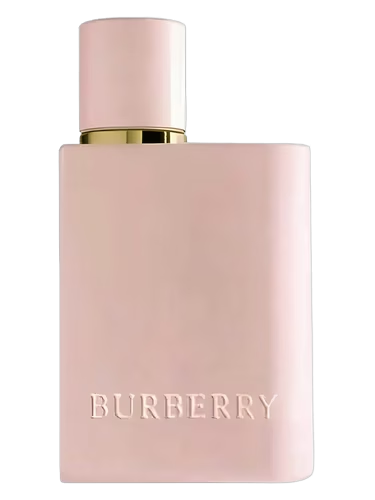
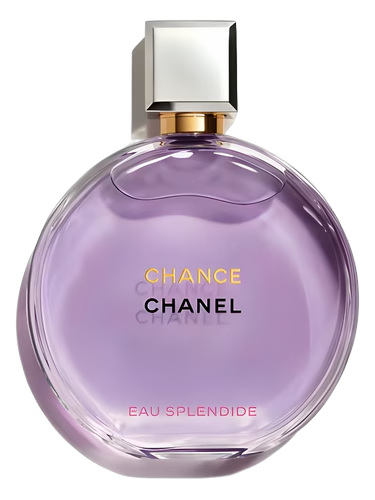
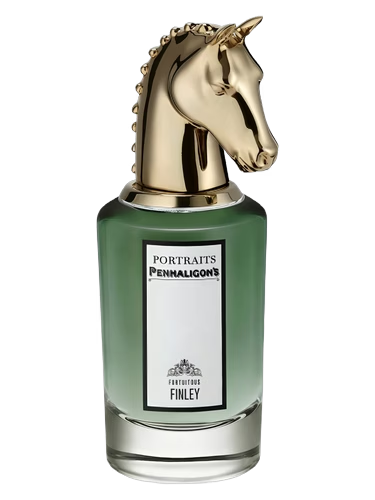
Most Popular Scents Using Plantain
What is Plantain in perfumery?
Plantain is a contemporary fragrance note derived from the starchy, banana-like fruit, valued for its unique ability to provide a creamy, tropical sweetness with a sophisticated green undertone.What does Plantain smell like?
It offers a creamy, sweet, and slightly starchy aroma that is less sugary and greener than conventional banana, often described as having a humid, tropical warmth.How is Plantain essence extracted?
While historically processed through simple infusions or maceration, modern perfumery utilizes high-quality tinctures, hot infusions, or advanced methods like supercritical CO2 extraction to capture its aromatic profile.What are some top perfumes featuring the Plantain note?
Notable fragrances include Day Three Tres Oros, Maven Theory Yucatán, Demeter Plantain, D. Grayi Orange Cat Express, and Cristian Cavagna Musa Paradisiaca.When is Plantain in season?
Broadleaf plantain is a hardy perennial that typically appears in early spring, with its peak growth and flowering occurring from late spring through summer.