Fragrance Notes Are Layers Of Scent That Are Layered To Form The Final Fragrance. Fragrance Notes Are Categorised Into Three Main Elements Based On How Long They Take To Evaporate, And How Long They Typically Last Following Application: Top Notes, Heart Notes And Base Notes.
Pistachio
Pistachio offers a unique gourmand note that is nutty, creamy, and slightly sweet. It presents a soft, warm, and delicate aroma with subtle green nuances and undertones of almond-like sweetness and a light buttery quality. This profile is valued for adding complexity and a comforting richness.

Origin & Extraction Of Pistachio
Pistachio, as an aromatic note in perfumery, is a relatively modern phenomenon, gaining significant traction alongside the rise of the gourmand fragrance category in the late 20th and early 21st centuries. While the pistachio nut itself has ancient origins in the Middle East and Mediterranean, its use in scent was historically overshadowed by classic perfumery ingredients like vanilla, almond, and tonka bean. Perfumers typically recreate the pistachio aroma synthetically or through accords, blending elements of almond, vanilla, subtle green notes, and a creamy, warm facet to capture the distinctive nutty, slightly sweet, and delicate profile.
The contemporary relevance of the Pistachio note lies in its ability to offer a unique twist on creamy sweetness, providing a more complex and comforting aroma compared to straightforward dessert notes. It is often employed to inject a warm, delicate, and sophisticated 'foodie' richness into compositions, particularly in niche and designer fragrances targeting youthful or sophisticated gourmand consumers. Its increasing popularity signals a shift toward exploring more detailed and photorealistic dessert notes in fine fragrance.
Extraction Methods of Pistachio
Historically, pistachio extraction was a manual, labor-intensive process where mature nuts were harvested by hand and the soft outer hull (epicarp) was removed using basic traditional methods. For culinary and medicinal purposes, ancient practices in regions like Persia and Syria involved using the whole nut or extracting resins and oils through simple pressing or maceration to capture the nut's strengthening properties and earthy aroma.
Modern commercial extraction for perfumery and food science typically utilizes advanced solvent extraction or steam distillation to capture the complex volatile aromatic compounds, such as pinene and limonene, from the kernels. In industrial processing, mechanical harvesting employs hydraulically powered limb shakers to vibrate the trees, followed by automated hulling, air-blown cleaning, and sophisticated machine vision systems that sort nuts by size, color, and natural shell splitting.
The rise of the gourmand fragrance category has brought notes like Pistachio to the forefront, celebrating its creamy, nutty, and slightly sweet profile. One of the most iconic contemporary uses is in KAYALI YUM PISTACHIO GELATO | 33 Eau de Parfum Intense. This fragrance fully embraces the dessert quality of the note, blending the delicate pistachio scent with rich accords like cotton candy, marshmallow, whipped cream, and rum to create an intensely sweet, comforting, and addictive "gourmand dessert" experience.
Another hugely popular fragrance that established the appeal of the pistachio note is Sol de Janeiro SOL Cheirosa '62 Eau de Parfum (and its accompanying body mist, '62). While often associated with salted caramel and vanilla, the fragrance features a distinctive opening of pistachio and almond. This blend captures a warm, sunny, and beachy sweetness that feels both invigorating and indulgent, securing its place as a contemporary favorite for its unique, comforting richness.
The versatility of the pistachio note extends beyond pure gourmand compositions, as seen in fragrances like Viktor&Rolf Spicebomb Night Vision Eau de Parfum. Though primarily a masculine scent focused on incense, woods, and spices, the inclusion of pistachio provides an unexpected, modern twist. It offers a subtle, creamy sweetness and green nuance that contrasts with the darker, aromatic core, adding complexity and a sophisticated, contemporary edge to the composition.
Sustainability Of Pistachio
Sustainability of Pistachio
- Adopting regenerative agriculture practices, such as cover cropping and resting land, to improve soil aggregation, water retention, and microbial abundance
- Implementing precision drip irrigation and advanced monitoring tools like soil probes and sensors to optimize water usage and protect against erosion
- Promoting a circular economy by upcycling hull biomass into compost and repurposing discarded shells for road construction to minimize dust and air pollution
- Utilizing integrated pest management (IPM) by installing owl and raptor nesting boxes to manage rodent and pest populations naturally, reducing reliance on chemical pesticides
- Investing in renewable energy, such as large-scale solar power systems, to fuel post-harvest processing, packaging, and irrigation infrastructure
- Developing drought-tolerant pistachio varieties and nitrogen-fixing cultivation methods to enhance crop resilience and reduce the need for synthetic fertilizers
Trivia
Pistachio is one of the world's oldest nuts, yet it was recently identified by major fashion and beauty publications as the "it" fragrance note of 2023, offering a modern, sophisticated alternative to traditional gourmand scents like vanilla or marshmallow.
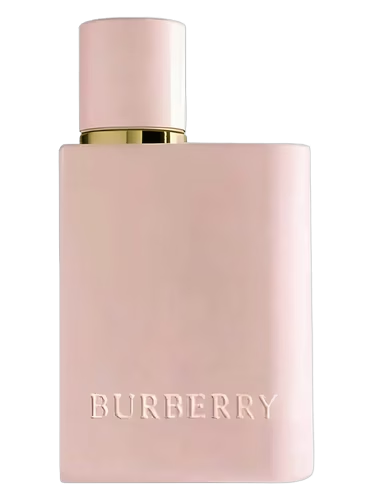
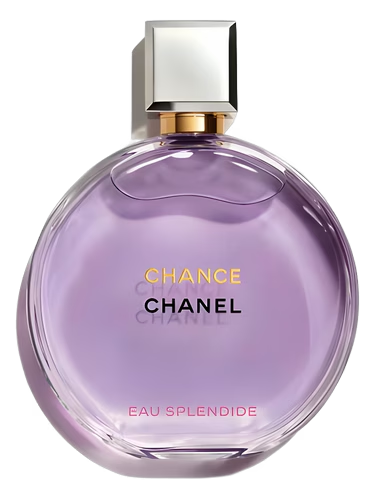
Most Popular Scents Using Pistachio

What is Pistachio in perfumery?
Pistachio is a modern gourmand note that gained popularity in the late 20th century, often used to add a sophisticated, creamy, and nutty richness to contemporary fragrances.What does Pistachio smell like?
It offers a unique nutty and creamy aroma with subtle green nuances, almond-like sweetness, and a soft, buttery quality that provides comforting complexity.How is Pistachio essence extracted?
Modern perfumery typically utilizes advanced solvent extraction or steam distillation of the kernels to capture the nut's complex volatile aromatic compounds.What are some top perfumes featuring Pistachio?
Popular fragrances featuring this note include Kayali Yum Pistachio Gelato 33, D.S. & Durga Pistachio, Sol de Janeiro Cheirosa '62, and Tom Ford Soleil Blanc.When is Pistachio in season?
The primary harvest occurs in September in the Northern Hemisphere and during February and March in the Southern Hemisphere, following a summer ripening period.