Fragrance Notes Are Layers Of Scent That Are Layered To Form The Final Fragrance. Fragrance Notes Are Categorised Into Three Main Elements Based On How Long They Take To Evaporate, And How Long They Typically Last Following Application: Top Notes, Heart Notes And Base Notes.
Petitgrain
Petitgrain offers a fresh, green, and slightly woody scent. It is distilled from the leaves and twigs of the bitter orange tree, giving it a sharper, more herbaceous edge than Neroli. It features a clean, tart, and bright citrus element, often described as having a pleasant green-tea like bitterness.

Origin & Extraction Of Petitgrain
Petitgrain, the essential oil derived from the leaves and twigs of the bitter orange tree (Citrus aurantium), has a long and distinguished history in perfumery, dating back several centuries. Its name, which translates to "little grain," historically referred to the fact that it was originally extracted from unripe, tiny fruit (petit grains) of the orange tree. However, it is now primarily distilled from the leafy branches. Petitgrain gained prominence in the 17th and 18th centuries, alongside Neroli (derived from the flowers of the same tree), and became a foundational ingredient in the earliest versions of Eau de Cologne, where its crisp, green, and slightly herbaceous scent provided a crucial counterpoint to the volatile zest of citrus oils, helping to extend the fresh opening.
In modern perfumery, Petitgrain remains essential, valued for its versatility in lending a sophisticated, naturalistic green quality to compositions. It is frequently employed not only in the ongoing production of traditional colognes but also in contemporary aromatic, chypre, and fougère fragrances. Perfumers use Petitgrain to create the impression of an entire citrus tree, bridging the light, zesty top notes with the richer, more stable heart and base notes. Its characteristic clean, slightly bitter, and woody profile is prized for adding structure, airiness, and a refined vegetal texture, ensuring that fresh compositions do not become overly sweet or simplistic.
Extraction Methods of Petitgrain
The primary method for extracting petitgrain essential oil is steam distillation of the leaves, twigs, and small branches of the bitter orange tree (Citrus aurantium). Historically, the process originated in the 18th century using the small, unripe fruits of the tree—resembling "little grains," which gave the oil its name—but shifted in the 19th century to using foliage to achieve higher efficiency and yield. In regions like Paraguay, traditional production still relies on simple, rustic equipment such as wooden or galvanized iron stills operated by smallholder farmers, where harvested material is often trodden by foot to compact it before processing.
Modern commercial extraction has evolved to use advanced stainless steel stills and controlled pressure systems to ensure high purity and prevent contamination. While steam distillation remains the industry standard, some producers utilize hydrodistillation or cellular extraction to capture more delicate aromatic profiles. Recent developments also emphasize sustainability through initiatives that support rural communities and use specific harvest timing, such as following the lunar calendar to maximize oil yield when sap concentration is highest in the leaves.
Petitgrain is a fundamental building block in traditional citrus colognes, particularly the Eau de Cologne structure, where it works alongside notes like Neroli and Bergamot to establish a clean, green, and enduring freshness. One of the most iconic examples is **4711 Original Eau de Cologne**, where Petitgrain's tart, slightly woody aroma contributes significantly to the bright opening and provides a sophisticated, natural link to the underlying floral and herbal heart.
In modern perfumery, Petitgrain's herbaceous and slightly bitter profile is used to ground abstract florals and provide a dynamic, naturalistic opening to fragrances. A notable example is **Tom Ford's Neroli Portofino**, where the Petitgrain note enhances the photorealistic quality of the bitter orange tree accord, lending the scent its characteristic crispness and green vitality that balances the sweeter Neroli blossom and bright citrus oils.
Furthermore, Petitgrain is utilized to add complexity and green texture to fragrances outside the traditional cologne family, such as masculine woody and aromatic compositions. In **Guerlain Vetiver**, Petitgrain provides an initial sharp, green lift that prepares the senses for the earthiness of the vetiver, giving the fragrance its tailored, invigorating elegance and maintaining a clean, classic structure throughout its development.
Sustainability Of Petitgrain
Sustainability of Petitgrain
- Preserving biodiversity by providing an economically viable alternative to clear-cutting for high-demand crops like soy and corn, helping to protect the Atlantic Forest in Paraguay
- Promoting a circular economy by repurposing distilled leaves and twigs as mulch, animal feed, or fuel for distillation units
- Establishing fair trade and ethical sourcing through initiatives like Co-Impact Sourcing, which provide stable income and technical assistance to hundreds of small-scale independent farmers
- Encouraging sustainable land use and regenerative agriculture by promoting crop diversification over monoculture farming practices
- Supporting social development by funding community projects, such as education and school infrastructure, for marginalized rural farming families
Trivia
Petitgrain's name translates to "little grain" because it was originally distilled from the tiny, unripe green fruits of the bitter orange tree before the industry shifted to using its leaves and twigs.
Most Popular Scents Using Petitgrain
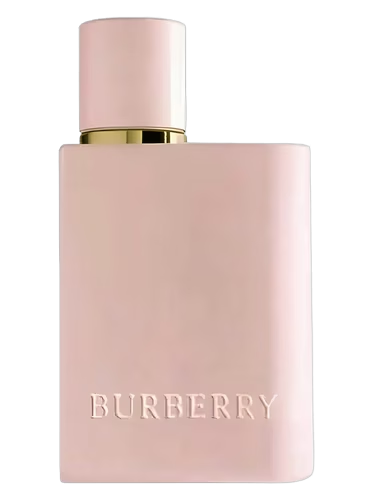
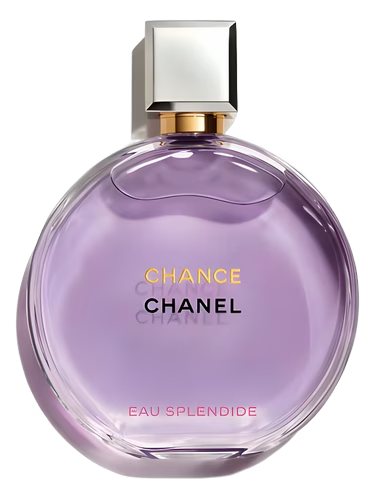
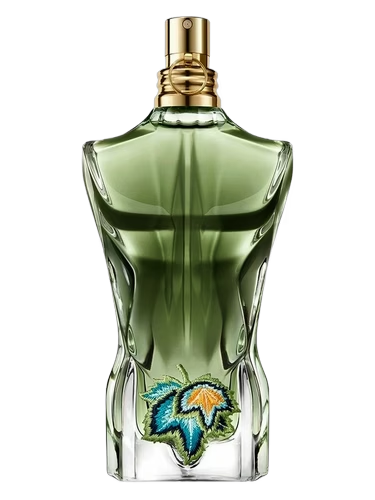
What is Petitgrain?
Petitgrain is an essential oil extracted from the leaves and green twigs of the bitter orange tree, known for its fresh, green, and slightly woody aroma.How is Petitgrain oil extracted?
The oil is primarily obtained through steam distillation of the leaves and twigs, a process that captures its sharp and herbaceous aromatic profile.What does Petitgrain smell like?
It offers a complex scent that is fresh, floral, and woody with a characteristic green-tea like bitterness and citrus undertones.What is the difference between Petitgrain and Neroli?
While both come from the bitter orange tree, Petitgrain is distilled from the leaves and twigs, whereas Neroli is distilled from the blossoms, resulting in a greener and less floral scent for Petitgrain.What are some top perfumes featuring Petitgrain?
Iconic fragrances featuring Petitgrain include 4711 Original Eau de Cologne, Tom Ford Neroli Portofino, Guerlain Vetiver, and Xerjoff XJ 1861 Renaissance.Why is it called Petitgrain?
The name translates to "little grain," referring to the historical practice of extracting the oil from the tiny, unripe green fruits of the orange tree before shifting to leaves and twigs.