Fragrance Notes Are Layers Of Scent That Are Layered To Form The Final Fragrance. Fragrance Notes Are Categorised Into Three Main Elements Based On How Long They Take To Evaporate, And How Long They Typically Last Following Application: Top Notes, Heart Notes And Base Notes.
Peruvian Pepper
Peruvian Pepper (often Pink Pepper) offers a finely spicy, fresh, and slightly zesty profile. It has bright, peppery top notes with subtle aromatic, earthy, and sometimes spicy-vanilla undertones, lending finessed warmth and depth to a fragrance, blending well with woody and citrus notes.

Origin & Extraction Of Peruvian Pepper
Peruvian Pepper, commonly known as Pink Pepper (derived from the *Schinus molle* tree), is a relatively modern ingredient in fine perfumery. While the berries have a long history of use in traditional medicine and cooking, their application in fragrance began gaining prominence in the late 20th and early 21st centuries. Perfumers discovered its unique aromatic profile—fresh, slightly rosy, and delicately spicy, without the heaviness of traditional black pepper—as an ideal, non-volatile top note.
The note quickly became popular for its versatility, offering a bright, vibrant, and contemporary opening that seamlessly bridges citrus top notes with floral or woody hearts. This use allowed fragrances to feature a subtle "peppery" warmth and sophistication that was previously difficult to achieve, securing Pink Pepper's place as a staple in modern, fresh, and complex compositions, particularly in dynamic unisex and masculine scents.
The extraction of Peruvian pepper, often referred to as pink pepper, primarily focuses on obtaining its essential oils and the pungent alkaloid piperine. Historically, extraction involved simple manual maceration or infusion in solvents like alcohol to capture aromatic compounds. Traditional methods also included solar drying of the berries followed by mechanical grinding to prepare them for solvent extraction using edible ethanol or glacial acetic acid.
Modern commercial production utilizes more sophisticated techniques to enhance yield and purity. Steam distillation and hydro-distillation are standard for capturing the volatile essential oils from the seeds and husk. For the extraction of piperine-rich oleoresins, advanced solvent extraction in stainless steel reactors is employed, followed by vacuum distillation or rotatory evaporation to remove solvents while preserving active compounds. Recent innovations include supercritical CO2 extraction, microwave-assisted extraction (MAE), and ultrasound-assisted extraction (UAE), which offer faster processing times and higher efficiency without the high heat that can degrade delicate aromatic molecules.
Peruvian Pepper, more commonly referred to as Pink Pepper in perfumery, is celebrated for its ability to lend a bright, fresh, and delicately spicy opening without the heavy heat of black pepper. It has been instrumental in modernizing classic fragrance structures, particularly in dynamic unisex and masculine scents where a sophisticated, non-traditional spice note is desired. Its versatility allows it to seamlessly bridge sparkling citrus top notes with richer, deeper floral or woody hearts, providing complexity and lift.
- One of the most famous applications of Pink Pepper is in Chanel's Bleu de Chanel, where it contributes to the vibrant, crisp opening alongside grapefruit and mint, setting a modern and energetic tone.
- Similarly, in Dior's Sauvage, Pink Pepper is a key component that introduces a fresh, slightly fiery sparkle to the bergamot top, which then transitions smoothly into the aromatic and ambroxan core.
- The note also features prominently in feminine compositions, offering a sophisticated edge. For instance, in Flowerbomb by Viktor&Rolf, Pink Pepper adds a momentary burst of freshness and piquancy to the otherwise dense and sweet floral-gourmand composition.
In addition to blockbuster designer fragrances, Pink Pepper is a staple in high-end niche perfumery due to its complex aromatic profile, often described as slightly rosy, earthy, and mildly citrusy. Niche houses frequently utilize it to enhance texture and longevity in the opening phase. It is often paired with notes like cedar, vetiver, and incense to create contemporary interpretations of classic woody-spicy genres, appealing to those seeking nuanced freshness.
Modern perfumery continues to explore Pink Pepper’s versatility. The note can be found in a wide variety of fragrances, from light, airy colognes to intense, deep orientals, demonstrating its indispensable role as a bright, bridging spice. Its clean, vibrant character ensures that fragrances featuring it feel contemporary, luminous, and refined, maintaining its status as a cornerstone ingredient in new fragrance development.
Sustainability Of Peruvian Pepper
Sustainability of Peruvian Pepper
- Adopting organic farming practices and agroforestry to replenish depleted soils and eliminate reliance on synthetic fertilizers
- Implementing the Sustainable Development Plan for Capsicum to enhance the competitiveness and socio-economic resilience of local producers
- Promoting biodiversity through in situ conservation of native varieties and integrated crop management to mitigate the impacts of climate change
- Utilizing agricultural waste as fuel for bioelectricity generation to add value to side-streams and provide sustainable energy for farming communities
- Establishing producer cooperatives and fair trade networks to ensure stable income and support long-term economic sustainability for smallholder farmers
Trivia
Peppers were cultivated in Peru over 6,000 years ago, and the Incas even used their intense heat in religious rituals and ceremonies to figuratively burn away possessing spirits.
Most Popular Scents Using Peruvian Pepper
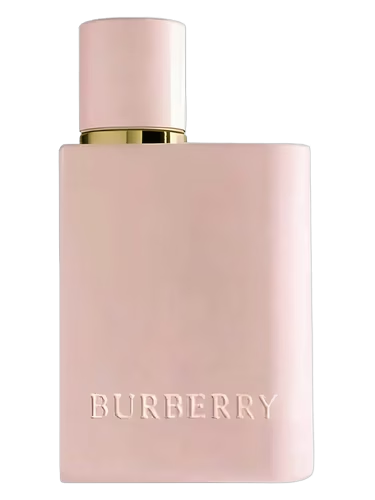
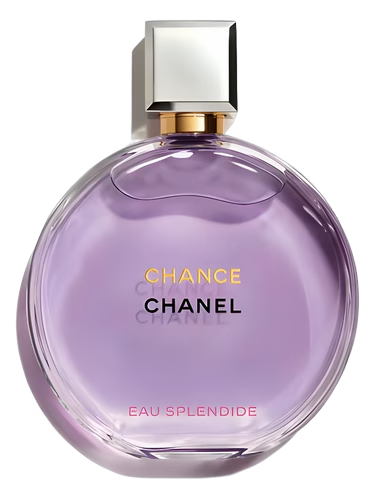
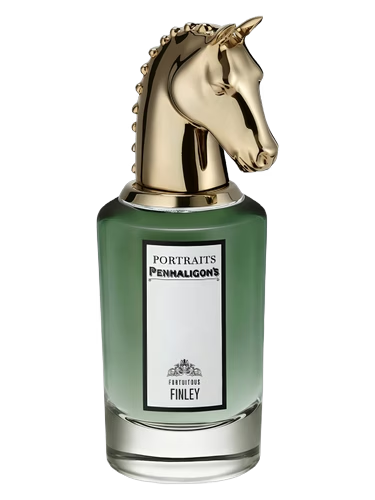
What is Peruvian Pepper?
Peruvian Pepper, commonly known as Pink Pepper and derived from the Schinus molle tree, is a modern fragrance ingredient native to the Andean deserts of Peru and South America.What does Peruvian Pepper smell like?
It offers a finely spicy, fresh, and slightly zesty profile with rosy facets and a bright, peppery warmth that is lighter and more refined than traditional black pepper.How is Peruvian Pepper essence extracted?
The essential oil is primarily obtained through steam distillation or hydro-distillation of the berries, while advanced methods like supercritical CO2 extraction are used to preserve delicate aromatic molecules.What are some top perfumes featuring Peruvian Pepper?
Notable fragrances featuring this note include Chanel's Bleu de Chanel, Dior's Sauvage, Estée Lauder Pleasures, and Viktor&Rolf Flowerbomb.When is Peruvian Pepper in season?
The plants thrive in heat and humidity, with the fruit typically reaching maturity for its primary harvest between late August and December.