Fragrance Notes Are Layers Of Scent That Are Layered To Form The Final Fragrance. Fragrance Notes Are Categorised Into Three Main Elements Based On How Long They Take To Evaporate, And How Long They Typically Last Following Application: Top Notes, Heart Notes And Base Notes.
Persimmon
Persimmon offers a sweet, fantasy note in perfumery, evoking the lush, pulpy texture of the ripe fruit. It presents a soft, aromatic character with nuances of honeyed sweetness and subtle spice, lending a translucent, comforting, and modern fruity quality to fragrances.

Origin & Extraction Of Persimmon
Persimmon, while enjoyed as a fruit for centuries, is a relatively modern and often conceptual note in perfumery. Unlike foundational notes like rose or bergamot, which have a history dating back to the start of modern perfumery, the persimmon note gained prominence primarily in the late 20th and early 21st centuries. Its appearance is largely tied to the rise of 'fantasy' and photorealistic fruity notes, as perfumers looked to expand beyond traditional fruit accords (like citrus and apple) to capture lush, pulpy, and subtly spicy sweetness. Because the natural fruit's scent is difficult to extract and stabilize, the note is usually created through synthesis to deliver its characteristic soft, honeyed, and translucent fruity quality.
The contemporary relevance of the persimmon note often lies in its use in feminine or unisex fragrances where a soft, comforting, and modern fruity opening is desired without the sharp tang of traditional citruses or the syrupy depth of stone fruits. It is frequently featured in compositions that aim for a clean, luminous, and slightly exotic feel. Its soft character allows it to pair well with florals, particularly white flowers, providing a gentle sweetness that bridges the volatile top notes and the warm, musky or amber bases of a composition, securing its place as a nuanced, contemporary building block.
Extraction Methods of Persimmon
Historically, the aromatic essence of persimmon was captured through traditional methods such as maceration and air-drying. In Japan, the "hoshigaki" method involves air-drying whole fruits for weeks while hand-massaging them to concentrate sugars and preserve the fruit's honeyed character. For medicinal and culinary use, persimmon leaves and skins were often pretreated with salt and then leached using solvents like petroleum ether or ethanol to create extracts and absolutes. Traditional steam distillation has also been a long-standing method for isolating essential oils from the leaves, though it often resulted in lower yields.
Modern commercial and artisanal production has introduced advanced techniques to improve yield and preserve delicate volatiles. Latest methods include microwave-assisted extraction using hydrophilic ionic liquids, which can increase essential oil yields by up to 40% compared to standard steam distillation. For high-end culinary and fragrance applications, vacuum-assisted extraction maceration and sous-vide techniques are employed to stabilize volatile aldehydes and esters under negative pressure. Additionally, ultrahigh pressure and ultrasonic treatments are utilized to extract polyphenols and other active compounds without the structural damage caused by high heat or harsh chemicals.
The Persimmon note found its most globally recognized platform in the iconic fragrance **Dolce & Gabbana Light Blue**. Introduced in 2001, this feminine scent became a worldwide bestseller, and the persimmon note was instrumental in defining its unique character. Unlike the sharper citruses common in Mediterranean-inspired fragrances, persimmon’s soft, honeyed sweetness provides a gentle, luminous opening that evokes the clean air and fruity lushness of the Italian coast. It offers a subtle, modern fruitiness that perfectly complements the Granny Smith Apple and cedar wood notes, securing its place as an enduring contemporary classic.
In masculine perfumery, Persimmon provides a refreshing, non-traditional fruity element that avoids sweetness, lending a sophisticated, slightly aqueous quality. A key example is **Acqua di Gio Profumo** by Giorgio Armani. While the core of this fragrance is defined by aquatic and mineral notes, the addition of the persimmon accord provides a momentary burst of luminous, clean fruitiness in the opening. This contrast sharpens the deep, smoky incense and patchouli base, showcasing Persimmon's ability to inject modern freshness and clarity into a dense, long-lasting composition.
Niche and artisanal houses have also embraced Persimmon for its nuanced, translucent qualities. For example, the note is utilized in fragrances like **Jo Malone Nectarine Blossom & Honey**, where it enhances the juicy, pulpy texture of the fruit accord, providing a soft backdrop that bridges the opening and heart notes. It is valued here not just for its own aroma, but for its function in smoothing out and adding dimension to other fruit and floral notes, ensuring the overall scent profile remains bright, comforting, and uniquely lush.
Sustainability Of Persimmon
Sustainability of Persimmon
- Promoting sustainable wild-harvesting practices to ensure the maintenance of healthy plant populations and local ecosystems
- Supporting the conservation of ancestral lands and traditional foraging knowledge through collaborative management and ethical harvesting agreements
- Assessing and monitoring fruit yield to prevent overharvesting and ensure the continued availability of resources for local wildlife
- Encouraging the use of traditional preservation methods that maximize the economic and cultural value of the seasonal harvest
- Advocating for low-impact collection techniques that protect the integrity of the habitat and promote long-term biodiversity
Trivia
While often mistaken for tomatoes due to their glossy orange skin, persimmons are known as the fruit of the gods in ancient Greek and contain high levels of tannins that can create a unique furry or dry sensation on the palate if eaten before they are perfectly ripe.
Most Popular Scents Using Persimmon
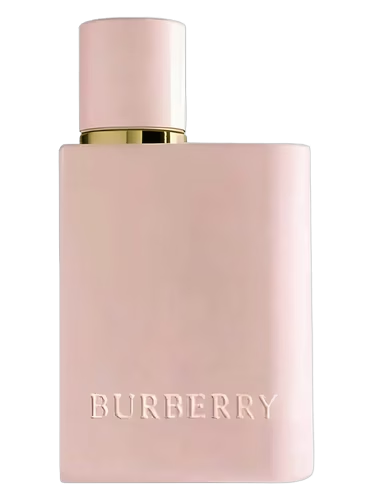
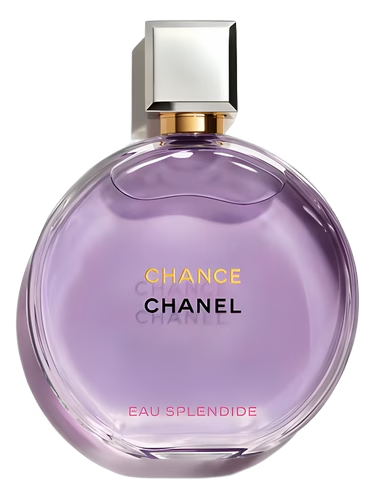
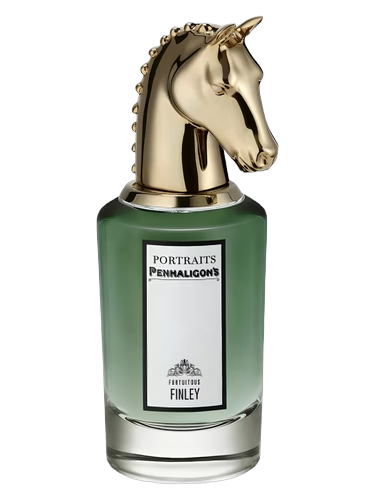
What is Persimmon in perfumery?
Persimmon is a relatively modern fantasy note used to evoke the lush, pulpy texture of the fruit, often created through synthesis to provide a soft, honeyed, and translucent quality.What does Persimmon smell like?
It offers a sweet, aromatic profile with nuances of honeyed sweetness and subtle spice, lending a comforting and luminous fruity character to modern fragrances.How is Persimmon essence extracted?
While historically captured through maceration or air-drying, modern methods include microwave-assisted and vacuum-assisted extraction to preserve its delicate aromatic compounds.What are some top perfumes featuring Persimmon?
Notable fragrances including the persimmon note are Dolce & Gabbana Light Blue, Calvin Klein Euphoria, Giorgio Armani Acqua di Gio Profumo, and Jo Malone London Wild Bluebell.When is Persimmon in season?
The seasonality of the fruit typically begins in late summer and extends into early winter, with the primary harvest window spanning from September through December.