Fragrance Notes Are Layers Of Scent That Are Layered To Form The Final Fragrance. Fragrance Notes Are Categorised Into Three Main Elements Based On How Long They Take To Evaporate, And How Long They Typically Last Following Application: Top Notes, Heart Notes And Base Notes.
Perfume lemon
A bright, intensely radiant citrus note, often capturing the sharp, zesty, and slightly sweet aroma of lemon peel and pulp. It provides a crisp, sparkling, and highly refreshing top-note burst, offering clean, acidic energy and an uplifting effect, distinct from heavier, sweeter citrus oils.

Origin & Extraction Of Perfume lemon
The "Perfume lemon" note, characterized by its intensely radiant and sharp zest, is a vital element in classic perfumery, particularly within the traditional Eau de Cologne structure. Its use provides a sparkling, clean, and energetic opening that has defined iconic fresh scents for decades, such as Acqua di Parma Colonia and Dior Eau Sauvage. This specific profile, valued for its crisp quality and uplifting effect, is sought after for its ability to maintain transparency and vitality in the initial stages of a fragrance.
In modern perfumery, this bright, acidic note is frequently used to cut through richer accords, like gourmand or oriental compositions, preventing them from becoming heavy or cloying. By offering a clean, zesty contrast, "Perfume lemon" helps balance and structure contemporary fragrances, extending the radiant, fresh effect beyond the top note. Its versatility secures its place as an essential tool for high-quality, refined, and invigorating scent creation across various olfactory families.
Extraction Methods of Perfume Lemon
The primary method for extracting the essential oil from lemon peels is cold expression, or cold pressing. Historically, this was performed in Sicily using the "sponge method," a labor-intensive manual technique where the fruit was halved, the pulp removed with a sharp-edged spoon called a "rastrelli," and the rinds pressed by hand against a natural sponge to collect the volatile oils and fluids in a terracotta container. Another traditional manual method included the "ecuelle a piquer," which involved pricking and rotating the fruit to rupture the oil glands.
Modern commercial extraction has shifted toward mechanized systems to increase yield and efficiency. Technologies like the "sfumatrice" use rollers and chains to rasp peels under water sprays, while "polycitrus" machines use rotating stainless-steel drums to extract oil from whole fruits. The "FMC-In-Line" extractor is a widely used modern refinement that simultaneously extracts juice and oil by compressing the fruit between mobile cups. Recent developments in sustainable processing also include the use of hydro-distillation for waste peels and green extraction methodologies such as ultrasound-assisted, microwave-assisted, and supercritical CO2 extraction, which significantly reduce processing time and energy consumption.
The "Perfume Lemon" note, prized for its intensely radiant and crisp zest, is often employed in modern interpretations of classic citrus structures, particularly those aiming for superior longevity and luminosity. While specific fragrances labeled as using "Perfume Lemon" are often contemporary niche or designer compositions focusing on hyper-realistic citrus accords, the essence it represents—sharp, clean, and highly effervescent lemon zest—is fundamental to the success of many enduring fresh fragrances. It provides a non-sweet, acidic burst that cuts through heavier ingredients.
Many famous compositions that rely on a powerful, zesty lemon top note effectively use materials mirroring the profile of "Perfume Lemon." A notable example in this category is often associated with the invigorating opening of fragrances like **Acqua di Parma Colonia** or **Dior Homme Cologne**. In these scents, the bright, slightly sweet, and intensely zesty quality of high-grade lemon oil (similar to "Perfume Lemon") is used to create an instant feeling of energy and cleanliness, defining the fragrance's initial character before transitioning to floral or musky heart notes.
In modern perfumery, particularly high-end fresh and aquatic compositions, the use of radiant lemon materials ensures the citrus burst isn't merely fleeting. This sophisticated, sharp lemon profile, akin to "Perfume Lemon," can be found providing the backbone for the crisp openings of popular releases like **Atelier Cologne Cédrat Enivrant** or certain fresh offerings from the Hermès Un Jardin series. Its function is to elevate the composition, providing a sparkling, clean energy that bridges the gap between the volatile top notes and the emerging, more stable base notes.
Sustainability Of Perfume lemon
Sustainability of Perfume Lemon
- Promoting circular economy principles by upcycling citrus peels, which are often discarded by the juice and food industries, into high-quality essential oils
- Adopting eco-friendly extraction methods like cold expression and CO2 extraction to preserve aromatic integrity with minimal waste and lower energy consumption
- Implementing organic farming practices that eliminate synthetic pesticides and fertilizers to protect soil health and local water systems
- Prioritizing water conservation strategies and sustainable irrigation in primary growing regions to ensure long-term agricultural resilience
- Supporting ethical sourcing and fair trade initiatives to provide stable livelihoods and socio-economic benefits for local farming communities
Trivia
The lemon tree is not a naturally occurring wild species but is actually an ancient hybrid between the citron and the bitter orange.
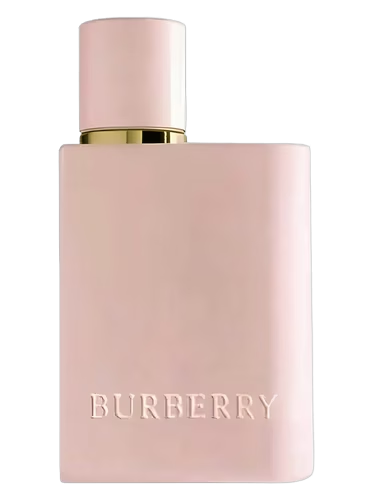
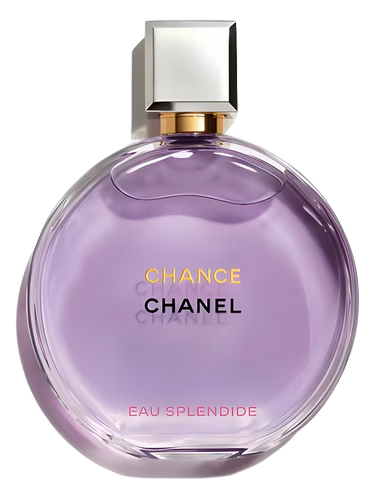
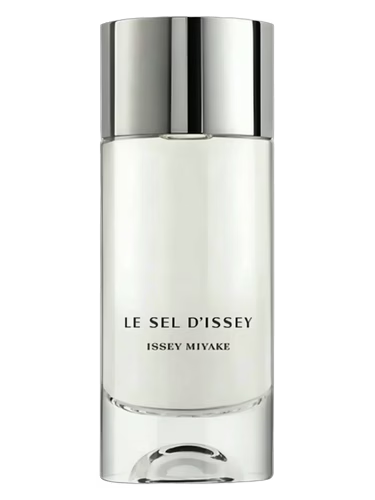
Most Popular Scents Using Perfume lemon
What is perfume lemon?
Perfume lemon is a bright, intensely radiant citrus note known for its sharp, zesty, and slightly sweet aroma of lemon peel and pulp, providing a crisp and refreshing top-note burst in fragrances.How is perfume lemon oil extracted?
The essential oil is primarily extracted through cold expression (cold pressing) of the fruit's peel, a process that preserves the delicate aromatic integrity of the citrus.What does perfume lemon smell like in perfumery?
It offers a clean, acidic, and highly effervescent scent that provides an immediate feeling of energy and brightness, often used to cut through heavier gourmand or oriental accords.What are some top perfumes featuring the perfume lemon note?
Iconic fragrances showcasing this radiant lemon profile include Acqua di Parma Colonia, Dior Eau Sauvage, Maison Margiela Replica Under the Lemon Trees, and Chanel Allure Homme Edition Blanche.When is perfume lemon in season?
While a versatile trans-seasonal staple, it is traditionally associated with spring and summer for its cooling quality, but it is also celebrated as a winter note for its crystalline clarity against gloomy skies.