Fragrance Notes Are Layers Of Scent That Are Layered To Form The Final Fragrance. Fragrance Notes Are Categorised Into Three Main Elements Based On How Long They Take To Evaporate, And How Long They Typically Last Following Application: Top Notes, Heart Notes And Base Notes.
Pecan
Pecan is typically utilized as a fantasy gourmand note in perfumery, presenting a warm, nutty, and sweet profile. It often carries nuances of roasted pecans, brown sugar, creamy custard, and caramel, offering a cozy, edible, and slightly woody aroma that is utterly irresistible.

Origin & Extraction Of Pecan
Pecans are native to North America, and their historical use dates back thousands of years to Indigenous cultures, but their application in perfumery is strictly modern, coinciding with the rise of the gourmand fragrance family. Unlike classical perfumery notes derived from flowers or citruses, the Pecan note is a synthetic or constructed "fantasy note" designed to evoke a specific, irresistible sensory experience. This note is rarely about the raw nut, but rather the highly sweetened, caramelized, and toasted preparations popular in desserts like pecan pie.
The relevance of the Pecan note in fragrance accelerated in the late 20th and early 21st centuries, following the groundbreaking success of edible-smelling perfumes. It is typically used as a warm, cozy element in the base or heart of a scent, contributing depth, sweetness, and a sense of comforting familiarity. Pecan is prized for its ability to blend seamlessly with vanilla, caramel, and creamy accords, establishing a rich, autumnal, and utterly delectable gourmand foundation.
Extraction Methods of Pecan
Historically, pecan oil was obtained through simple mechanical means, such as crushing the nuts and submerged them in water to allow the oil to rise to the surface for skimming, or using rudimentary stone presses to squeeze the oil from ground kernels. These traditional methods were labor-intensive and often yielded oil with a shorter shelf life due to impurities. Traditional mechanical extraction eventually evolved into the use of hydraulic and screw presses (expellers), which remain common for "cold-pressed" oils, though they typically recover only 65% to 75% of the available oil.
Modern commercial extraction primarily utilizes solvent extraction, most commonly with hexane, to achieve yields near 100%. However, recent advancements have introduced more sustainable and health-conscious techniques. These include supercritical carbon dioxide (CO2) extraction and the Oklahoma State University/ATEP process, which uses propane as a non-toxic solvent to produce pure oil at lower temperatures and pressures. Other innovative methods include ultrasonic-assisted aqueous enzymatic extraction (UAAEE), microwave-assisted solvent extraction, and subcritical fluid extraction using n-butane, all designed to improve oil recovery while preserving the pecan's delicate nutritional profile and antioxidant properties.
The Pecan note, valued for its warm, nutty, and sweet profile, is a staple in the modern gourmand category, where it contributes a distinctly caramelized, dessert-like richness. It perfectly evokes the comforting aroma of toasted nuts and brown sugar, making it ideal for creating cozy, autumnal, and utterly delectable compositions. One of the most prominent examples where this gourmand note takes center stage is **Jo Malone London's English Oak & Hazelnut**, although other examples are more direct in their use of a pecan-pie-like accord.
The versatility of the Pecan note allows it to pair seamlessly with other rich, edible materials, often anchoring the base of a fragrance alongside vanilla, patchouli, or tonka bean. This combination provides enduring sweetness and a slightly woody texture that helps the fragrance longevity. A celebrated niche perfume that highlights this luxurious, nutty facet is **A *Men Pure Tonka** by Mugler (or similar gourmands) where the pecan accord adds an extra layer of complexity and warmth to the coffee and caramel structure, moving the scent from merely sweet to richly sophisticated.
In contemporary perfumery, the Pecan note is often synthesized to be clean and creamy, appealing to a wide audience seeking comforting and irresistible scents. It is utilized both in high-end niche houses and accessible designer brands looking to capitalize on the success of edible fragrances. For instance, **Hanae Mori's Butterfly** has been known to feature notes that hint at a buttery, creamy nuttiness, aligning with the profile of pecan, cementing the ingredient’s place as a complex enhancer in modern, sweet fragrances.
Sustainability Of Pecan
Sustainability of Pecan
- Promoting carbon sequestration through the cultivation of long-lived pecan trees, which act as significant carbon sinks for atmospheric CO2
- Implementing regenerative agriculture practices, such as maintaining 100% ground cover and balancing soil minerals to improve microbial life and soil health
- Utilizing water-efficient irrigation strategies, including drip and micro-irrigation systems, to manage the high water demands of orchards in arid climates
- Adopting Integrated Pest Management (IPM) and biological control agents to reduce reliance on synthetic pesticides and develop disease-resistant hybrids
- Supporting a circular economy by developing waste-free production processes that utilize the entire nut, including shells and byproducts
- Advancing social and economic sustainability by establishing local cooperatives and fair-trade practices that support rural communities and smallholder farmers
Trivia
While pecans are a beloved gourmand note in modern perfumery, they are botanically one of the few "true nuts" alongside walnuts and hazelnuts, and were once a dietary staple for Indigenous North American cultures long before becoming a dessert icon.
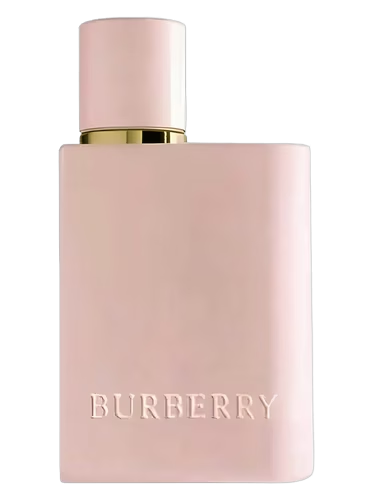
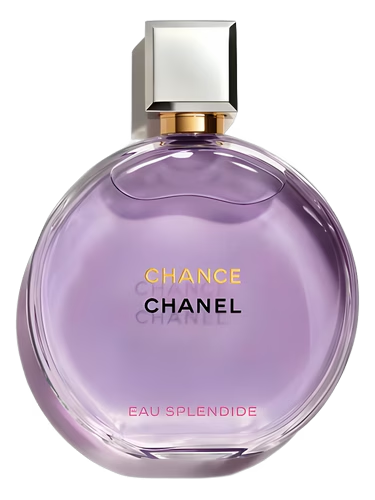
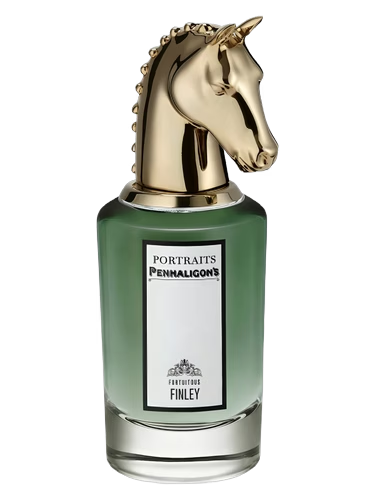
Most Popular Scents Using Pecan
What is Pecan?
Pecan is a fantasy gourmand note in perfumery, presenting a warm, nutty, and sweet profile often used to evoke the aroma of desserts like pecan pie.What does Pecan smell like?
It offers a cozy, edible, and slightly woody scent with nuances of roasted pecans, brown sugar, creamy custard, and caramel.How is Pecan essence extracted?
In perfumery, Pecan is a constructed fantasy note, though pecan oil can be obtained through mechanical cold-pressing or modern solvent extraction methods.What are some top perfumes featuring Pecan?
Notable fragrances include Jousset Parfums Pecan Pie, Sorce The Cookie Party, Arabiyat Sugar Pecan Butter Cookie, and Solstice Scents Sugarvale.When is Pecan in season?
The harvest typically occurs from late September through November, with the note being celebrated as a quintessential autumnal and holiday scent.