Fragrance Notes Are Layers Of Scent That Are Layered To Form The Final Fragrance. Fragrance Notes Are Categorised Into Three Main Elements Based On How Long They Take To Evaporate, And How Long They Typically Last Following Application: Top Notes, Heart Notes And Base Notes.
Peanut
Peanut presents a creamy, rich, and edible nutty aroma, often featuring a distinct roasted quality. It combines sweet, gourmand facets like caramel and cocoa with earthy, musty, and subtle fatty undertones. This unique profile adds depth, warmth, and an unexpected, comforting texture to fragrance compositions.

Origin & Extraction Of Peanut
The history of the peanut note in fine perfumery is largely contemporary, distinct from classical perfumery ingredients. Peanuts, native to South America, have been cultivated and used culinarily for thousands of years, but their distinct, roasted, gourmand scent profile only gained relevance in fragrance with the rise of the gourmand category in the late 20th and early 21st centuries. Prior to this, the idea of incorporating common food aromas, especially earthy or fatty ones, into sophisticated fragrance compositions was uncommon. The note's complexity—combining sweet, nutty, and slightly earthy facets—requires synthetic reconstruction or specialized extracts, as natural peanut oil is often too heavy or volatile for traditional use.
Today, the peanut note is primarily utilized in niche and innovative designer fragrances seeking a comforting, unexpected twist. It lends a unique, roasted warmth and creamy texture, often complementing other gourmand notes like caramel, vanilla, or cocoa, or adding an intriguing, savory depth to oriental structures. Its use signals a move toward photorealistic, edible scents that evoke nostalgia and comfort, positioning the peanut note as a modern tool for adding unconventional depth and a playful, addictive quality to fragrance compositions.
Extraction Methods of Peanut
The extraction of peanut oil is primarily achieved through mechanical pressing and solvent extraction. Historically, traditional methods involved manual labor, such as mortar and pestle grinding or simple stone pressing, followed by boiling the peanut paste in water to allow the oil to rise to the surface for skimming. Low-tech solutions also included using heavy rocks or wooden presses to physically squeeze the oil from ground nuts. In many regions, traditional "cold pressing" used animal-driven or manual screw presses to extract oil without the application of external heat, preserving the oil's natural flavor and nutritional profile.
Modern industrial production utilizes more advanced and efficient techniques. Mechanical methods now feature high-capacity screw presses (expellers) and hydraulic presses that use significant pressure to force oil out of the kernels. To maximize yield, large-scale facilities often employ solvent extraction, typically using hexane to dissolve and recover oil from the remaining peanut cake. Recent developments include the use of supercritical CO2 extraction and enzyme-assisted aqueous extraction, which aim to improve purity and sustainability by reducing chemical usage. Furthermore, advanced refining processes like degumming, deacidification, and deodorization are standard to ensure the final product meets commercial edible standards.
The peanut note, recognized for its creamy, roasted, and subtly earthy gourmand profile, is a relatively new addition to fine perfumery. Its use is largely confined to the contemporary niche sphere, where perfumers aim for innovative, photorealistic scents that evoke comfort and nostalgia. Unlike classical notes, the peanut accord often focuses on capturing the rich texture and roasted sweetness of the nut, adding an unexpected, savory depth to compositions. The versatility of this note allows it to pair exceptionally well with sweet materials like vanilla and caramel, or rich, woody base notes.
- DS&Durga's "Peanut" is one of the most prominent recent examples to feature the note front and center. Launched in 2024, the fragrance is a woody gourmand built around the intense aroma of Virginia peanuts, capturing the scent of "bold Virginia nuts ensconced in sandy soils and fields of crumbling shells." It utilizes the peanut note in the top and middle, pairing it with earthy notes and vetiver in the base for a rich, naturalistic, and surprisingly sophisticated interpretation of the common snack.
Another fragrance that utilizes the complexity of the peanut note is **Demeter Fragrance Library's Peanut Butter**, although it approaches the scent with playful simplicity. While perhaps not "fine" perfumery in the traditional sense, this scent exemplifies the note's strong link to the gourmand category, offering a sweet, comforting, and deeply edible aroma. The success of such simple, photorealistic scents showcases the modern desire for comforting, nostalgic food notes in personal fragrance.
Beyond these dedicated scents, the peanut note sometimes appears in abstract or blended gourmand fragrances to lend a creamy texture or a surprising twist. A famous example often cited for its nutty character, which hints at a sophisticated roasted peanut butter, is **Bottega Veneta Pour Homme Extreme**. Although the official note breakdown does not list peanut, its blend of leather, woody notes, and warm spices often creates a rich, fatty, and deeply satisfying gourmand texture that many wearers perceive as having a luxurious, roasted nut quality, demonstrating how this unique aromatic facet can be integrated into high-end compositions.
- Planting typically occurs in late spring, generally from April to May, once soil temperatures reach 65 to 70 degrees Fahrenheit following the last frost
- Yellow flowers emerge near the base of the plant approximately 30 to 40 days after planting, signaling the start of the reproductive phase and the unique pegging process
- The growing cycle spans four to five months, with peak maturity usually reached between 120 and 160 days after the initial planting
- Harvesting takes place during the autumn months of September and October, though it can extend into November in certain regions depending on variety and climate
- Fresh green peanuts have a limited seasonal window from late July through November, whereas raw dehydrated peanuts are available for year-round consumption
Sustainability Of Peanut
Sustainability of Peanut
- Utilizing a zero-waste crop model where every part of the plant is repurposed, including using roots and hulls for animal feed, biofuel, and organic fertilizers
- Optimizing water resources through the plant's natural drought tolerance and deep root systems, requiring significantly less water per ounce compared to tree nuts
- Enhancing soil health via nitrogen fixation, a process where the plants naturally enrich the soil with nitrogen, reducing the need for synthetic fertilizers for subsequent crops
- Reducing environmental impact by maintaining the smallest carbon footprint of any nut and achieving a 40% decrease in greenhouse gas emissions over the last few decades
- Implementing the Sustainable U.S. Peanuts Initiative to document production practices and provide growers with data-driven insights for continuous environmental improvement
Trivia
Although it is a staple of the "nutty" fragrance family, the peanut is actually a legume rather than a true nut, and its roasted aroma is primarily created by pyrazines, the same chemical compounds responsible for the scent of freshly baked bread and cocoa.
Most Popular Scents Using Peanut
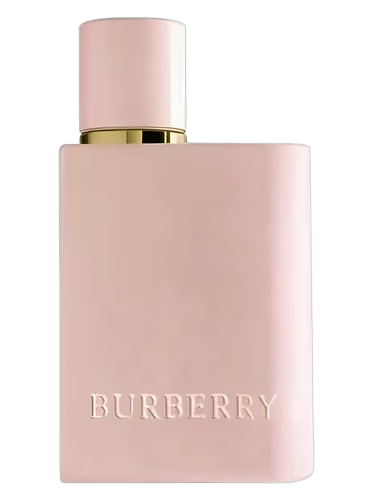
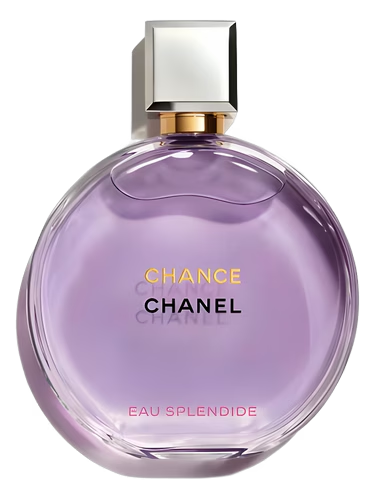
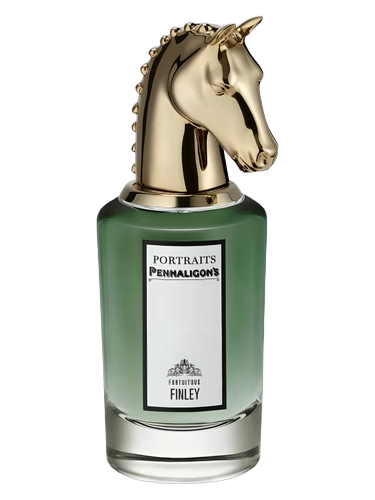
What is Peanut in perfumery?
Peanut is a modern gourmand note known for its creamy, rich, and roasted aroma, primarily used in niche fragrances to add an unexpected, comforting texture.What does Peanut smell like?
It offers a distinct roasted quality that combines sweet facets like caramel and cocoa with earthy, musty, and subtle fatty undertones.How is Peanut essence extracted?
Peanut oil is primarily obtained through mechanical cold pressing or solvent extraction of the kernels, though the fragrance note is often synthetically reconstructed for stability.What are some top perfumes featuring Peanut?
Notable fragrances include D.S. & Durga Peanut, Demeter Peanut Butter, and Bottega Veneta Pour Homme Extreme, which is often cited for its roasted nut quality.Is Peanut a true nut?
No, the peanut is actually a legume, and its characteristic roasted scent is created by pyrazines, the same compounds found in freshly baked bread and cocoa.